
The Golden Road: How Ancient India's Cultural and Scientific Achievements Shaped World History
- Date & Time:
- |
- Views: 78
- |
- From: India News Bull
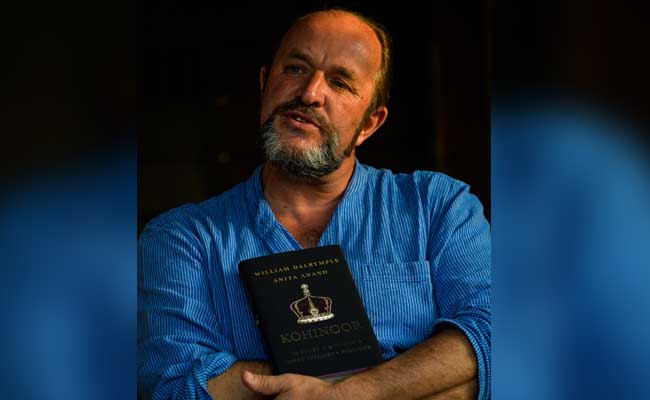
"It feels like India was the cultural superpower of Asia in that period," remarked William Dalrymple, author of the newly published book "The Golden Road: How Ancient India Transformed the World."
According to Dalrymple, many innovations commonly attributed to Greece or Egypt actually originated in India, including chess, the concept of zero, and the heliocentric theory that the Earth revolves around the Sun.
"These come from India, which was a crucial engine of trade and cultural transmission in the ancient world that has been often overlooked in the intervening centuries," he emphasized.
In a conversation with CNN's Fareed Zakaria, Dalrymple highlighted that over half of today's global population lives in countries once influenced by Indian religions or philosophical systems such as Buddhism and Hinduism. "Buddhism not only spread across Southeast Asia - Thailand, Laos, Cambodia - but also reached China itself," he explained.
Dalrymple's book illustrates how India expanded its influence primarily through cultural exchange and commerce rather than military conquest. This stands in contrast to many other religions that spread through colonial expansion.
Describing India as an "empire of the spirit," Dalrymple pointed to numerous examples of Hindu and Buddhist imagery that persist beyond India's geographical boundaries. These include Indonesia's national airline Garuda, named after Vishnu's divine mount; Cambodia's magnificent Angkor Wat, the world's largest Hindu temple complex; and Java's Borobudur, the largest Buddhist monument globally.
Between 200 BCE and 1200 AD, Sanskrit functioned across Asia much as Latin did throughout medieval Europe. "If you were a scholar or ambassador in 10th-century Java or 7th-century Afghanistan, you would be speaking Sanskrit," Dalrymple noted.
The author also emphasized India's significant contributions to mathematics and science. Aryabhatta introduced the revolutionary concepts of zero and place value, which ultimately led to the development of algebra, algorithms, and binary systems.
"Thanks to him, we have algebra, algorithms, and binary," Dalrymple stated, adding that even the terms "algebra" and "algorithm" trace their origins to translations of Indian mathematical texts. The mathematician who worked extensively on these translations was Brahmagupta.
Islamic scholars in 12th-century Spain acknowledged Indians as masters of mathematics, a recognition that continues today in Silicon Valley, according to Dalrymple.
He further noted that travelers crossing continents during this period would share stories from India's great epics. The Mahabharata and Ramayana were revered throughout Asia, with scenes from these narratives appearing on temple walls across Thailand and Sumatra.
Last year marked a significant milestone as India surpassed Great Britain to become the world's fourth-largest economy. Dalrymple mentioned that India is projected to overtake both Japan and Germany within the next five years.
During the NDTV World Summit in 2024, Dalrymple highlighted that Rome and India were primary trading partners in ancient times, rather than China. He also described Nalanda University as the "Oxbridge of ancient India," attracting students from across Asia, including regions as distant as Korea and Japan.
Source: https://www.ndtv.com/world-news/empire-of-spirit-william-dalrymple-on-how-ancient-india-influenced-world-9451718