
Trump's 45% Lumber and Furniture Tariffs: Impact on US Housing Market and International Trade Relations
- Date & Time:
- |
- Views: 83
- |
- From: India News Bull
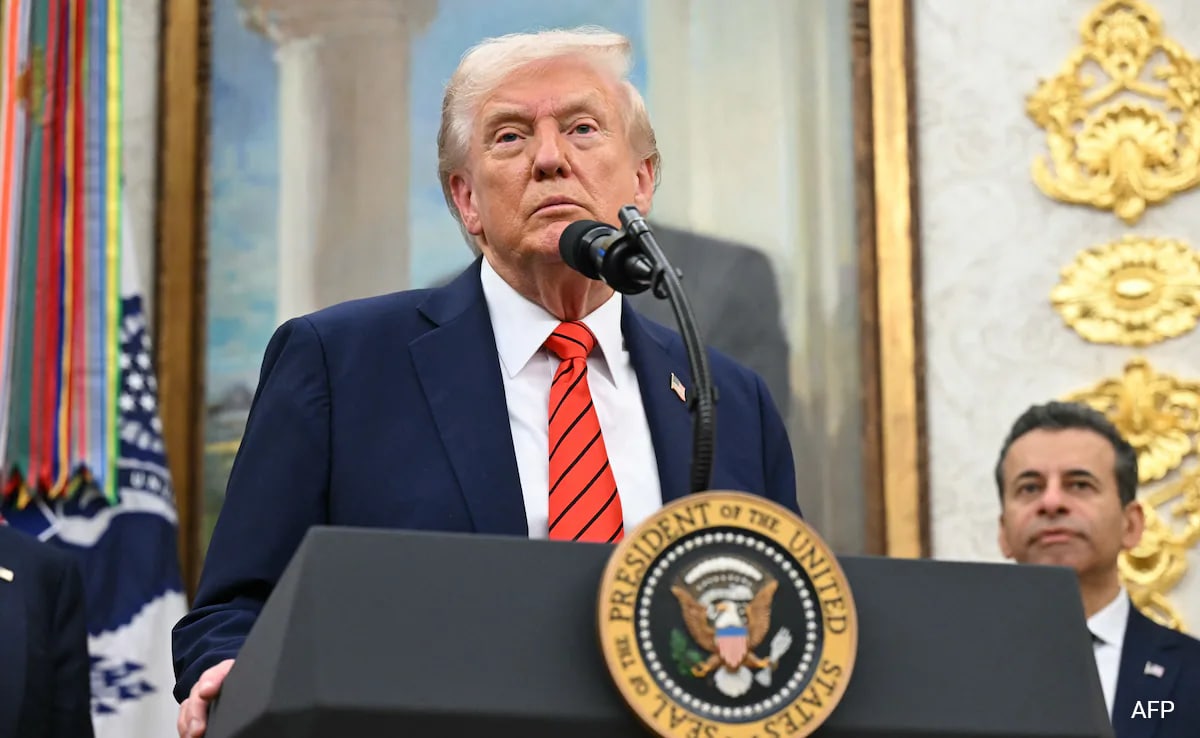
US President Donald Trump's new tariffs on imported wood, furniture and kitchen cabinets have officially taken effect on Tuesday, a move expected to increase construction costs and create additional challenges for homebuyers in an already difficult market.
The White House states these duties were implemented to strengthen American industries and protect national security, expanding Trump's existing portfolio of sector-specific tariffs since his return to office.
This latest round includes a 10-percent tariff on softwood lumber imports, while certain upholstered furniture and kitchen cabinets face initial duties of 25 percent.
Starting January 1, the tariff on imported upholstered furniture will increase to 30 percent, and duties on kitchen cabinets and vanities will escalate significantly to 50 percent.
Wood products from the United Kingdom will face tariffs capped at 10 percent, while those from the European Union and Japan will have a ceiling of 15 percent, as these trading partners have negotiated agreements with the Trump administration to avoid more severe duties.
National Association of Home Builders (NAHB) chairman Buddy Hughes warned that the new tariffs will "create additional headwinds for an already challenged housing market by further raising construction and renovation costs."
The US housing market has been struggling in recent years, with high mortgage rates and limited inventory driving up prices for potential buyers.
In justifying these duties, Trump noted that the Commerce Secretary determined "wood products are used in critical functions of the Department of War, including building infrastructure for operational testing," adding that US wood production "remains underdeveloped," making the country dependent on imports.
Hughes challenged this rationale, stating: "Imposing these tariffs under a 'national security' pretext ignores the importance housing plays to the physical and economic security of all Americans." He advocated for agreements that would "roll back tariffs on building materials" instead.
Canada, the United States' primary lumber supplier, will be significantly impacted. The new 10-percent lumber tariff comes on top of existing anti-dumping and countervailing duties, which were recently more than doubled to 35 percent. With Trump's latest action, total duties on Canadian lumber now reach 45 percent.
The BC Lumber Trade Council, representing British Columbian lumber producers in trade matters, described the new tariffs as "misguided and unnecessary" in September. The council stated, "This will impose needless strain on the North American market, threaten jobs on both sides of the border, and make it harder to address the housing supply crisis in the United States."
Stephen Brown of Capital Economics noted that with 30 percent of lumber sourced internationally, a 10-percent tariff could increase the cost of building an average home by $2,200.
Brown also pointed out that China, Vietnam, and Mexico represent the majority of US furniture imports. "The US gets 27 percent of its furniture imports from China and then almost 20 percent from both Vietnam and Mexico," he explained.
Vietnam is expected to experience the most significant impact "as furniture makes up 10 percent of its exports to the US," compared to just four percent for China and 2.5 percent for Mexico.
The tariffs were implemented under Section 232 of the Trade Expansion Act of 1962, the same authority Trump used earlier this year for steel, aluminum, and auto duties.
Products subject to these sector-specific tariffs are not additionally affected by separate countrywide tariffs that Trump has imposed, which are sometimes higher.
Source: https://www.ndtv.com/world-news/trump-tariffs-on-timber-furniture-come-into-effect-today-9450505