
Analyzing Trump's Gaza Peace Deal: Diplomatic Breakthrough or Temporary Solution?
- Date & Time:
- |
- Views: 64
- |
- From: India News Bull
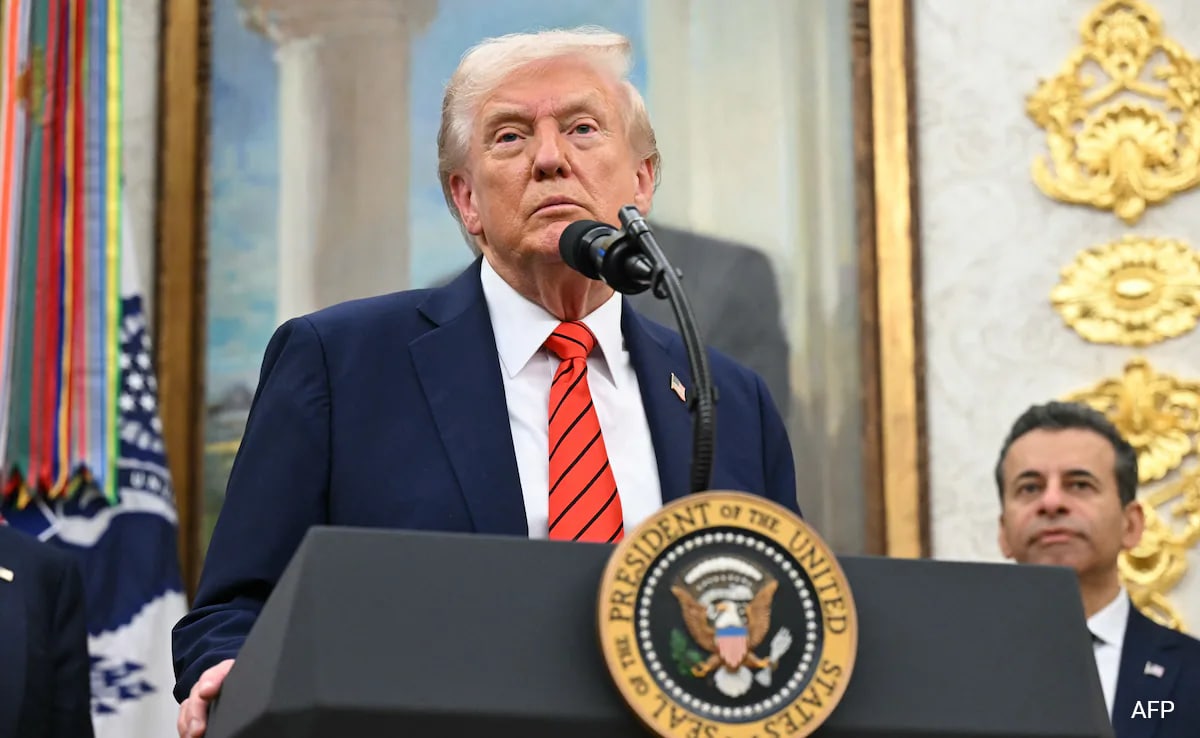
President Trump's personal diplomatic style is characterized by unprecedented pace, scope, and intensity.
Sydney:
This week, US President Donald Trump visited Israel and Egypt to oversee the initial implementation of his Gaza peace agreement, which many believe could permanently end the two-year conflict in the region.
If peace endures, the Gaza accord may represent Trump's greatest foreign policy achievement, potentially surpassing his first term's Abraham Accords that normalized relations between Israel and several Arab nations.
Given the Trump administration's rapid negotiation of the ceasefire, now is an appropriate time to evaluate Trump's dynamic foreign policy approach at the beginning of his second term.
The "Trump Doctrine" – an unconventional, energetic, and fast-moving approach to international affairs now employed by the United States – has yielded significant achievements, most notably in Gaza. However, questions remain about whether these breakthroughs will last and if this foreign policy approach can effectively address larger geostrategic challenges.
Streamlining the Decision-Making Process
A key difference in the Trump administration's approach compared to previous administrations – including Trump's first term – is its leaner organizational structure, which enables quicker action.
Trump has restructured national security decision-making in surprising ways. Secretary of State Marco Rubio now simultaneously serves as national security adviser. Rubio has also reduced National Security Council staff from approximately 350 to about 150, still larger than many pre-Obama predecessors maintained.
There have been challenges along the way. Trump's initial national security adviser, Michael Waltz, attempted to accommodate the president's need for rapid decision-making by establishing Signal app group chats for the small circle of agency heads and senior advisers who counsel Trump. This appropriately raised concerns about classified information security – especially after Waltz accidentally added a journalist to a chat group – leading to his removal.
With a significantly reduced staff, Rubio is now implementing a more sustainable communication method between the president and his top advisers, primarily through Rubio himself and Trump's influential chief of staff, Susie Wiles.
Rubio has also led a comprehensive restructuring of bureaucratic foreign policy frameworks. Dozens of offices were eliminated, and hundreds of career professionals lost their positions. Numerous political appointments, including ambassadorships, remain vacant.
Many bureaus are now headed not by Senate-confirmed assistant secretaries but by career foreign and civil service "senior bureau officials." This maintains a small number of politically appointed policymakers – mostly in Rubio's immediate circle – while keeping professional "implementers" in key positions to execute policy.
Diplomatic Special Envoys
To set the stage for his personal deal-making, Trump relies on his longtime friend and multipurpose envoy, Steve Witkoff, for the highest-level conversations. Without Senate confirmation, Witkoff has become Trump's most trusted representative in Ukraine, Gaza, and several other foreign policy negotiations.
Massad Boulos, another unconfirmed Trump envoy, handles secondary negotiations, primarily in Africa but also in parts of the Middle East.
Trump's son-in-law, Jared Kushner, played a significant role in the recent Gaza accord as well. This has raised conflict of interest concerns. Nevertheless, Trump's preference for business-minded dealmakers in diplomatic roles is intentional.
This approach appears particularly welcome in certain regions, especially the Middle East, where traditional diplomacy has been burdened with historical complications.
The "Shock and Awe" Diplomatic Strategy
Above all, Trump's style and showmanship define his approach.
His most controversial statements – such as demanding US ownership of Greenland – may initially seem outlandish and offensive. However, legitimate national security concerns exist regarding China's Arctic presence and the possibility that an independent Greenland might create vulnerability in a critical region. From this perspective, establishing some US influence over Greenland's foreign policy represents a rational objective.
What distinguishes Trump is the speed, breadth, and intensity of his personal diplomatic engagement.
Trump's relationship with Israeli Prime Minister Benjamin Netanyahu exemplifies this approach. While publicly embracing Netanyahu and supporting Israel's military actions, Trump is willing to privately oppose the Israeli leader when necessary. For instance, Trump intervened to prevent Israel from annexing the West Bank immediately before the Gaza breakthrough.
Furthermore, Trump's personal charm offensive with regional Arab leaders – his first major foreign trip after Pope Francis' funeral was to Qatar, Saudi Arabia, and the United Arab Emirates – established a coalition to pressure Hamas to accept the deal.
This represents a "shock and awe" diplomatic strategy: everything, everywhere, simultaneously. Previous agreements and norms (including those Trump himself established) are downplayed or abandoned in favor of immediate action.
Long-Term Strategic Vision?
The Trump approach certainly has drawbacks. Historical context cannot be ignored, especially in the Middle East. Many previous agreements and norms existed for good reason – they functioned effectively and helped stabilize otherwise chaotic situations.
Whether Trump's approach can produce a lasting solution in Gaza remains uncertain. Many critics highlight the vagueness in his 20-point peace plan, which could cause it to collapse at any moment.
Second-term American presidents like Trump typically focus on foreign policy, where presidential authority is broad and congressional influence limited. However, American presidents usually concentrate on achieving one major objective. Consider Obama's Iran nuclear deal or George W. Bush's Iraq troop surge.
Currently, beyond the Gaza accord, Trump is pursuing separate diplomatic arrangements with all four major American adversaries: China, Russia, Iran, and North Korea.
The strategy aims to create direct pressure on this alliance of adversaries. Does Chinese leader Xi Jinping trust Russian President Vladimir Putin enough to resist Trump's overtures, and vice versa? To what extent are Russia and China concerned about North Korean leader Kim Jong Un potentially negotiating with Washington?
The true measure of the Trump Doctrine will not be the Gaza accord's success, but whether Trump can leverage it to drive wedges between Western adversaries – primarily China and Russia – weakening their strategic positions.
(Author: Lester Munson, Non-Resident Fellow, United States Studies Centre, University of Sydney)
(This article is republished from The Conversation under a Creative Commons license. Read the original article.)
Source: https://www.ndtv.com/world-news/trumps-foreign-policy-achieved-gaza-peace-deal-but-is-it-sustainable-9450423