
Comprehensive Analysis: The Israel-Hamas War, Hostage Crisis and Path to Ceasefire
- Date & Time:
- |
- Views: 79
- |
- From: India News Bull
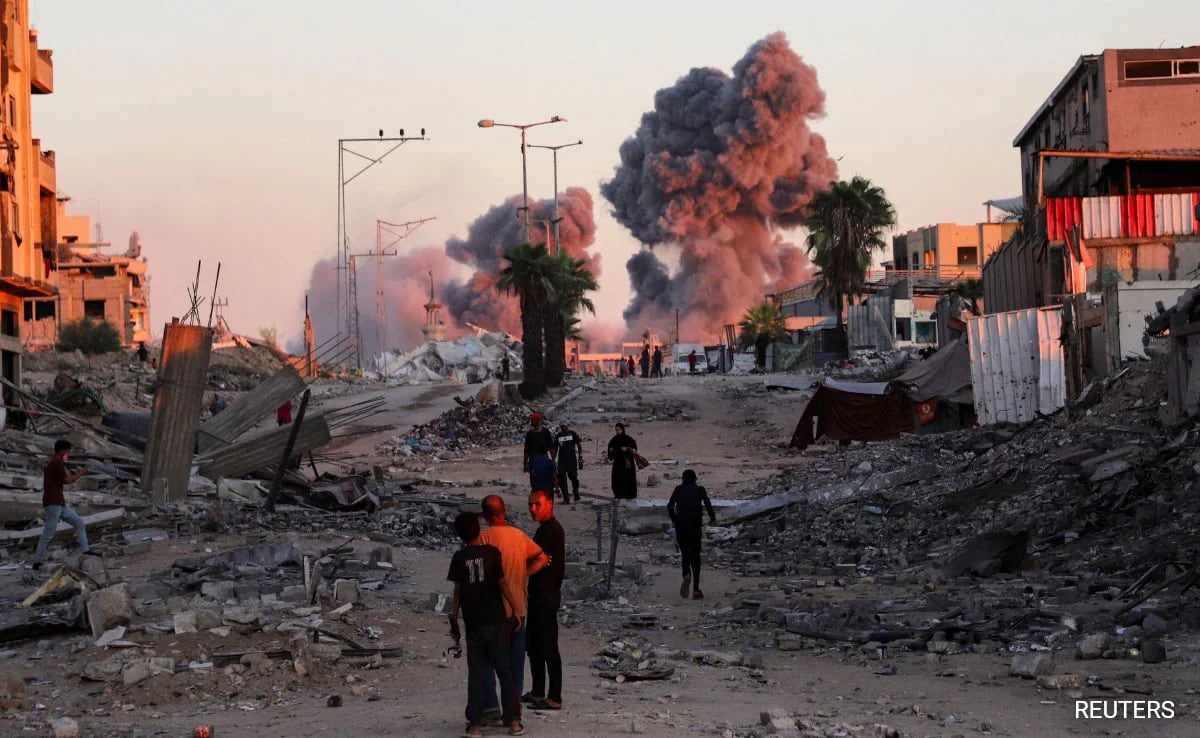
More than 67,800 Palestinians, predominantly civilians, have been killed since Israel initiated military operations in Gaza.
Following the ceasefire agreement between Israel and Hamas and Monday's release of the remaining living Gaza hostages in exchange for Palestinian prisoners, here is an overview of five critical aspects of the Gaza conflict.
Israel commenced its devastating air and ground campaign after the Palestinian militant group Hamas launched an unprecedented attack on October 7, 2023.
According to official figures from the Hamas-administered health ministry in Gaza, more than 67,800 Palestinians, mostly civilians, have lost their lives since the conflict began.
The Hamas attacks occurred at dawn on Saturday, October 7, 2023, during the Jewish festival of Simhat Torah, when hundreds of Hamas fighters infiltrated Israel from the Gaza Strip under a barrage of rocket fire.
An AFP count based on official Israeli figures indicates that 1,219 people, primarily civilians, were killed in the attacks targeting kibbutzim and a rave music festival.
The attackers captured 251 hostages and transported them to Gaza, with some already deceased.
Israel's domestic intelligence agency Shin Bet and the military later acknowledged their failure to prevent the attack. Shin Bet stated there was an overarching assessment that Hamas was more focused on "inciting violence" in the occupied West Bank.
The agency admitted that "a policy of quiet had enabled Hamas to undergo massive military buildup."
Regarding hostages, 141 captives, eight of whom were deceased, were freed during truces in November 2023 and early 2025. In exchange, Israel released more than 2,000 Palestinian prisoners.
Additional hostages were recovered, either alive or dead, by the Israeli military over subsequent months.
The remaining 20 living hostages were liberated on Monday, marking the initial phase of a ceasefire agreement facilitated by US President Donald Trump. The first bodies of the 28 deceased captives—including a soldier killed in 2014—began returning to Israel.
In exchange, Israel freed 1,968 Palestinians.
The humanitarian crisis resulting from Netanyahu's air and ground campaign, which aimed to destroy Hamas and retrieve all hostages, has claimed tens of thousands of Gazan civilian lives, sometimes entire families.
The United Nations reported unprecedented destruction in recent history, with 83 percent of buildings damaged or destroyed, including hospitals and schools.
Most of the Palestinian territory's two million residents have been forcibly displaced.
Humanitarian supplies have entered Gaza sporadically after Israeli authorities completely blocked aid for 11 weeks beginning in March 2025, partially easing restrictions in late May.
Following months of warnings, a UN agency declared a state of famine in part of the territory in August, which Israel denies.
In mid-September, UN investigators accused Israel of perpetrating a "genocide" in Gaza. Israel rejected these findings, alleging UN bias.
In 2024, the International Criminal Court issued arrest warrants for Netanyahu and former defense minister Yoav Gallant for alleged war crimes and crimes against humanity.
The conflict has spread throughout the region, with Hamas receiving support from Iran and its regional allies.
From the beginning, Lebanon's Hezbollah launched rockets at Israel from southern Lebanon.
Two months of open warfare between Israel and Hezbollah from September 2024 was followed by a fragile truce.
In solidarity with Palestinians, Yemen's Iran-backed Houthi rebels have targeted shipping near Yemen and conducted missile and drone attacks against Israel, which has responded with several strikes.
Israel engaged in a 12-day conflict with arch-enemy Iran in mid-June, attacking military and nuclear sites. Iran retaliated with drone and missile barrages targeting Israeli cities.
In 2024, Iran directly attacked Israel twice, also using drones and missiles, in response to a deadly assault on its Damascus consulate attributed to Israel and the killing of Hamas and Hezbollah leaders by Israel.
Regarding the ceasefire and hostage release, on September 16, Israel launched a major ground offensive to capture Gaza City, which it identified as one of Hamas's remaining strongholds.
US President Donald Trump proposed a 20-point plan to end the conflict on September 29.
The plan included a ceasefire, the release of hostages within 72 hours, a phased Israeli withdrawal from Gaza, Hamas disarmament, and the establishment of a transitional authority comprised of technocrats led by a committee under Trump's direction.
After four days of indirect negotiations in Egypt between Hamas and Israel through international mediators, including the United States, an agreement was reached on October 9.
A ceasefire took effect, prompting mass returns of displaced Palestinians to northern Gaza and initiating the process for hostage releases.
Trump and Egyptian President Abdel Fattah al-Sisi chaired a summit on Gaza in Sharm el-Sheikh on Monday, attended by more than two dozen world leaders including Palestinian Authority president Mahmoud Abbas and UN Secretary General Antonio Guterres, though Netanyahu and Hamas representatives were absent.
Source: https://www.ndtv.com/world-news/five-key-elements-of-israels-war-in-gaza-9450021