
Understanding the Afghanistan-Pakistan Border Conflict: Taliban Tensions and Trump's Intervention Offer
- Date & Time:
- |
- Views: 77
- |
- From: India News Bull
Islamabad:
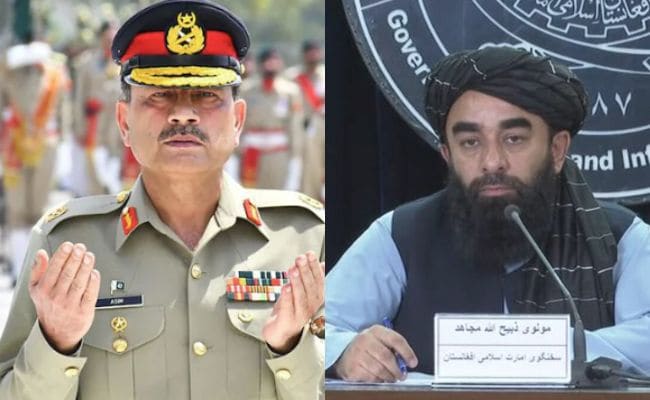
Border confrontations between Afghanistan and Pakistan over the weekend resulted in dozens of military casualties, marking the most severe clash between the two nations since the Taliban's ascension to power in Kabul in 2021, drawing the attention of US President Donald Trump. By Monday, the hostilities had ceased.
THE INCIDENT
On Saturday evening, Taliban forces launched attacks on Pakistani military installations along the entirety of the 2,600 km (1,600 miles) shared border, with Pakistani forces subsequently retaliating. The exchange involved firearms, artillery, and drone strikes continuing into early Sunday morning. Some intermittent fighting persisted throughout Sunday. Pakistan reported 23 soldiers killed while the Taliban acknowledged nine fatalities among their ranks, though both sides claimed to have inflicted substantially higher casualties on their opponent.
THE CATALYST
Pakistan conducted an airstrike on Afghanistan's capital Kabul last week, reportedly targeting the leader of the Pakistani Taliban militant group, according to Pakistani security officials. His survival remains unconfirmed. The Taliban stated that their Saturday attack was a direct response to the violation of Afghan airspace.
THE PAKISTANI TALIBAN EXPLAINED
In 2007, several jihadist organizations operating in northwest Pakistan from the Pashtun ethnic community formed Tehreek-e-Taliban Pakistan (TTP), commonly referred to as the Pakistani Taliban. This group was structured after the Afghan Taliban, an ethnic Pashtun organization that conquered Afghanistan in the 1990s before being displaced by a US-led invasion in 2001. However, the TTP adopted a more radical ideology influenced by al Qaeda.
During subsequent years, the TTP carried out attacks on markets, mosques, airports, military installations, and police stations while gaining territory - primarily along the Afghanistan border but also within Pakistan's interior, including the Swat Valley where they later shot schoolgirl Malala Yousafzai.
They fought alongside the Afghan Taliban in Afghanistan and provided sanctuary to Afghan fighters in Pakistan, establishing close ties. Pakistan launched multiple military operations against the TTP within its borders, achieving limited success.
In 2014, the TTP attacked a school in the northwestern city of Peshawar, killing over 130 children. This atrocity prompted a further military offensive that largely pushed the group into Afghanistan.
POST-TALIBAN TAKEOVER DEVELOPMENTS
Pakistan initially welcomed the Taliban's return to power in 2021, with then-Prime Minister Imran Khan declaring that Afghans had "broken the shackles of slavery." However, Islamabad soon discovered that the Taliban's allegiances lay elsewhere. Since then, TTP attacks in Pakistan have increased sharply.
Islamabad maintains that the TTP's leadership and many fighters are based in Afghanistan. Pakistan has repeatedly urged the Taliban administration to control the TTP, but Kabul denies the group's presence in the country.
Pakistan has been accused of supporting the two-decade Taliban insurgency in Afghanistan against the US-backed government - allegations it denies - but any influence over the group has dissipated. Now, Islamabad claims its patience has been exhausted.
INDIA'S ALLEGED INVOLVEMENT
Islamabad alleges that India is collaborating with Afghanistan to support the TTP against Pakistan. New Delhi rejects these claims. Afghan Foreign Minister Amir Khan Muttaqi is currently on an extended visit to India, during which New Delhi elevated relations between the two nations, further fueling concerns in Pakistan.
TRUMP'S REACTION
"I hear there's a war now going on between Pakistan and Afghanistan," Trump remarked on Sunday while en route to the Middle East. "I'll have to wait till I get back. You know, I'm doing another one, because I'm good at solving wars."
(This article has not been edited by NDTV staff and is auto-generated from a syndicated feed.)
Source: https://www.ndtv.com/world-news/afghanistan-pakistan-is-the-latest-conflict-trump-wants-to-solve-why-has-it-erupted-9447510