
Gaza Ceasefire Agreement: Critical Questions About Hostage Release, Military Withdrawal and Future Governance Remain Unresolved
- Date & Time:
- |
- Views: 62
- |
- From: India News Bull
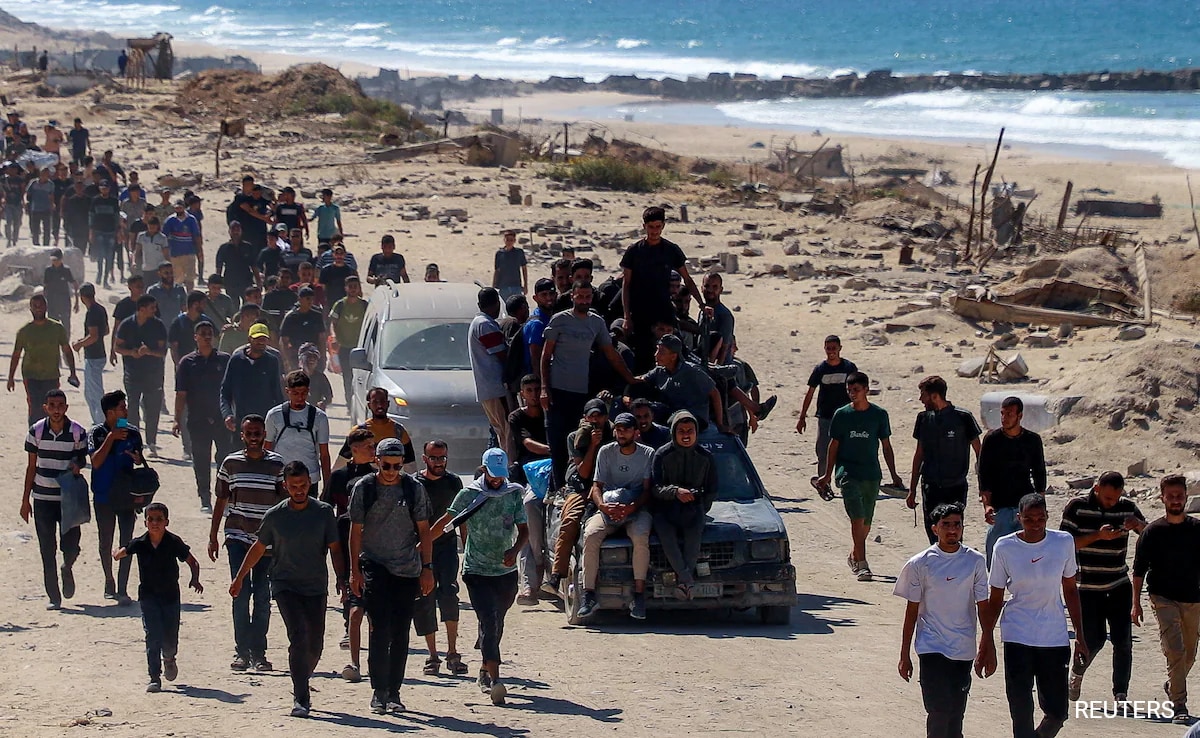
The initial phase of the agreement aims to release the remaining hostages within days.
Cairo:
A ceasefire between Israel and Hamas was holding in Gaza on Saturday after two years of conflict. However, questions remain about whether this agreement will lead to what US President Donald Trump described as "a Strong, Durable, and Everlasting Peace".
The agreement came about through pressure on both Israel and Hamas from the United States, Arab nations, and Turkey. The war has destroyed much of the Gaza Strip, claimed tens of thousands of Palestinian lives, ignited other regional conflicts, and increasingly isolated Israel internationally.
In the first phase of the deal, the remaining hostages are expected to be freed within days in exchange for the release of hundreds of Palestinians held in Israeli prisons.
Numerous questions persist regarding what happens next.
The conflict began when Hamas attacked Israel on October 7, 2023, killing approximately 1,200 people and taking 251 hostages.
Israel seeks to ensure Hamas disarmament, while Hamas demands complete Israeli troop withdrawal from Gaza and guarantees against renewed hostilities. Simultaneously, a post-war governance structure must be established to replace Hamas' rule. Without this, reconstruction efforts are unlikely to proceed, leaving Gaza's more than 2 million residents in continued hardship.
Any complications in resolving these interconnected issues could collapse the entire agreement and potentially lead Israel to resume its campaign to eliminate Hamas.
Here's what we know about the current agreement.
The ceasefire took effect at noon on Friday. The Israeli military confirmed it had withdrawn its forces to agreed positions inside Gaza, pulling back from much of Gaza City, southern Khan Younis, and other areas. However, troops remain in most of Rafah, towns in Gaza's far north, and along the wide strip bordering Israel.
Tens of thousands of displaced Palestinians are now returning to their homes in northern Gaza.
Israel has authorized the United Nations to begin delivering increased aid into Gaza starting Sunday, according to a UN official speaking anonymously about details not yet made public.
By Monday, Hamas is scheduled to begin releasing the remaining 48 hostages, approximately 20 of whom are believed to be alive. Israel will free around 2,000 Palestinians, including several hundred serving prison sentences and others captured from Gaza during the conflict.
Jared Kushner, Trump's son-in-law, told a rally in Israel on Saturday that they would celebrate on Monday.
Negotiations for subsequent phases would then begin.
Hamas had previously insisted it wouldn't release its final hostages until Israeli troops completely withdrew from Gaza. After agreeing to release them first, Hamas says it is relying on Trump's guarantees that the complete withdrawal will occur.
The timeline for this withdrawal—whether weeks, months, or years—remains unknown.
Trump's initial 20-point plan proposed that Israel maintain a narrow buffer zone within Gaza along their shared border. Israel has also indicated intentions to retain control of the Philadelphi corridor, a strip of land on Gaza's border with Egypt.
Israel is unlikely to surrender these areas unless Hamas disarms and an acceptable governing authority replaces them in Gaza.
Trump's plan also called for an Arab-led international security force to enter Gaza, alongside Palestinian police trained by Egypt and Jordan. Israeli forces would withdraw as these forces deploy.
Hamas has long refused to surrender its weapons, claiming the right to armed resistance until Israel's occupation of Palestinian territories ends.
For Israel, disarmament is a fundamental demand. Prime Minister Benjamin Netanyahu has repeatedly stated that Israel's campaign will continue until Hamas' military capabilities are dismantled, including its tunnel network throughout the territory.
However, there are indications that Hamas might agree to "decommission" its offensive weapons, transferring them to a joint Palestinian-Egyptian committee, according to Arab officials familiar with the negotiations who spoke anonymously.
Israel has stated it wants Gaza purged of Hamas influence. Yet it has also rejected giving any role to the West Bank-based Palestinian Authority or any arrangement potentially leading to a Palestinian state.
Hamas, which has governed Gaza since 2007, has agreed to relinquish control and hand over governance to a body of Palestinian technocrats.
What replaces Hamas remains uncertain.
Under Trump's plan, an international body would govern with primary authority, overseeing an administration of Palestinian technocrats handling day-to-day affairs. This body would also direct Gaza's reconstruction. The initial plan proposed former British Prime Minister Tony Blair to lead this body.
Hamas has not yet agreed to this arrangement, maintaining that Gaza's governance should be determined among Palestinians.
For much of the Israeli public, freeing the hostages held for two years has been the highest priority.
Among Gaza's Palestinians, there is relief that bombardment and ground operations may temporarily cease and aid may arrive. However, skepticism and concern persist about the duration of any fighting pause, whether hundreds of thousands can return to their homes, and whether Gaza—with cities largely in ruins—will ever be rebuilt.
Many Palestinians fear Israel will use any breakdown in talks as justification to resume its offensive. For months, Netanyahu and his hard-line allies have insisted on maintaining long-term direct security control over Gaza and have discussed encouraging its Palestinian population to leave "voluntarily." Many in Gaza believe this remains Israel's objective.
Pressure from the US and allies—if sustained after hostages are freed—could prevent Israel from relaunching full-scale war.
If Hamas and Israel cannot reach a final agreement or negotiations stall indefinitely, Gaza could enter a limbo state with Israeli troops holding portions while Hamas remains active. In such a scenario, Israel would likely block significant reconstruction, leaving Gaza's population confined to tent camps or shelters.
Source: https://www.ndtv.com/world-news/gaza-ceasefire-continues-but-many-unresolved-questions-remain-9439747