
IUCN Report: Over 48,000 Species Now Threatened with Extinction as Arctic Wildlife Faces Accelerating Climate Impact
- Date & Time:
- |
- Views: 67
- |
- From: India News Bull
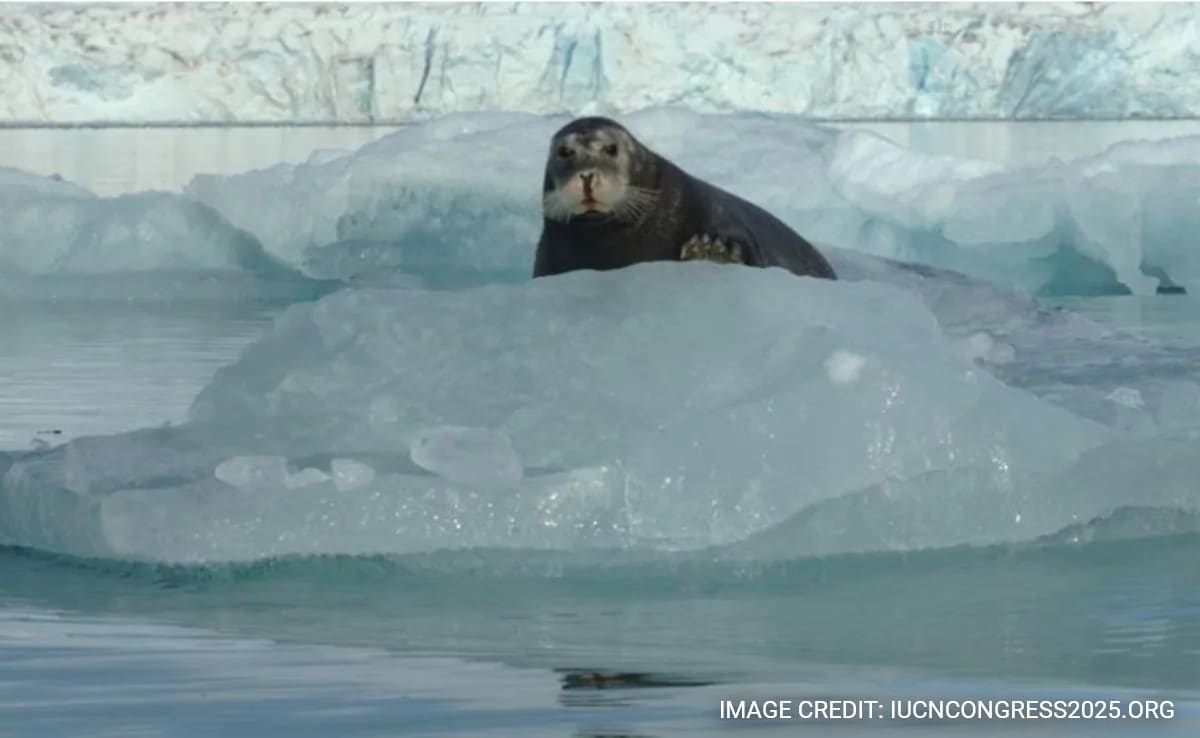
Arctic seals and avian populations are facing increasing threats of extinction, primarily due to climate change and anthropogenic activities, according to the latest assessment released by the International Union for Conservation of Nature (IUCN).
The updated endangered species list from IUCN indicates that habitat degradation from logging and agricultural expansion is severely impacting bird populations globally, while seal species are endangered predominantly by global warming and human-related activities such as maritime transport. The conservation body has elevated the status of the hooded seal from vulnerable to endangered, while bearded and harp seals have been reclassified as near threatened.
Grethel Aguilar, Director General of IUCN, emphasized at the World Conservation Congress in Abu Dhabi: "This timely global update highlights the ever increasing impact human activity is having on nature and the climate and the devastating effects this has."
According to the organization's statement, the IUCN red list now encompasses "172,620 species of which 48,646 are threatened with extinction."
The Arctic region is experiencing global warming at four times the rate of other areas worldwide, dramatically reducing sea ice coverage in both extent and duration. Seals that depend on ice formations are crucial components of Arctic food webs, serving as vital prey for other animals while consuming fish and invertebrates and recycling nutrients through the ecosystem.
Kit Kovacs, a researcher from the Norwegian Polar Institute, expressed alarm about conditions in the Svalbard archipelago located between Norway and the North Pole: "When I lived in the archipelago, just a couple of decades ago, we had five months of sea ice cover in areas that are now winter ice-free. It is really hard to express just how rapidly the Arctic is changing."
Beyond maritime mammals, the IUCN's comprehensive bird assessment—representing nine years of research by thousands of experts—revealed disturbing trends. Approximately 61 percent of bird species now show declining populations, a significant increase from 44 percent reported in 2016.
The study evaluated 11,185 bird species worldwide and determined that 1,256 (11.5 percent) are globally threatened. This year's update highlighted regions where tropical forest destruction increasingly threatens avian biodiversity.
In Madagascar, 14 bird species were newly classified as near threatened with an additional three labeled as vulnerable. West Africa saw five more bird species classified as near threatened, with one additional species in Central America receiving the same designation.
Amid these concerning developments, the report did include one conservation success story: the green turtle has been removed from endangered status following "decades of sustained conservation action" that helped its population recover by 28 percent since the 1970s.
Nicolas Pilcher, Executive Director of the Marine Research Foundation, cautioned that this achievement should inspire continued action rather than complacency: "Just because we have reached this great step in conservation isn't a reason to sit back and then become complacent."
Source: https://www.ndtv.com/world-news/new-iucn-red-list-reveals-48-646-species-now-at-risk-of-extinction-9432785