
Taiwan's New T-Dome Air Defense System: Strategic Response to Growing Regional Tensions
- Date & Time:
- |
- Views: 78
- |
- From: India News Bull
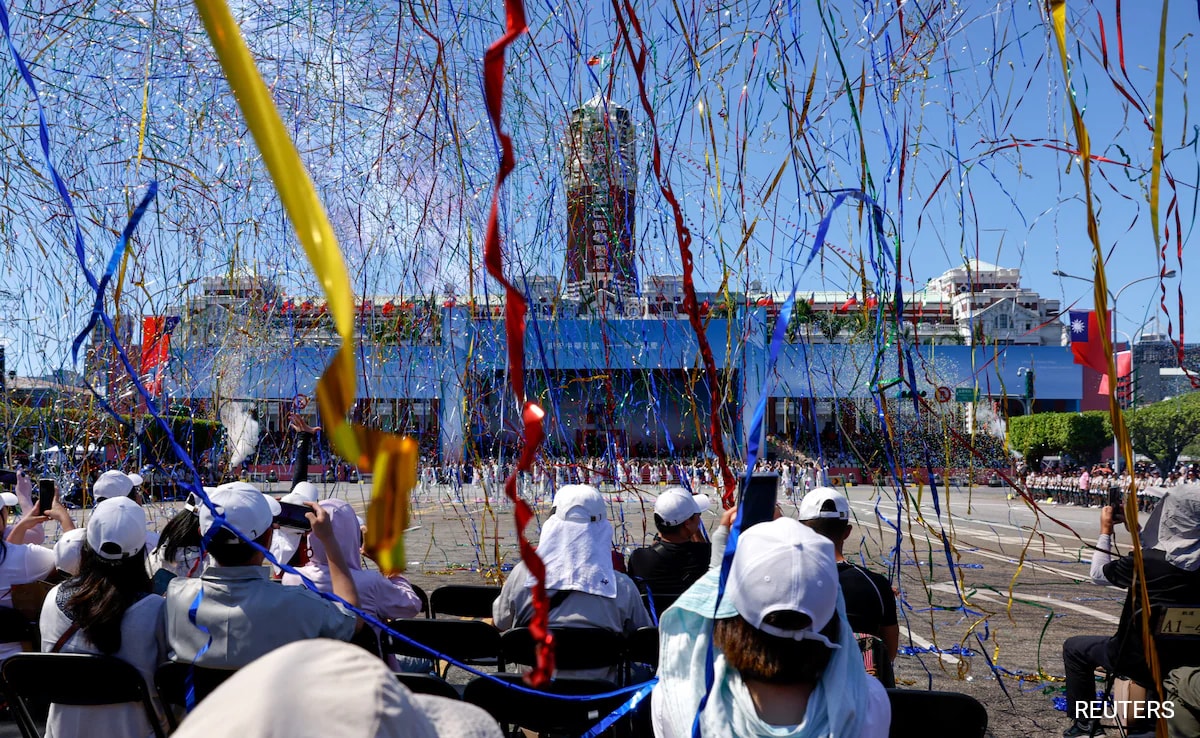
Taiwan is enhancing its defensive capabilities through increased military spending and modernization initiatives to address growing regional tensions.
President Lai Ching-te announced on Friday that Taiwan will construct a new multi-layered air defense system named "T-Dome" to protect against external threats. During his address, he urged China to abandon any intentions of using force to take control of the island.
Taiwan's democratic government has been experiencing escalating military and political pressure from China, which asserts sovereignty over the island despite strong opposition from Taipei's leadership.
The Taiwanese government is actively boosting defense expenditures and upgrading its military forces. However, Taiwan faces significant challenges when compared to China's substantially larger military arsenal, which includes advanced stealth fighters, aircraft carriers, and an extensive missile collection.
In his National Day speech, President Lai emphasized Taiwan's commitment to increasing defense funding, announcing plans to propose a special military budget before year-end. This move demonstrates the government's dedication to safeguarding the island's security.
"Our defense spending increases serve a clear purpose - they are essential for countering threats and driving the development of our domestic defense industries," he stated.
"We will expedite the development of the T-Dome system to establish a comprehensive air defense network featuring multi-layered protection, advanced detection capabilities, and effective interception mechanisms. This will create a protective shield for Taiwan, ensuring the safety of our citizens and their property," Lai declared to audience applause.
While this marked the first public mention of the "T-Dome" system, Reuters reported earlier that President Lai would unveil this project, with sources indicating it aims to function similarly to Israel's Iron Dome defense system.
A senior presidential office representative later informed reporters that funding for the "T-Dome" initiative would be incorporated into the budget proposal expected by December.
"We aim to construct a more comprehensive air defense network with superior interception capabilities," the official explained under condition of anonymity, noting that countries like the United States are developing comparable systems.
Taiwan's current air defense infrastructure primarily relies on U.S.-manufactured Patriot missiles and locally developed Sky Bow systems.
Last month, Taiwan showcased its newest air defense missile, named Chiang-Kong, at a major arms exhibition in Taipei. This system is engineered to intercept mid-range ballistic missiles and operate at altitudes exceeding those covered by Patriot systems.
In response to President Lai's speech, Chinese Foreign Ministry spokesperson Guo Jiakun warned that "pursuing independence through force" would only lead Taiwan into conflict.
"He promotes separatist rhetoric advocating Taiwanese independence," Guo told Beijing reporters. "This further reveals his persistent character as an instigator of trouble, danger, and conflict."
China, which conducted military exercises around Taiwan following Lai's speech last year, has labeled him a "separatist" and rejected his offers for dialogue.
President Lai urged China to renounce the use of force or coercion to alter the status quo across the Taiwan Strait, affirming Taiwan's commitment to maintaining peace and stability in the region.
"Reflecting on World War Two reminds us of the immense suffering caused by war and invasion. We must learn from these historical lessons to ensure such tragedies never repeat themselves," Lai stated.
A U.S. administration official expressed support for Lai's commitment to increase defense spending and his comments on maintaining regional stability.
"We won't speculate about Beijing's potential reactions. However, our general position is that routine speeches should not be used as justification for coercive or military actions," the official commented.
Taiwan's National Day commemorates the 1911 uprising that led to the collapse of China's final imperial dynasty and established the Republic of China.
Following their defeat in the civil war against Mao Zedong's communist forces in 1949, the Republican government relocated to Taiwan, which continues to use Republic of China as its official name.
Source: https://www.ndtv.com/world-news/taiwan-unveils-t-dome-air-defence-system-to-counter-china-threat-9430677