
Discovering Nature's Solution: How Chile's Atacama Desert Flower Could Transform Drought-Resistant Agriculture
- Date & Time:
- |
- Views: 71
- |
- From: India News Bull
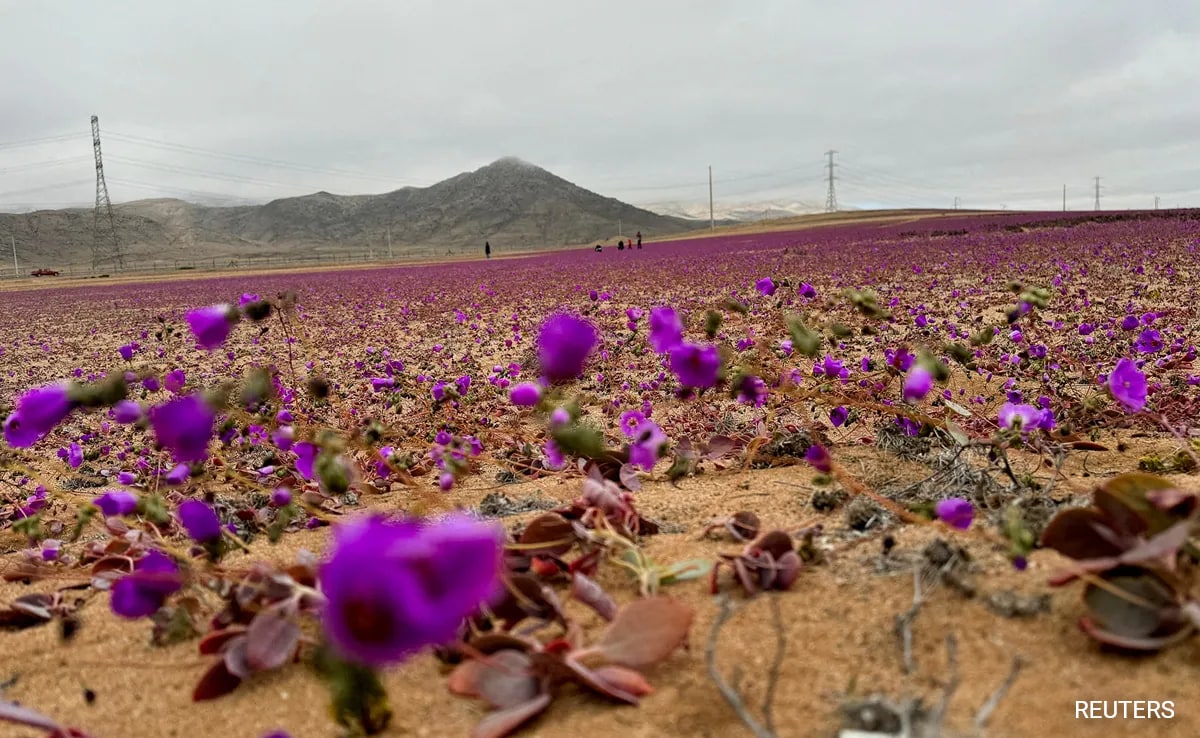
The resilient flower displays its vibrant colors during infrequent rainfall events in the Atacama desert.
Atacama:
Scientists in Chile's Atacama, recognized as the world's driest desert, are conducting research on a remarkable flower that may contain genetic information crucial for developing crops capable of surviving increasingly severe drought conditions resulting from climate change.
The Cistanthe longiscapa, commonly referred to as "pata de guanaco" by locals, blossoms during rare precipitation events in the Atacama desert, creating a spectacular colorful landscape known as the flowering desert phenomenon.
Researchers at Chile's Andres Bello University are now performing genetic sequencing experiments to identify the specific traits enabling this fuchsia-colored flower to endure water scarcity and extreme temperature fluctuations in one of Earth's most challenging environments. Their research aims to transfer these drought-resistant characteristics to agricultural crops.
"Climate change is making drought an increasingly serious threat to agriculture globally and in our country," explained Ariel Orellana, who directs the university's Plant Biotechnology Center. "We urgently need to develop plants capable of tolerating these drought conditions."
Chile faces escalating water challenges, with the World Resources Institute ranking it among the most water-stressed nations globally. Research predicts extreme drought conditions will affect Chile's fertile central valley by 2050 - a region critical for agricultural exports including wine, fruit, and livestock.
According to Orellana, what makes the pata de guanaco truly exceptional is its ability to switch between different photosynthesis types, making it an ideal model plant for studying survival in extreme environments.
When experiencing stress from drought, intense sunlight, or high salinity, the plant activates a water-conserving mechanism known as CAM photosynthesis. When environmental conditions improve, it switches back to the more common C3 photosynthesis process.
"This remarkable flexibility makes it an excellent model for investigating how genes control these adaptive changes," Orellana noted.
Cesar Pizarro Gacitua, who heads biodiversity conservation in the Atacama region for Chile's CONAF forestry agency, emphasizes the need for additional collaborative research to fully understand the plant's remarkable capabilities.
"We still need to discover how it produces sufficient food and performs photosynthesis to survive such extreme environmental conditions," Pizarro stated.
Source: https://www.ndtv.com/world-news/chiles-atacama-desert-flower-could-hold-key-to-drought-tolerant-crops-9417928