
Priceless Archaeological Artefacts In Gaza Saved In Frantic Rescue
With an Israeli airstrike looming, aid workers carried out a last-minute rescue mission to salvage thousands of priceless artifacts from a Gaza warehouse before the building was flattened.
- Date & Time:
- |
- Views: 87
- |
- From: India News Bull
Jerusalem:
A desperate nine-hour negotiation with Israeli forces. A race against time to secure scarce transportation in war-torn Gaza. Six hours of hasty packing, carefully loading fragile items onto open trucks.
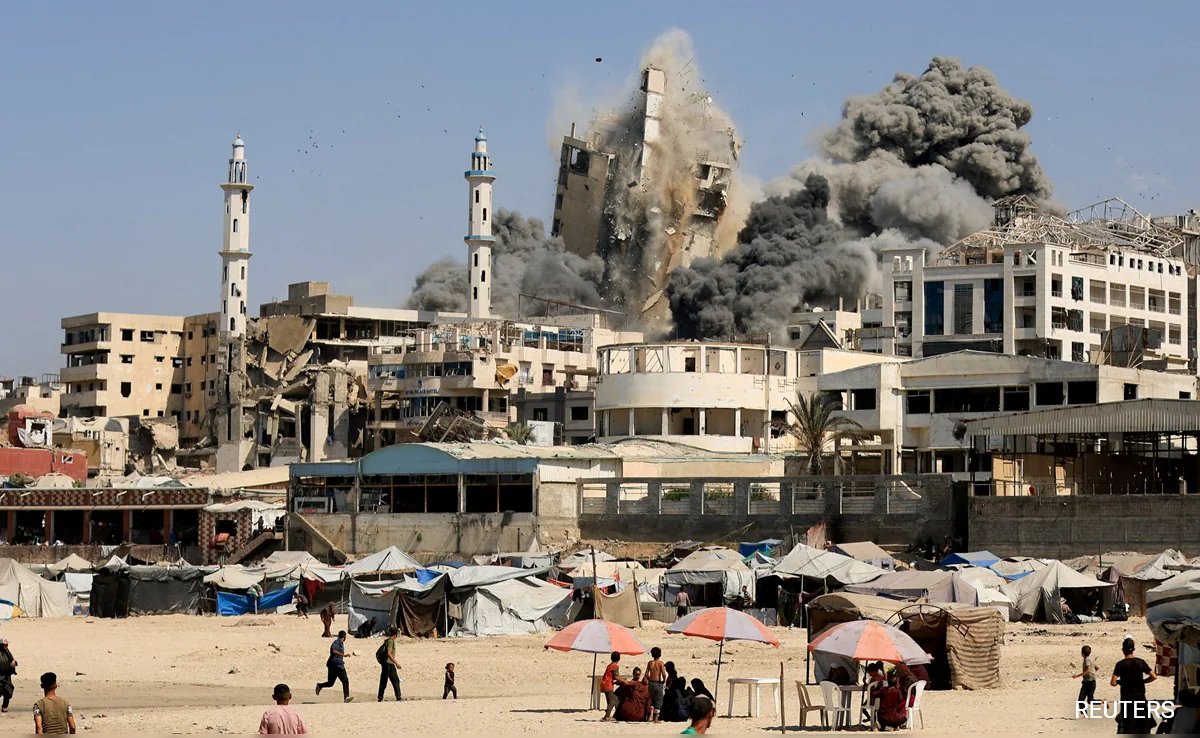
In the shadow of an impending Israeli airstrike, humanitarian workers conducted an emergency operation to rescue thousands of irreplaceable archaeological artifacts from a Gaza warehouse before the structure was destroyed.
The warehouse contained archaeological treasures from over 25 years of excavations, including items from a 4th-century Byzantine monastery recognized as a UNESCO World Heritage Site, and some of the earliest evidence of Christianity in Gaza. Israeli military officials had identified the building as housing Hamas intelligence facilities and planned to demolish it as part of their expanded military campaign in Gaza City.
"This isn't merely about Palestinian or Christian heritage, but about globally significant cultural treasures protected by UNESCO," said Kevin Charbel, emergency field coordinator for Première Urgence Internationale (PUI), a humanitarian organization operating in Gaza since 2009. PUI focuses on health services while also working to safeguard Gaza's cultural heritage.
COGAT, Israel's defense body overseeing humanitarian aid, alerted PUI about the planned demolition last Wednesday. The warning came through a notification system that allows international NGOs to inform Israeli military about sensitive sites like schools, hospitals, or humanitarian aid warehouses.
Charbel, temporarily stationed in Gaza City on humanitarian rotation, spent nine intense hours negotiating with Israeli authorities for additional time to relocate the artifacts to safety. However, the challenge extended beyond delaying military action. With Israel expanding operations in Gaza City, other organizations were in disarray, making it nearly impossible to find transportation for the artifacts on such short notice.
"With just five minutes before I had to accept these treasures would be destroyed before our eyes, another organization offered transportation," Charbel explained. PUI collaborated with the Latin Patriarchate of Jerusalem to move the artifacts to a secure location in Gaza City, which remains undisclosed for security reasons.
The French Biblical and Archaeological School of Jerusalem (EBAF), a respected archaeological institution that oversaw the Dead Sea Scrolls excavation in Israel, was responsible for approximately 80 square meters (860 sq ft) of archaeological artifacts stored in Gaza City's Al-Kawthar high-rise building. PUI provided security for the site.
Gaza contains dozens of ancient archaeological sites, including temples, monasteries, palaces, churches, mosques, and mosaics. Many have already been lost to urban development and looting. UNESCO continues efforts to preserve the remaining sites, some dating back 6,000 years, when Gaza served as a crucial stop on trade routes between Egypt and the Levant during the early development of urban societies.
The rescued artifacts include ceramic vessels, mosaics, coins, painted plasterwork, human and animal remains, and items excavated from Saint Hilarion Monastery, recognized by UNESCO as one of the oldest examples of Christian monastic communities in the Middle East.
Beginning at dawn on Thursday, workers rushed to load five flatbed trucks with as many delicate artifacts as possible within six hours. Carefully catalogued and stored artifacts were hastily packed into cardboard boxes, with nearly 2,000-year-old pottery temporarily resting on sandy ground.
Charbel observed that transporting such ancient artifacts typically requires extensive preparation and specialized protection for delicate items—precautions impossible under these circumstances. Israeli military regulations prohibit using enclosed container trucks, exposing the artifacts to additional risks. Several items broke during transport, and others had to be abandoned. Israel destroyed the building on Sunday, claiming Hamas had established observation posts and intelligence infrastructure within it.
In the past week, Israel has demolished multiple high-rise buildings in Gaza City, issuing evacuation warnings to civilians ahead of the ground offensive that began Tuesday morning.
As Israel's ground operation intensifies, the artifacts are being held at another location in Gaza City. However, they remain outdoors, exposed to the elements and in serious danger as military strikes increase.
UNESCO reports that Israel has damaged at least 110 cultural sites across Gaza since October 2023, including 13 religious sites, 77 buildings of historical or artistic significance, one museum, and seven archaeological sites.
During the archaeological rescue operation, Charbel recalled grappling with profound ethical questions. Was it justifiable to allocate scarce resources like fuel and transportation, risking lives under constant threat of bombardment, to save historical objects when the humanitarian situation is so desperate? Charbel worried about dedicating time to negotiating for archaeological artifacts when discussions about essential water, food, and medicine were equally urgent.
"Nevertheless, we committed to this mission because these artifacts hold immense value for world history and Palestinian heritage," Charbel explained. "Destroying early examples of Christian history in Palestine would erase it permanently."