
Divers Recover Artefacts From Titanic's Sister Ship Britannic
Divers have recovered artifacts from the Titanic's sister ship, the Britannic, for the first time since the ocean liner sank in the Aegean Sea more than a century ago after striking a mine during World War I.
- Date & Time:
- |
- Views: 59
- |
- From: India News Bull
Athens:
For the first time since its sinking over a century ago, artifacts have been retrieved from the Britannic, sister vessel to the Titanic, which lies in the depths of the Aegean Sea after hitting a mine during World War I.
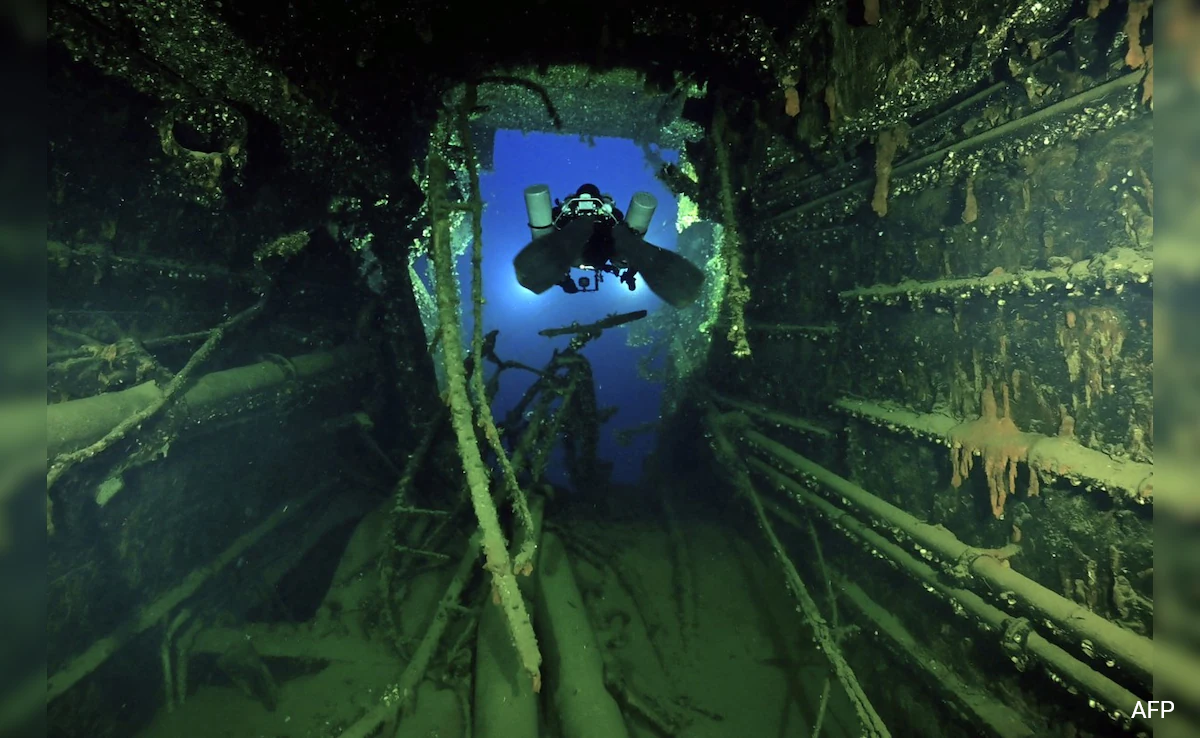
According to a Monday statement from Greece's Culture Ministry, a specialized team of eleven deep-sea divers conducted a week-long recovery operation in May, successfully bringing up significant items including the ship's bell and a port-side navigation light.
Originally constructed in 1914 by the White Star Line as a luxury passenger liner, the Britannic was later converted to serve as a hospital ship during World War I. The vessel was en route to Lemnos island when it struck a mine and sank near the island of Kea, approximately 75 kilometers (45 miles) southeast of Athens on November 21, 1916.
As the largest hospital ship of its era, the Britannic sank in under an hour. The disaster claimed thirty lives from the more than 1,060 people aboard when some lifeboats were caught in the still-rotating propellers of the sinking vessel.
The shipwreck rests 120 meters (nearly 400 feet) below the surface, limiting access to technical divers only. The recovery team utilized closed-circuit rebreather equipment during the operation, which was organized by British historian Simon Mills, who established the Britannic Foundation, as noted by the Culture Ministry.
The ministry reported that divers faced challenging conditions at the wreck site due to strong currents and poor visibility. The recovered artifacts represent both the ship's functional purpose and its luxurious design, including the lookout bell, navigation lamp, silver-plated first-class serving trays, ceramic tiles from the onboard Turkish bath, a passenger's binoculars, and a porcelain sink from the second-class accommodations.
These historical items are now undergoing preservation work in Athens and will eventually be displayed in the permanent collection of the forthcoming Museum of Underwater Antiquities being developed at Piraeus port. The museum will feature a dedicated World War I section with the Britannic artifacts as a highlight of the exhibition.