
Trump's H-1B Visa Crackdown Reshapes Indian Marriage Preferences and Immigration Dreams
- Date & Time:
- |
- Views: 74
- |
- From: India News Bull
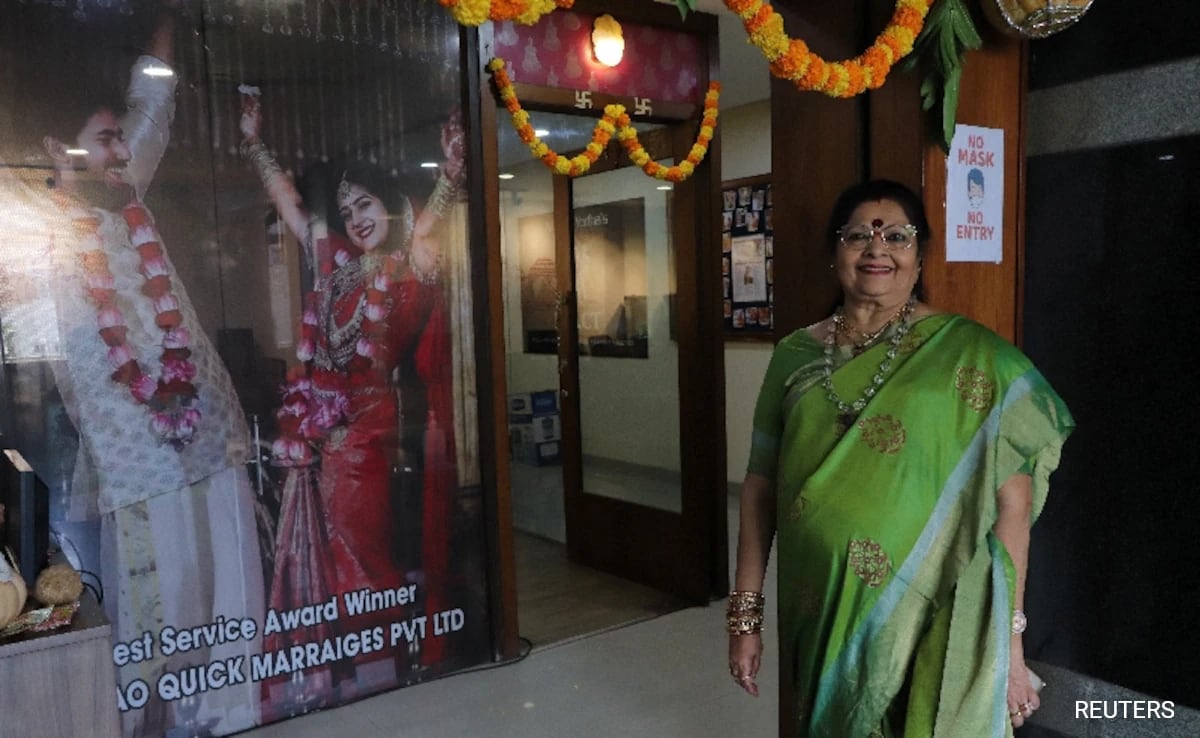
Vanaja Rao, owner of a matchmaking agency, poses for a picture in front of her office, in Hyderabad
Sidhi Sharma, a 19-year-old medical student from Haryana, once aspired to marry an Indian citizen with a prestigious job in the United States. However, she abandoned this dream after witnessing headlines about President Donald Trump's immigration restrictions.
"I had always dreamed of settling in the US after marriage," she confessed, without elaborating further. "Trump has shut the door for me."
Stricter US immigration policies, particularly regarding H-1B skilled-worker visas, are causing Indian families to reconsider marrying their children to US-based Indian citizens. The fear that these potential partners might lose their employment or immigration status has created hesitation, according to matchmakers, academics, and marriage prospects themselves.
No official government data exists regarding marriages between Indian citizens living domestically and those overseas.
"Immigration policies may be written in Washington, but its ripple effects are seen at dinner tables of Indian families when they're talking about marriages," explained Anuradha Gupta, founder of the bespoke matchmaking service 'Vows For Eternity'.
In India, marriages traditionally involve family-driven decisions, with relatives and matchmaking agencies facilitating "arranged" matches. While love marriages are becoming more common, especially in urban areas, families typically maintain supportive roles in the process.
The United States hosts the world's largest overseas Indian population, according to Indian government statistics, including approximately 2.1 million Non-Resident Indians (NRIs), who have traditionally been highly sought-after marriage candidates.
Since returning to office in January, Trump has implemented a comprehensive immigration crackdown, including efforts to restrict legal pathways to residency. His overhaul of the H-1B visa program represents the most significant effort to reshape temporary work visas, particularly affecting Indians, who accounted for 71 percent of these visas last year.
For many Indians, marrying a compatriot residing in America represented a path to financial security and improved quality of life. Families appreciated the tradition of these individuals sending money home and providing support to extended family members.
Approximately 75 percent of H-1B visas granted to Indian citizens in 2024 were awarded to men, according to US Citizenship and Immigration Services data.
"Up until last year, there was a lot of demand and craze for NRI suitors and men settled abroad," said Vanaja Rao, managing director of the Vanaja Rao group of companies, widely known as Vanaja Rao quick marriages.
"We've started to see a slowdown ever since Trump took over, and it intensified in the last six months. And of course, after the recent chaos and curbs on H-1B, there's more panic," added Rao, who has nearly five decades of experience in the matchmaking industry.
In some instances, families are postponing weddings altogether.
"There is a lot of uncertainty in terms of immigration in general and not just H-1B, it has only escalated in the past year," revealed a 26-year-old Indian based in Atlanta, Georgia, speaking anonymously due to the sensitivity of the issue.
He knows of three weddings that have been delayed as a direct consequence of Trump's policy changes.
"Every time there has been speculation about stopping or tightening the restrictions around H-1B visas and skilled-worker migration, there has always been a corresponding impact on the marriage market," observed Harshita Yalamarty, an assistant professor at Toronto Metropolitan University.
She referenced Trump's first administration when he also targeted H-1B visas and proposed prohibiting spouses from working. His successor, Joe Biden, subsequently withdrew this policy.
Trump's visa reforms have also prompted numerous Indian students to reconsider the 'American Dream'. According to US Immigration and Customs Enforcement data, approximately 422,335 Indian students were studying in the US in 2024.
Some matchmaking services are adapting to these new circumstances.
Premium matchmaking platform Knot.dating introduced a 'US visa filter' on its app while expanding into southern India. The company's cofounder and CEO Jasveer Singh noted that many families in this region were particularly interested in NRI matches.
"Families want to see the visa status of the suitor or match from abroad before proceeding further," Singh explained.
Since launching this feature in September, about 1,000 NRIs have registered with the platform, with 60 percent holding H-1B visas and the remainder possessing green cards or other visa types. Of these 1,000 registrants, 81 percent were men.
Knot.dating requires male users to earn at least 5 million rupees ($56,332.32) annually but imposes no income criteria for women.
That figure is "astronomically higher than what a fresh graduate or professional typically earns in India, that's equivalent to many years' worth of income here," noted KP Singh of overseas education consultancy IMFS.
"This US salary offers a level of financial security many here can only dream of."
As the American Dream becomes increasingly elusive, some Indian clients are shifting their focus toward Canada, the UK, Europe, and the Middle East for potential matches, according to Nikita Anand, founder of matchmaking agency Wedding Tales Matrimony.
"When families consider marriage, factors like mobility and security are deeply embedded in their decision-making. It's about long-term stability, not just for themselves but for future generations as well," emphasized Vows For Eternity's Gupta.
Source: https://www.ndtv.com/world-news/us-visa-no-longer-a-passport-to-love-for-indians-after-trump-h-1b-squeeze-9409432