
Russia Shows Off Military Might In Drills, And Raises Tensions With NATO
Moscow showcased its conventional and nuclear military might in long-planned exercises with Belarus, as it warns the West against sending foreign troops into Ukraine.
- Date & Time:
- |
- Views: 82
- |
- From: India News Bull
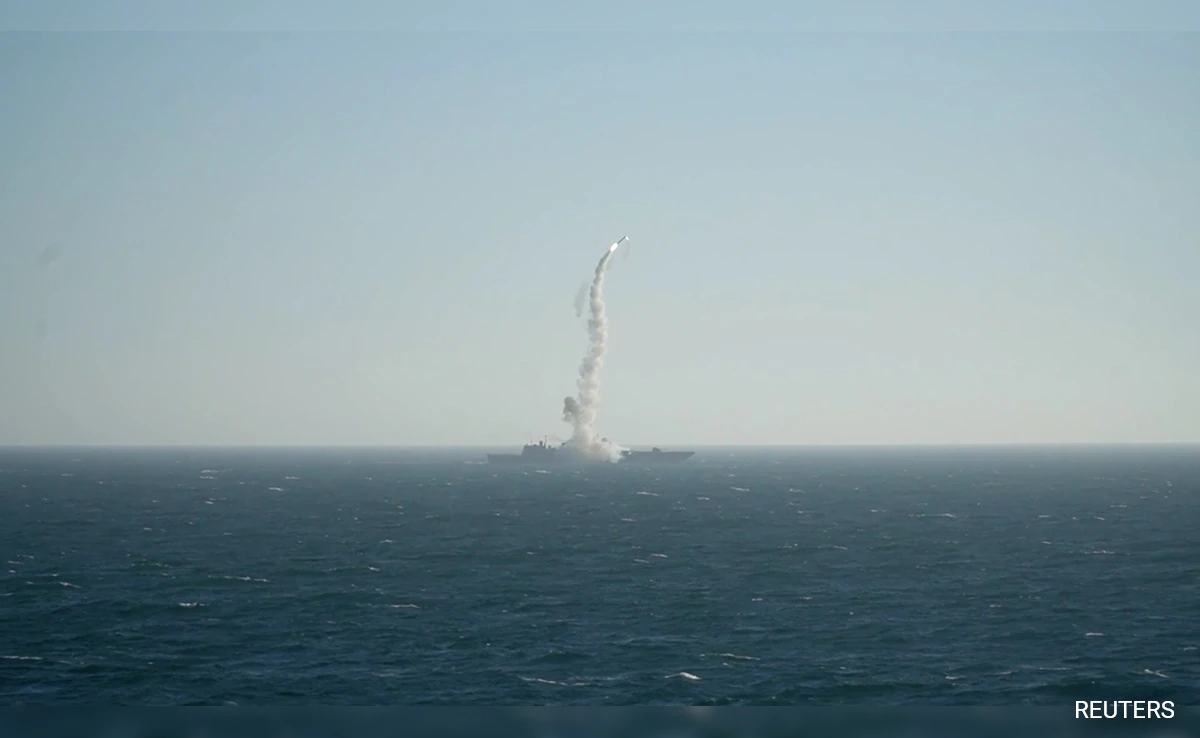
Russian frigate Admiral Golovko of the Northern Fleet launches a hypersonic missile during strategic military exercises.
Polish officials report a deliberate provocation as a cluster of Russian drones penetrates their airspace.
In response, NATO strengthens air defense systems along its eastern border regions.
Russia displays both conventional and nuclear military capabilities in pre-planned drills with Belarus, while cautioning Western nations against deploying troops to Ukraine.
These developments—all occurring since the unsuccessful U.S.-Russia summit in Alaska aimed at bringing peace to Ukraine—have further escalated tensions across eastern Europe.
When President Putin initiated the full-scale invasion of Ukraine in February 2022, it followed shortly after joint military exercises with Belarus. The current extensive drills, named "Zapad 2025" or "West 2025," have created anxiety among NATO members Poland, Latvia, and Lithuania that share borders with Belarus.
The exercises, concluding Tuesday, have featured nuclear-capable bombers and naval vessels, alongside thousands of military personnel and hundreds of combat vehicles simulating coordinated responses to enemy attacks—including scenarios involving nuclear weapons deployment and options utilizing Russia's new Oreshnik intermediate range ballistic missile.
NATO Secretary-General Mark Rutte highlighted Moscow's hypersonic missile capabilities, emphasizing that countries like Spain or Britain face similar threats as Russia's immediate neighbors Estonia or Lithuania.
"Let's agree that within this alliance of 32 countries, we all live on the eastern flank," Rutte stated in Brussels.
Last year, Putin announced revisions to Moscow's nuclear doctrine, stating that any conventional attack on Russia supported by a nuclear power would be considered a joint assault on his nation. This threat clearly aims to discourage Western powers from allowing Ukraine to conduct long-range strikes against Russian territory and appears to significantly lower the threshold for potential deployment of Russia's nuclear arsenal.
The doctrine also extends Russia's nuclear umbrella over Belarus. Russia claims to have deployed tactical nuclear weapons to Belarus and plans to station Oreshnik missiles there later this year.
The Zapad 2025 exercises occur amid Russia's ongoing 3½-year war in Ukraine, which continues despite President Trump's push for peace negotiations and his August 15 meeting with Putin in Alaska.
On September 10, just two days before the military drills began, approximately 20 Russian drones entered Polish airspace. While Moscow denied targeting Poland and Belarusian officials claimed the drones were thrown off course by Ukrainian jamming, Polish Prime Minister Donald Tusk described it as a "provocation" that "brings us all closer to open conflict, closer than ever since World War II."
Rutte characterized Moscow's actions as "reckless" while announcing a new "Eastern Sentry" initiative to enhance alliance air defenses in the region. He also noted violations of airspace in "Romania, Estonia, Latvia and Lithuania" by drones.
When Russia first deployed the Oreshnik against Ukraine in November 2024, Putin warned Western nations that similar strikes could target Kyiv's allies if they permitted Ukraine to conduct long-range strikes inside Russia.
Putin has touted the Oreshnik's capabilities, claiming its multiple warheads descend at speeds up to Mach 10, making interception impossible, and that several conventional strikes could produce devastation comparable to a nuclear attack. Russian state media boasted the missile could reach a Polish air base in just 11 minutes and NATO headquarters in Brussels in 17 minutes. The missile's payload—nuclear or conventional—cannot be identified before impact.
Putin confirmed last month that Russia has begun Oreshnik production and reaffirmed plans for deployment to Belarus later this year.
Belarus' deputy defense minister Pavel Muraveiko confirmed Tuesday that the exercises included planning for tactical nuclear weapons use and Oreshnik deployment, without providing further details.
Unlike city-destroying intercontinental ballistic missiles, tactical nuclear weapons have shorter ranges designed for battlefield deployment against troop formations.
Russia's Defense Ministry released footage of nuclear-capable bombers conducting training missions during exercises spanning from Belarus—which borders NATO members Poland, Latvia and Lithuania—to Arctic regions, where naval forces practiced launching nuclear-capable missiles, including the hypersonic Zircon.
Belarusian President Alexander Lukashenko stated in December that his country hosts several dozen Russian tactical nuclear weapons.
The updated Russian nuclear doctrine indicates Moscow might employ nuclear weapons "in the event of aggression" against Russia and Belarus using conventional weapons that threaten "their sovereignty and/or territorial integrity."
Russian and Belarusian officials have made inconsistent statements regarding weapon control. Initially, Lukashenko claimed Belarus would maintain control, but Russian military officials emphasized their continued authority over the weapons.
When signing a December security agreement with Lukashenko, Putin indicated that while Russia maintains control of Oreshnik missiles, Moscow would permit Minsk to select targets. He noted that missiles used against targets nearer to Belarus could carry substantially heavier payloads.
Deploying tactical nuclear weapons to Belarus enables Russian aircraft and missiles to reach potential Ukrainian targets more rapidly if Moscow decides to use them. It also extends Russia's capability to target several NATO members in eastern and central Europe.
"The weapons' deployment closer to the borders with the West sends a signal even if there are no plans to use it," said Andrey Baklitskiy, senior researcher at the United Nations Institute for Disarmament Research.
Alexander Alesin, a military analyst based in Minsk, stated that Russian tactical nuclear weapons in Belarus have transformed the country into a "balcony looming over the West" threatening the Baltic states and Poland, as well as Ukraine.
The planned Oreshnik deployment will pose a threat to all of Europe, reminiscent of Cold War scenarios when Belarus served as a forward base for Soviet nuclear weapons targeting Europe, according to Alesin.
During the Cold War, Belarus hosted more than half the Soviet intermediate-range missile arsenal, concealed within its dense forests. Such land-based weapons with ranges between 500 to 5,500 kilometers (310 to 3,400 miles) were prohibited under the 1987 Intermediate-range Nuclear Forces Treaty, which was terminated in 2019.
"Belarus served as a nuclear fortress during the Soviet times," Alesin noted.
The Soviet Union constructed approximately 100 reinforced storage facilities for nuclear weapons in Belarus, some of which have been modernized to house Russian nuclear weapons, he explained.
"If they restored several dozen storage sites and are actually keeping nuclear warheads in just two or three, the potential enemy will have to guess where they are," Alesin added.