
Doha Fires Missile of Condemnation at Israel, But No Consequences
At the much-anticipated Arab and Islamic Summit in Qatar, leaders from across the Muslim world gathered amid soaring outrage over Israel's war on Gaza.
- Date & Time:
- |
- Views: 96
- |
- From: India News Bull
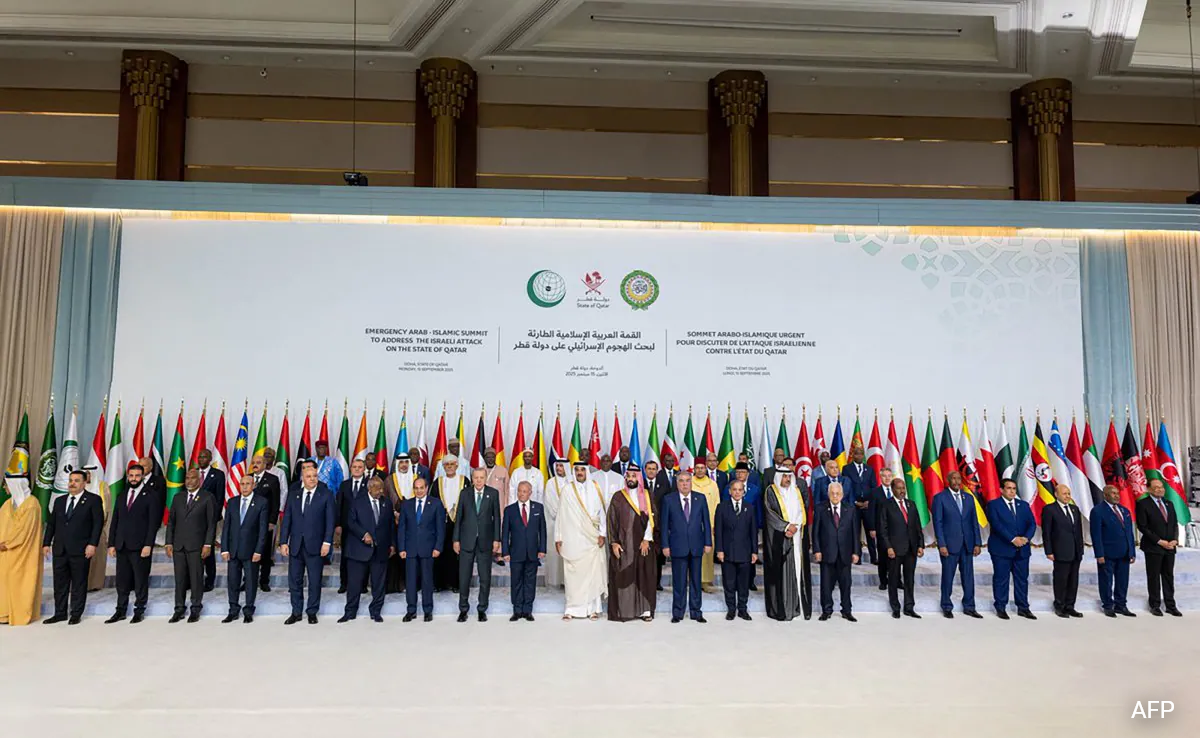
Group photograph from the Arab and Islamic Summit held in Qatar
The highly anticipated Arab and Islamic Summit convened in Qatar against a backdrop of widespread anger over Israel's military campaign in Gaza. Despite passionate rhetoric, the gathering failed to implement any concrete punitive actions against Tel Aviv, leading to widespread disappointment across Muslim nations.
While leaders strongly condemned Israel's recent strike against Hamas officials in Doha, they ultimately agreed only to limited measures in response.
Rhetoric Without Substantial ActionThe Monday gathering aimed to showcase a unified stance against Israel's operations in Gaza, yet the concluding declaration merely urged nations to "implement all possible legal and effective measures to stop Israel from continuing its actions against the Palestinian people."
Though the summit's joint statement delivered formal diplomatic censure and demands for international inquiries, it notably lacked any concrete measures such as sanctions, oil embargoes, or diplomatic downgrades - a significant omission given Gaza's extensive devastation.
Abraham Accords Partners Maintain ReserveSignificantly, the UAE, Bahrain, and Morocco - countries that normalized relations with Israel under the Abraham Accords - avoided making substantial statements against Israeli actions. Their restraint was particularly noticeable as Israel intensifies military operations in Palestinian territories.
Coincidentally, the summit fell on the fifth anniversary of the Abraham Accords signing by Bahrain and the UAE, which established their formal diplomatic recognition of Israel.
Saudi Crown Prince's Notable QuietnessCrown Prince Mohammed bin Salman of Saudi Arabia attended the summit but remarkably did not deliver any address - a surprising development given Saudi Arabia's regional influence and increasing calls for decisive action. Analysts interpreted his absence from the speakers' roster as indicating Saudi caution, potentially influenced by broader geopolitical considerations.
Dr. Rashad Mohammed Al-Alimi, Chairman of Yemen's Presidential Leadership Council, advocated for a comprehensive Arab and Islamic framework for joint action and collective measures against Israeli expansionist policies and regional dominance aspirations. He also criticized the Houthis, noting, "Today's geopolitical challenges demonstrate that expansionist regional states and armed groups in the region represent two sides of the same coin."
Continuing TrendUltimately, the Doha Summit followed a familiar trajectory: strong verbal condemnation without meaningful consequences for Israel. Many observers now question whether Arab world unity is more symbolic than substantive - especially as Palestinian suffering continues with no ceasefire on the horizon.