
France's Political Crisis Deepens: Why PM Lecornu's New Government Faces Immediate Challenges
- Date & Time:
- |
- Views: 58
- |
- From: India News Bull
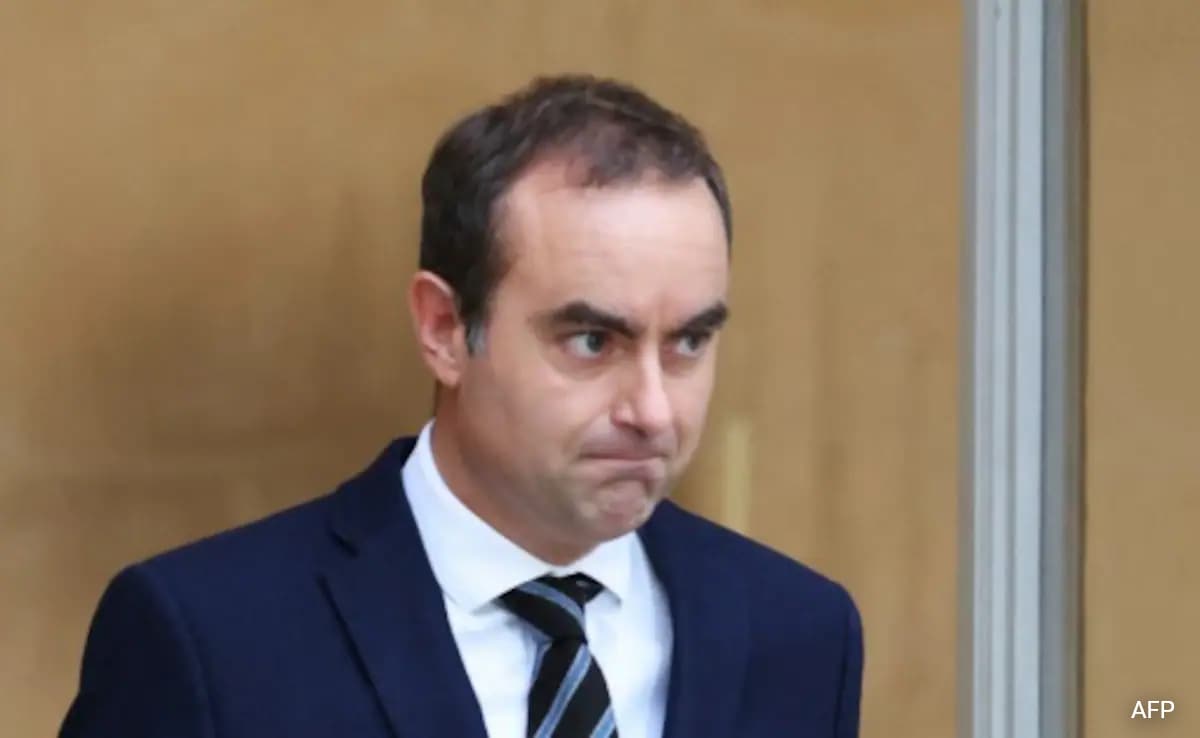
The immediate challenge for Lecornu, a centrist and trusted Macron ally, is maintaining his position as Prime Minister.
Paris:
France's newly appointed Prime Minister Sebastien Lecornu announced his government on Sunday, bringing former finance minister Bruno Le Maire back to serve in the defense ministry. Le Maire will oversee French military assistance to Ukraine and address European security concerns related to Russia.
Key positions in the cabinet, as announced by President Emmanuel Macron's office, remain largely unchanged. Conservative Bruno Retailleau continues as interior minister overseeing policing and internal security, Jean-Noel Barrot stays as foreign minister, and Gerald Darmanin retains the justice ministry.
However, Prime Minister Lecornu's minority government faces potential instability without a stable parliamentary majority. Left-wing opponents in the National Assembly are organizing efforts to remove Lecornu through a no-confidence vote, while Marine Le Pen's far-right National Rally party is advocating for new legislative elections.
For 39-year-old Lecornu, a centrist and close Macron associate, job security is the immediate concern. Macron elevated Lecornu from defense minister last month, making him France's fourth prime minister in a year after his predecessor was ousted by the divided parliament during disputes over budget cuts.
This extended political instability complicates the government's ability to address France's budget challenges and weakens Macron domestically as he navigates international crises, including conflicts in Ukraine and Gaza, along with adapting to changing priorities under U.S. President Donald Trump.
Bruno Le Maire, previously a significant government figure as finance minister until last year, replaces Lecornu as defense minister. Lecornu's promotion to prime minister placed him at the center of France's ongoing political turbulence, where minority governments have faced repeated crises and collapses over the past year.
The current political deadlock stems from Macron's unexpected dissolution of the National Assembly, parliament's influential lower chamber, in June 2024. This triggered legislative elections that Macron hoped would strengthen his pro-European centrist alliance. Instead, the strategy backfired, resulting in a fragmented legislature without a dominant political bloc—unprecedented in France's modern republic.
Beyond Le Maire's appointment, the most significant cabinet change is Roland Lescure becoming finance minister. While France maintains one of the world's largest economies and the EU's second-largest, growing deficit and debt concerns are alarming investors and creating political divisions. Lescure previously held junior positions within the finance ministry until last year.
Lecornu faces a critical test on Tuesday when he addresses the National Assembly to outline his government's direction and budget plans for the coming year—an urgent but contentious national priority.
He announced Friday that he will not invoke special constitutional powers to force a budget through parliament without a vote—a tactic used by his predecessors—preferring instead to seek compromise with lawmakers across the political spectrum.
In response to Lecornu's appointment, unions and activists have organized three nationwide protest days, including one that closed the Eiffel Tower on Thursday, demonstrating against anticipated cuts to public services.
(This article has been reformatted from an auto-generated syndicated feed.)
Source: https://www.ndtv.com/world-news/why-frances-new-government-under-pm-sebastien-lecornu-might-not-last-long-9402135