
Lack Of Replacement Options Keeps UK PM Keir Starmer Safe, For Now
Talk of replacing Prime Minister Keir Starmer as leader of the Labour Party has spilled into the open, but the lack of a plausible replacement may keep the rebels at bay for now.
- Date & Time:
- |
- Views: 64
- |
- From: India News Bull
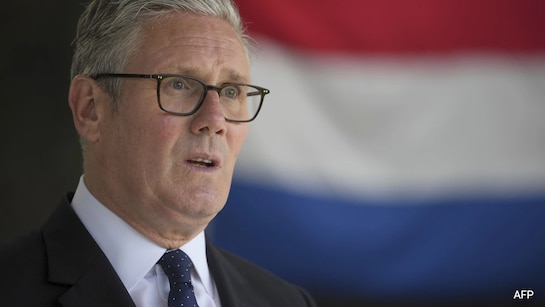
A series of high-profile departures has disrupted Prime Minister Starmer's attempt to initiate the second phase of his administration.
Discussions about replacing Keir Starmer as Labour Party leader have now become public, yet the absence of a credible alternative may temporarily shield him from mounting internal opposition.
Following the tumultuous exits of his deputy prime minister, US ambassador, and most recently his strategy director on Monday, plots against Starmer have dominated British headlines. These departures have overshadowed the prime minister's efforts to launch his government's "phase two" after a significant cabinet reshuffle earlier this month intended to deliver the changes voters expected when they brought Labour to power 14 months ago.
This situation has emboldened Starmer's longtime critics within Labour, with MP Richard Burgon telling media on Monday that Starmer's removal seemed "inevitable" unless he changed direction. However, according to Starmer's supporters, the opposition currently lacks a viable replacement candidate.
"Anyone who thinks they could perform the incredibly challenging role of Labour PM better than Keir should either step forward or remain silent," stated MP Luke Akehurst. "I suspect people are undermining him simply for the sake of it, without having any credible alternative in mind."
Labour MPs reported that 10 Downing Street spent the weekend attempting to consolidate support among ministers and backbenchers following the departures of former Deputy PM Angela Rayner and former US Ambassador Peter Mandelson. Recently, the prime minister has faced near-daily reports of plots to remove him, stirring memories of the instability that characterized previous Conservative governments.
Several Labour MPs who spoke with Bloomberg indicated that talk of replacing Starmer was premature, though they acknowledged that factions on the party's left and center-left were working to accelerate the downfall of a leader who has pursued a more centrist agenda. All maintained there was no obvious successor and that Labour's leadership rules made removing an incumbent extremely difficult.
"Our focus should be on delivering results for the British people who elected us," said Chris Curtis, a Labour MP chairing the pro-Starmer Labour Growth Group. "All this debate about leadership risks repeating the self-absorption that led the Conservatives into endless chaos."
In the immediate term, no clear successor has emerged. While Greater Manchester Mayor Andy Burnham has been mentioned in the press, he isn't currently an MP, and several lawmakers privately noted there's no straightforward path for his return to Westminster. They also questioned whether he would have sufficient support within the parliamentary party.
Another frequently mentioned potential replacement, Health Secretary Wes Streeting, is considered vulnerable due to potential vote splitting in his Ilford North constituency, meaning he might need to relocate to position himself as a future party leader.
Though Rayner was previously seen as Starmer's main rival from the left, her recent tax scandal forcing her resignation has cast doubt on her political future. Another potential left-wing candidate, Louise Haigh, faced personal controversy last year.
Former Labour leader Ed Miliband would need to overcome his 2015 election defeat. Cabinet member Lisa Nandy, once considered a rising star, has since failed to reach top political positions. Other potential candidates like Home Secretary Shabana Mahmood and Education Secretary Bridget Phillipson remain untested at senior leadership levels.
Nevertheless, Starmer's supporters acknowledge he cannot withstand further setbacks that might unite critics around a successor. One supporter stated the obvious: Starmer needs to improve his position before next May's local elections, including votes for the devolved governments in Scotland and Wales.
Another emphasized that Starmer must increase engagement with Labour MPs, warning that any new controversy on the scale of the Mandelson departure would jeopardize his position—a concern for Number 10 as President Donald Trump arrives Tuesday for a three-day visit.
A supporter suggested Starmer would announce policy initiatives in coming weeks, including at Labour's Liverpool convention later this month, potentially regaining support through measures like lifting child benefit restrictions and boosting northern England rail projects. They warned that leadership change discussions would only benefit right-wing populist Nigel Farage, who could argue any Starmer successor lacked electoral mandate.
Starmer has time, but needs significant performance improvements to regain support from both his party and the public, another backer noted. Several lawmakers told Bloomberg that Chancellor Rachel Reeves' November budget represents a pivotal moment. A successful budget could improve the government's standing, while a poorly received one could further endanger Starmer's leadership.
"We're now in at least the fourth year of this trend where the response to systemic problems in British governance is to seek a new leader," said James Johnson of polling firm JL Partners. He added that Labour should learn from their Conservative predecessors that new leaders "invariably disappoint further."
(This story has not been edited by NDTV staff and is auto-generated from a syndicated feed.)