
Smoke-dried bodies could be world's 'oldest mummies': study
Some ancient societies in China and southeast Asia appear to have smoke-dried their dead, effectively mummifying them thousands of years earlier than their Egyptian counterparts, new research has found.
- Date & Time:
- |
- Views: 76
- |
- From: India News Bull
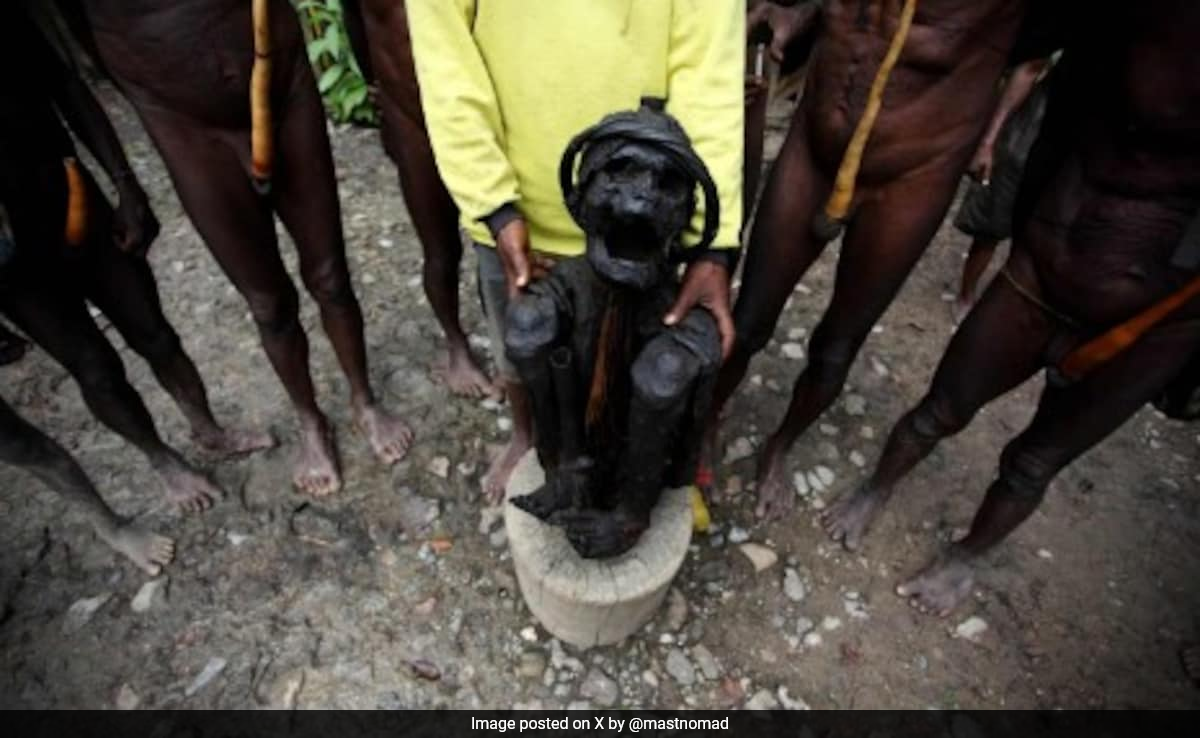
Research indicates the skeletons were preserved rather than cremated, given their complete structural integrity.
Thailand:
Recent research has revealed that ancient communities in China and Southeast Asia likely practiced smoke-drying of their deceased, effectively creating mummies millennia before the well-known Egyptian practice emerged. This groundbreaking discovery challenges our understanding of mummification's history.
While Egyptian mummies wrapped in bandages date back approximately 4,500 years, the previously recognized oldest examples of mummification were attributed to Chilean societies, where natural preservation occurred due to the Atacama coastline's arid conditions.
However, the newly studied remains from China and Southeast Asia were predominantly discovered in humid environments, making their preservation particularly remarkable.
Scientists became curious about the unusual, contorted positions of skeletons unearthed at burial sites across China, Vietnam, the Philippines, Laos, Thailand, Malaysia, and Indonesia. These remains exhibited scorch marks in patterns inconsistent with cremation practices.
Researchers hypothesized that these unusual burial positions might have been possible because the bodies lacked soft tissue—suggesting mummification through drying techniques similar to those documented in parts of Indonesia's Papua region.
To test this theory, they compared bone sample compositions from these sites with control samples from ancient Japanese burials, finding evidence of exposure to predominantly low-temperature heat. The complete preservation of the skeletons indicated deliberate preservation rather than cremation attempts.
Astonishingly, some samples date back more than 10,000 years, suggesting mummification was practiced millennia earlier than previously thought.
"The results were a great surprise," stated Hsiao-chun Hung, senior research fellow at Australian National University. "The bones are so ancient, and it is remarkable to discover that this tradition is so old, connecting the practices of ancient peoples with those still found in some communities today."
While smoke-drying was likely the "most effective option for preserving corpses in tropical climates," researchers believe the process also held significant cultural importance.
Several Indonesian and Australian societies are known to have smoke-dried bodies by tightly binding them and positioning them above continuously burning fires, sometimes for months. This practice allowed family members to maintain connections with the deceased, and in certain cultures was believed to permit the spirit to freely wander during daylight hours before returning to the body at night.
"I believe this reflects something deeply human -- the timeless wish that our loved ones might never leave us, but remain by our side forever," Hung told AFP.
Researchers theorize this practice may have been widespread in ancient Asian civilizations. "This tradition may have been known among hunter-gatherer societies across a vast region, for many millennia," they wrote in the study, published Monday in the Proceedings of the National Academy of Sciences journal.