
Bangladesh's Challenges Ahead Of Yunus-Led Polls In February
Bangladesh has been in political turmoil since a student-led uprising forced former prime minister Sheikh Hasina to flee into exile last year, ending her 15-year autocratic rule.
- Date & Time:
- |
- Views: 77
- |
- From: India News Bull
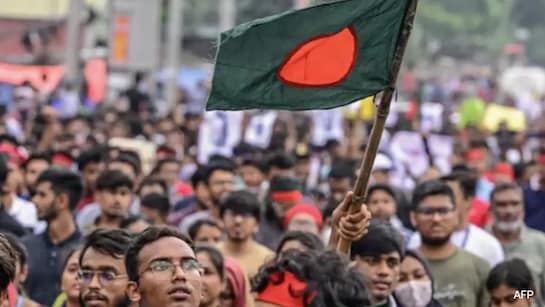
Nobel laureate Muhammad Yunus leads an interim government promising February elections in a politically divided Bangladesh.
Bangladesh:
Following a student-led uprising that ended Sheikh Hasina's 15-year authoritarian rule and forced her into exile, Bangladesh has been experiencing significant political instability.
The interim administration, headed by Nobel Prize winner Muhammad Yunus, has scheduled elections for February.
However, deep skepticism persists across this predominantly Muslim nation of 170 million, as political divisions widen and violence escalates.
With expected elections approximately five months away in early February 2026, coalitions formed during and after Hasina's downfall are beginning to fragment.
Who are the major political forces?
With the former ruling party Awami League now prohibited, the Bangladesh Nationalist Party (BNP) and the Islamist organization Jamaat-e-Islami have emerged as the principal contenders.
Another significant group is the National Citizen Party (NCP), established by student leaders who led the uprising against Hasina.
Growing rivalries have sparked concerns about potential street violence, while Yunus struggles to rebuild confidence in the electoral system.
What is Yunus' position?
The 85-year-old microfinance pioneer, who will resign after the elections, maintains that there is "no alternative to election".
Michael Kugelman, an analyst based in the United States who recently visited Bangladesh, suggests certain key elements "may have an interest in elections being delayed".
Yunus' separation from everyday politics, coupled with rumors about military influence, has contributed to the atmosphere of uncertainty.
Recent consultations between army chief General Waker-Uz-Zaman and high-ranking officials have intensified speculation.
In this nation with numerous historical coups, the military continues to wield substantial influence.
Why are political groups at odds?
The July National Charter has become a central point of contention, proposing comprehensive reforms including two-term limits for prime ministers and expanded presidential authority.
While parties have reached consensus on 84 reform proposals, they remain divided over the implementation process. The primary disagreement concerns its legal status.
"The main point of contention now is the procedure for implementing them," explained Ali Riaz, vice-chairman of the National Consensus Commission.
The BNP argues the charter cannot supersede the existing constitution until after February's elections, when a newly elected parliament could endorse it.
Other factions want it approved before the polls take place.
Senior Jamaat leader Syed Abdullah Mohammad Taher told AFP that "people should be given a chance to share their opinions" on the reforms, suggesting that "a referendum is essential".
NCP senior leader Saleh Uddin Sifat stated it would betray those who died during the uprising if there was no "legal basis" established before elections.
"We are not going to participate in the election without our demands being fulfilled," Sifat informed AFP.
What are the key disputes between parties?
Hasina's Awami League was prohibited through executive order.
Jamaat seeks to ban 13 additional groups with past connections to Hasina, including the Jatiya Party.
The BNP opposes such prohibitions, insisting any action against the Awami League should proceed through judicial channels.
"Banning any political party through executive order is not what we support," stated Salahuddin Ahmed of the BNP, emphasizing that such decisions require legal justification through proper judicial processes.
Yunus has faced accusations of favoritism after meeting with BNP leader Tarique Rahman in London, which has angered both Jamaat and the NCP.
What challenges lie ahead?
The interim government confronts deteriorating law and order conditions.
Zahid Hussain, former lead economist at the World Bank, characterized the interim government as "cordial and brave" but simultaneously "helpless and bewildered".
Rights organization Ain o Salish Kendra documented 124 mob lynchings this year, while police statistics indicate increases in murders, rapes, and robberies.
Analysts suggest Yunus will require complete military support to conduct credible elections and ensure all parties can freely participate.
Mamun Al Mostofa, professor of political science at the University of Dhaka, stated that for timely elections, Yunus would need "unconditional and constant support of the military".