
Taliban Foreign Minister's Historic Visit to India: A New Chapter in Regional Diplomacy
- Date & Time:
- |
- Views: 65
- |
- From: India News Bull
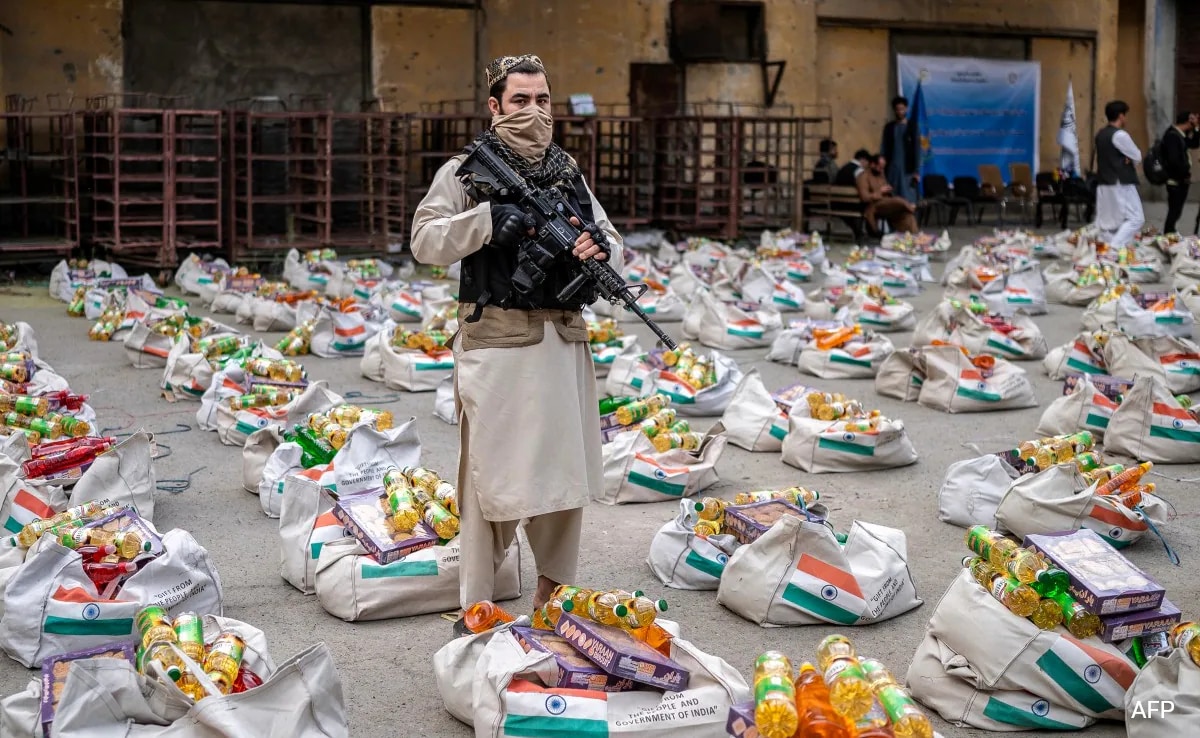
A Taliban security personnel stands guard next to the sacks of food aid donated by India in Kabul
In a significant diplomatic milestone, Afghan Foreign Minister Amir Khan Muttaqi of the Taliban government is scheduled to visit India on October 9. This visit represents the first high-level diplomatic engagement between Kabul and New Delhi since the Taliban assumed control of Afghanistan in August 2021, signaling a potential transformation in India-Taliban relations.
The United Nations Security Council has granted Muttaqi a temporary exemption from travel restrictions, permitting him to visit New Delhi between October 9 and 16. This exemption highlights the importance attributed to this diplomatic exchange by both the Taliban administration and regional powers seeking to reestablish connections.
Indian diplomatic officials have been meticulously preparing for this engagement over several months. Since January, senior Indian representatives, including Foreign Secretary Vikram Misri and senior IFS officer J.P. Singh, have conducted multiple discussions with Muttaqi and other Taliban officials, frequently meeting in neutral locations such as Dubai. During these meetings, conversations centered on India's humanitarian assistance to Afghanistan, particularly regarding healthcare improvements and refugee support initiatives.
A crucial development occurred on May 15, immediately following India's Operation Sindoor against Pakistan, when External Affairs Minister S. Jaishankar conducted a telephone conversation with Muttaqi – marking the first ministerial-level interaction since 2021. During this exchange, Jaishankar acknowledged the Taliban's condemnation of the Pahalgam terror attack and reaffirmed India's "traditional friendship with the Afghan people."
In April, the Taliban had condemned the Pahalgam terror attack in Indian-administered Kashmir during high-level discussions with Indian officials in Kabul, where India provided specific information about the incident. This statement indicated alignment between India and Afghanistan regarding Pakistan-sponsored terrorism in the region.
India has subsequently increased direct humanitarian assistance to Afghanistan, delivering food grains, medical supplies, and development aid. Sources indicate that the Taliban administration has formally expressed several needs to India, spanning from energy support to infrastructure development cooperation.
Following September's devastating earthquake, India demonstrated its commitment as an early responder, rapidly dispatching 1,000 family tents and 15 tonnes of food supplies to the most severely affected provinces. This was promptly supplemented with an additional 21 tonnes of relief materials, including essential medicines, hygiene kits, blankets, and generators, emphasizing India's dedication to supporting the Afghan population during crisis situations.
Since the Taliban's assumption of power in August 2021, India has provided Afghanistan with approximately 50,000 tonnes of wheat, more than 330 tonnes of medicines and vaccines, and 40,000 liters of pesticides, alongside various other essential items. These ongoing efforts have delivered critical assistance to millions of Afghans facing food insecurity, health challenges, and humanitarian distress.
The upcoming visit is widely perceived as a diplomatic setback for Pakistan, which has historically sought to maintain influence over Kabul. Islamabad's decision earlier this year to repatriate over 80,000 Afghan refugees has strained relations with the Taliban, creating diplomatic opportunities for India to engage more assertively. Analysts suggest that Muttaqi's visit to New Delhi indicates Kabul's interest in diversifying its international relations and reducing dependency on Pakistan.
For India, this engagement represents a calculated diplomatic strategy. Direct interaction with the Taliban government enables New Delhi to protect its long-term interests in Afghanistan, address potential terror threats from the region, and counterbalance Chinese and Pakistani influence.
The bilateral meeting scheduled for October 10 during Foreign Minister Muttaqi's visit could represent a pivotal moment, establishing a foundation for cautious cooperation between India and Afghanistan that might significantly alter power dynamics throughout South Asia.
Source: https://www.ndtv.com/world-news/talibans-foreign-minister-to-visit-india-in-historic-diplomatic-breakthrough-9385931