
Explained: What Hurdles Lie Ahead For US-China TikTok Deal
Questions and potential hurdles surround a framework agreement announced on Monday between the US and China that would switch short-video app TikTok to US-controlled ownership, including whether any deal will comply with a 2024 law.
- Date & Time:
- |
- Views: 79
- |
- From: India News Bull
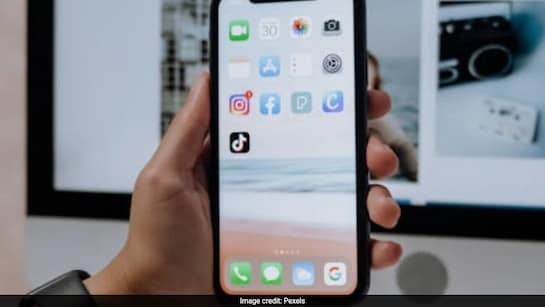
The Trump administration initially advocated for selling TikTok's US operations back in 2020.
Washington:
A preliminary agreement between the United States and China regarding the transfer of short-video platform TikTok to US ownership was announced Monday, yet numerous challenges and uncertainties remain, particularly regarding compliance with legislation passed in 2024.
Officials from both nations revealed the framework agreement during trade discussions in Madrid but left critical details unaddressed, including whether China will permit the transfer of the recommendation algorithm that has made TikTok immensely popular among its 170 million American users.
ALGORITHM TRANSFER CONCERNS
During previous negotiation attempts, Chinese authorities demonstrated significant resistance to allowing ByteDance's recommendation algorithm to be exported. This algorithm is widely considered ByteDance's most valuable asset and a fundamental component of TikTok's worldwide success.
Following the Trump administration's initial push for TikTok's US business divestiture in 2020, China modified its export control regulations to include technologies such as recommendation algorithms, effectively giving Beijing authority over any potential transfer.
CONGRESSIONAL APPROVAL REQUIREMENTS
Any deal may require approval from the Republican-led Congress, which enacted legislation in 2024 mandating ByteDance to divest TikTok or face a US ban. The law was passed due to concerns that TikTok's US user data could be accessed by Chinese authorities, potentially enabling surveillance of Americans or influence campaigns through the platform.
Since the law's implementation, President Trump has postponed the enforcement deadline three times.
Several Democratic lawmakers have contended that Trump lacks legal authority to extend these deadlines and suggested that a previous deal under consideration in April would not satisfy legal requirements.
Attorney General Pam Bondi sent correspondence to Apple, Google, and other companies providing services to or hosting TikTok in February, informing them that the Justice Department was relinquishing claims regarding potential violations of the law. These communications became public in June.
A congressional aide informed Reuters on Monday that lawmakers intend to carefully examine the new agreement once details are released to determine if it complies with existing legislation.
QUESTIONS ABOUT CHINESE OWNERSHIP
A central issue concerns whether ByteDance will completely divest from TikTok's US operations following the deal.
During an Oval Office press conference, Trump responded to a question about potential Chinese stake in TikTok by stating, "We haven't decided that, but it looks to me and I'm speaking to President Xi on Friday for confirmation."
Senate Intelligence Committee chair Tom Cotton stated in April that American investors seeking to acquire TikTok must sever all connections with China.
ByteDance's current investor base includes American companies such as Susquehanna International Group, General Atlantic, KKR, and Andreessen Horowitz.
Should Congress reject this agreement, Trump may have few options. In January, the Supreme Court unanimously ruled that the law, which passed with strong bipartisan support in Congress last year and was signed by former Democratic President Joe Biden, does not violate First Amendment protections against government restriction of free speech.
FUTURE CONTROL OF TIKTOK
Officials anticipate that the final agreement will closely resemble the previous arrangement outlined in April, which proposed spinning off TikTok's US operations into a new US-based entity, majority-owned and managed by American investors. That deal stalled after China indicated it would withhold approval following Trump's announcement of substantial tariffs on Chinese products. The exact structure of the anticipated ownership arrangement remains undefined.
(This story has not been edited by NDTV staff and is auto-generated from a syndicated feed.)