
"We Must Unite": Arab, Muslim Leaders Urge Review Of Israel Ties After Doha Strike
Arab and Muslim leaders called for a review of ties with Israel after emergency talks in Doha on Monday following last week's deadly strike on Hamas members in the Qatari capital.
- Date & Time:
- |
- Views: 78
- |
- From: India News Bull
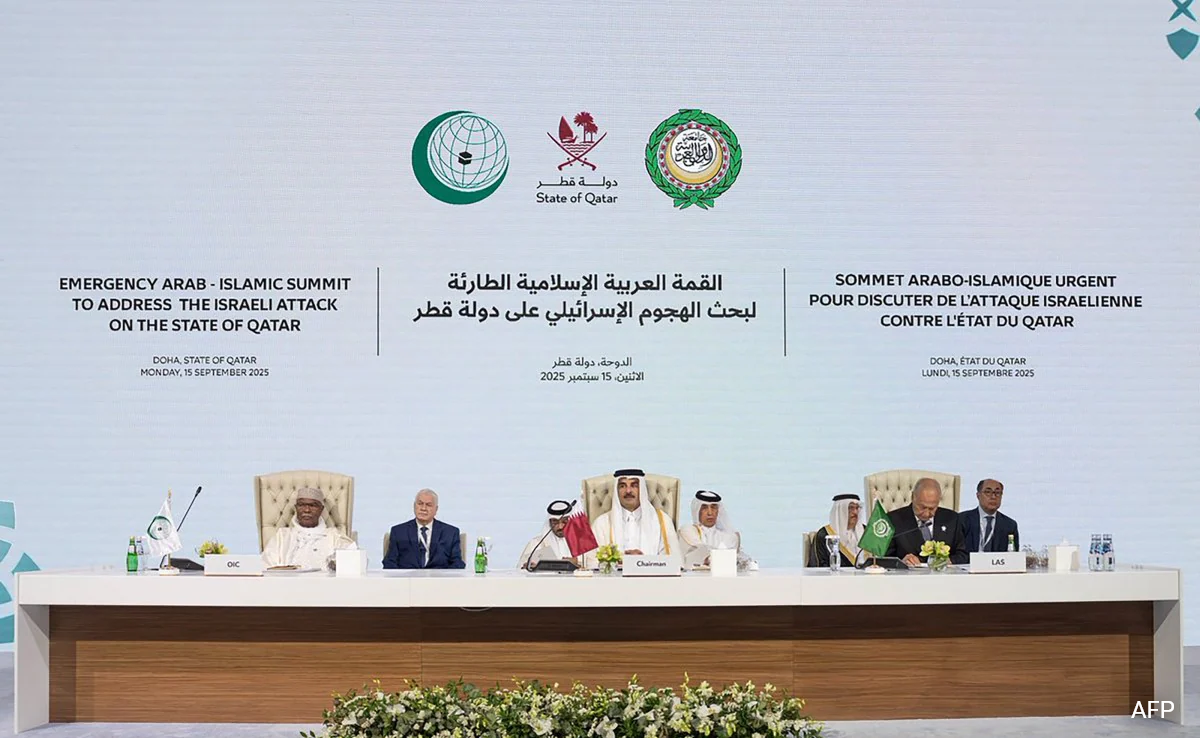
Arab-Islamic Summit in Doha Calls for Reassessment of Israel Relations Following Strike
Doha:
Following Israel's deadly attack on Hamas representatives in Qatar's capital, Arab and Muslim leaders gathered in Doha on Monday for emergency discussions, urging nations to reconsider their diplomatic ties with Israel.
The joint session between the Arab League and Organisation of Islamic Cooperation, representing nearly 60 countries, sought decisive action after Israel's strike on Hamas officials who were engaged in Gaza ceasefire negotiations in Qatar.
The summit produced a joint declaration calling on "all States to implement every possible legal and effective measure to stop Israel's ongoing actions against Palestinians," including "reassessing diplomatic and economic relations with Israel, and initiating legal proceedings against it."
Among the attendees were representatives from Gulf nations with established relations with Israel, including the United Arab Emirates, Bahrain, as well as Egypt, Jordan and Morocco.
Notably, leadership from the UAE, Bahrain and Morocco—signatories to the Abraham Accords recognizing Israel precisely five years ago—did not personally attend Monday's summit, sending high-ranking delegates instead.
The declaration additionally encouraged member states to "coordinate efforts aimed at suspending Israel's United Nations membership."
US Secretary of State Marco Rubio is scheduled to arrive in Qatar on Tuesday, following his expression of "unwavering support" for Israel's objective to eliminate Hamas during his visit there.
The Israeli strike has strained relations between Washington and key Gulf allies, raising questions about American security guarantees in a region hosting significant US military assets, including a major base in Qatar.
The State Department announced Rubio would "reaffirm America's complete support for Qatar's security and sovereignty" following last week's attack.
- Growing Pressure Regarding Gaza -
Qatar had advocated for a coordinated regional response following the Israeli strike, which shocked the typically peaceful, prosperous peninsula.
The summit sought to increase pressure on Israel, which faces growing international demands to end the war and humanitarian crisis in Gaza.
Qatar's emir, Sheikh Tamim bin Hamad Al Thani, accused Israel of attempting to derail ceasefire negotiations by targeting Hamas negotiators in Qatar, a crucial mediator in the process.
Hamas has stated that senior officials survived the air strike in Doha, which killed six individuals and prompted widespread condemnation.
"Any party that deliberately and systematically attempts to assassinate those with whom they are negotiating clearly intends to sabotage the negotiations," the emir told summit participants.
Saudi Arabia's de facto ruler, Crown Prince Mohammed bin Salman, attended Monday's meeting, alongside Iranian President Masoud Pezeshkian, Iraqi Prime Minister Mohammed Shia al-Sudani, Turkish President Recep Tayyip Erdogan, and Palestinian President Mahmud Abbas.
"Any Arab or Islamic capital could be targeted next," warned Pezeshkian, whose country engaged in a 12-day conflict with Israel in June, including attacking a US installation in Qatar in response to strikes on Iranian nuclear facilities.
"The choice before us is clear. We must unite."
Egyptian President Abdelfattah al-Sisi, representing the first Arab nation to recognize Israel, cautioned that Israel's action in Qatar "creates barriers to potential new peace agreements and even undermines existing peace treaties with regional countries."
Israel and its principal ally Washington have been working to expand the Abraham Accords, established during US President Donald Trump's first administration, particularly pursuing Saudi Arabia.
Turkish President Recep Tayyip Erdogan accused Israel of embracing a "terrorist mentality," as participating countries took turns condemning Israel's actions in Gaza.
Gulf nations also conducted separate discussions on the summit's sidelines, urging the United States to utilize its "leverage and influence" to constrain Israel, according to Gulf Cooperation Council Secretary General Jasem Mohamed Al-Budaiwi at a press conference.