
Government Shutdown Impact: Critical Economic Data Delays Create Policy and Investment Challenges
- Date & Time:
- |
- Views: 58
- |
- From: India News Bull
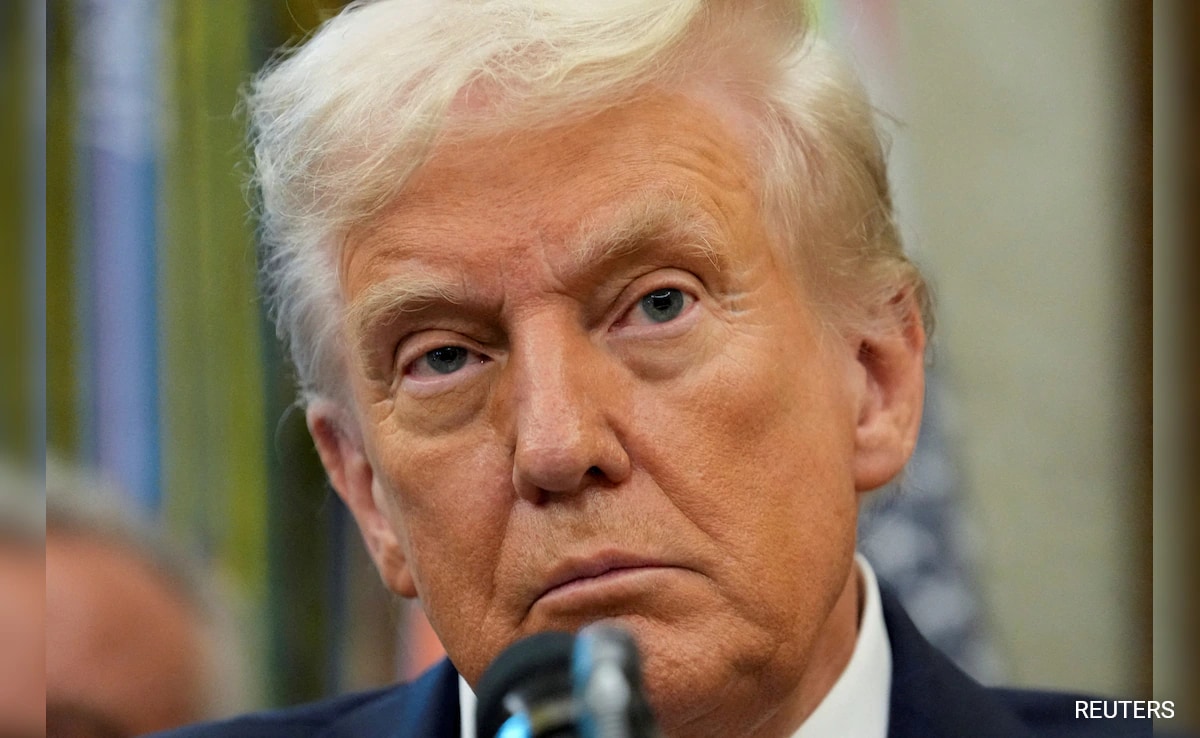
US President Donald Trump
The government shutdown that commenced Wednesday will deprive economists, policymakers, and investors of crucial economic data necessary for their decision-making during a period of exceptional uncertainty regarding the US economy's direction.
The impact will be immediately noticeable, as Friday's scheduled monthly jobs report will likely face postponement. Additionally, the weekly report on unemployment benefit claims—a typical Thursday publication that serves as an indicator for layoffs—will also be delayed.
A brief shutdown won't cause significant disruption. However, if economic data releases are postponed for several weeks or longer, challenges may arise, especially for the Federal Reserve. The Fed currently faces conflicting economic signals, with inflation exceeding its 2% target while hiring has nearly stalled, causing August's unemployment rate to increase.
Typically, the Fed reduces its key interest rate when unemployment rises but increases or maintains it when inflation grows too rapidly. By the Fed's next meeting on October 28-29, when another rate cut is widely anticipated, there may be minimal new federal economic data available for analysis.
"The job market had been a significant strength in the economy but has shown considerable slowing in recent months," noted Michael Linden, senior policy fellow at the Washington Center for Equitable Growth. "Understanding whether this slowdown is continuing, accelerating, or reversing would be extremely valuable."
Earlier this month, the Fed implemented a quarter-point rate cut and indicated likelihood of two additional cuts this year. Fed officials committed to monitoring inflation and unemployment trends closely, though this depends on data availability.
A critical inflation report is scheduled for October 15, followed by the government's monthly retail sales report on October 16.
"We're approaching this on a meeting-by-meeting basis, with decisions guided by incoming data," Fed Chair Jerome Powell stated during a recent news conference.
The economic outlook has recently become less clear. Despite reduced hiring, indicators suggest overall economic growth may be accelerating. Consumer spending has increased, and the Federal Reserve Bank of Atlanta estimates healthy economic expansion in the July-September quarter, following substantial growth in April-June.
A crucial question for the Fed is whether this growth can reinvigorate the job market—something Friday's report might have helped clarify. Economists had projected another month of weak hiring, forecasting just 50,000 new positions, according to FactSet surveys. The unemployment rate was expected to remain at a relatively low 4.3%.
Wall Street investors closely monitor the monthly jobs reports, typically released the first Friday of each month. These reports serve as vital economic health indicators and provide insights into potential Fed interest rate adjustments, which impact borrowing costs and investment strategies.
Thus far, investors appear unconcerned by the shutdown. The S&P 500 stock index rose slightly Wednesday, reaching an all-time high.
Many businesses rely on government data to assess economic conditions. The Commerce Department's monthly retail sales report offers a comprehensive view of US consumer health and can influence companies' expansion or contraction decisions regarding operations and workforce.
For now, the Fed, economists, and investors will likely place greater emphasis on private sector data.
On Wednesday, payroll provider ADP released its monthly employment data, showing businesses cut 32,000 jobs in September—indicating economic slowdown. However, ADP chief economist Nela Richardson emphasized that their report "was not intended to be a replacement" for government statistics.
The ADP data doesn't capture government agency employment trends—a sector potentially significantly affected by a prolonged shutdown.
"Utilizing both private sector and government data provides a better chance of accurately capturing our complex economy," she explained.
The Fed will remain operational regardless of the shutdown's duration, as it self-funds through earnings on government bonds and other securities it holds. It will continue providing monthly industrial production reports, covering mining, manufacturing, and utility output, with the next report scheduled for October 17.
Source: https://www.ndtv.com/world-news/from-retail-sales-to-job-reports-government-shutdown-delays-key-us-economic-data-9382037