
First Russian Oil, Now American Corn: How US Is Using Tariffs Against India
Even before trade negotiations between India and the United States resumed, US Commerce Secretary Howard Lutnick warned that New Delhi could lose its access to the American market if it refuses to purchase US-grown corn.
- Date & Time:
- |
- Views: 110
- |
- From: India News Bull
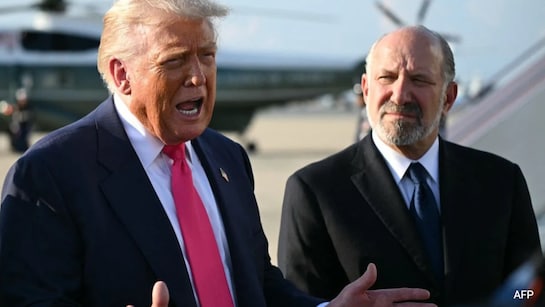
US Commerce Secretary claims trade relationship with India is imbalanced.
Washington is intensifying pressure on New Delhi in trade discussions, with US Commerce Secretary Howard Lutnick issuing a stark warning that India may lose access to American markets if it continues refusing to purchase US corn. In an interview with Axios, Lutnick suggested India could face significant consequences for maintaining high tariffs, even as President Trump appears to be softening his stance toward the country.
Lutnick characterized the India-US trade relationship as distinctly unbalanced. "They access our markets while blocking us from theirs. India freely sells to us while we remain completely open to them," Lutnick stated.
"India proudly references its 1.4 billion population. Why won't these 1.4 billion citizens purchase even one bushel of American corn? Isn't it troubling that they export extensively to us but refuse to buy our corn? They impose tariffs on virtually everything we sell."
A bushel is a volume measurement equivalent to 35.2 liters, typically used for measuring dry goods.
According to Lutnick, President Trump has requested India to "lower your tariffs and offer us reciprocal treatment." He added that the Trump administration needs to "correct years of trade imbalance, so we're implementing counter-tariffs until this situation is resolved."
"This represents the president's approach, and countries must either accept it or face difficulties accessing the world's largest consumer market," he remarked.
Why India Rejects American Corn
The primary obstacle is that US corn is predominantly genetically modified, while India prohibits GM corn. India restricts both importation and domestic cultivation of GM varieties to prevent genetically modified organisms from contaminating the food supply through soil or animal consumption.
This concern also led to the rejection of a NITI Aayog proposal to cultivate GM corn specifically for ethanol production.
The genetic modification of US corn contributes to its status as among the world's least expensive, making it suitable not only for human consumption but also as animal feed.
Trump's Tariff Strategy Against India
Despite months of suggesting that both nations were approaching a trade agreement, Trump doubled tariffs on Indian imports to 50 percent, raising questions about the future of US-India relations that had strengthened in recent years, including during Trump's first term. US tariffs on Indian goods, including a 25 percent duty on Russian oil purchases, rank among the highest imposed on any nation globally.
Recently, Trump and senior officials have criticized India for purchasing Russian oil, claiming India is financing the Ukraine conflict—an allegation India firmly denies.
India has characterized the US measures as "unfair, unjustified and unreasonable." In defending its Russian oil purchases, India maintains that its energy procurement decisions are guided by national interests and market conditions.
Progress on India-US Trade Agreement
Following weeks of diplomatic tension, Trump indicated last week that his administration continues negotiating to address trade barriers with India and mentioned plans to speak with Prime Minister Narendra Modi, suggesting a potential improvement in bilateral relations.
In a notable change of tone, Trump expressed anticipation about discussions with Modi in the "upcoming weeks" and optimism about finalizing a trade deal. Prime Minister Modi responded positively to this overture, with both leaders expressing mutual goodwill.
Subsequently, reports indicated US trade negotiators are scheduled to arrive in New Delhi for continued discussions later this week. However, even before negotiations resumed, Lutnick established additional conditions.
Strategic Importance of Corn Exports
According to BBC reporting, US agricultural organizations have warned that American farmers face widespread difficulties this year, primarily due to economic tensions with China.
Since April, Beijing and Washington have been engaged in trade conflicts, resulting in a significant decrease in Chinese orders for American agricultural products. Consequently, American farmers have filed increasing numbers of small business bankruptcies, reaching a five-year high according to Bloomberg data from July.
Although the US and China are engaged in trade discussions, negotiators face the challenge of stabilizing an uncertain truce while addressing disagreements over technology access, tariffs, and rare earth exports. While Washington works to resolve its trade disputes with Beijing, the Trump administration appears to be attempting to create new markets for American farmers—one of Trump's key voter constituencies—in India.