
UN Reimposition of Snapback Sanctions on Iran Triggers International Tensions and Economic Concerns
- Date & Time:
- |
- Views: 56
- |
- From: India News Bull
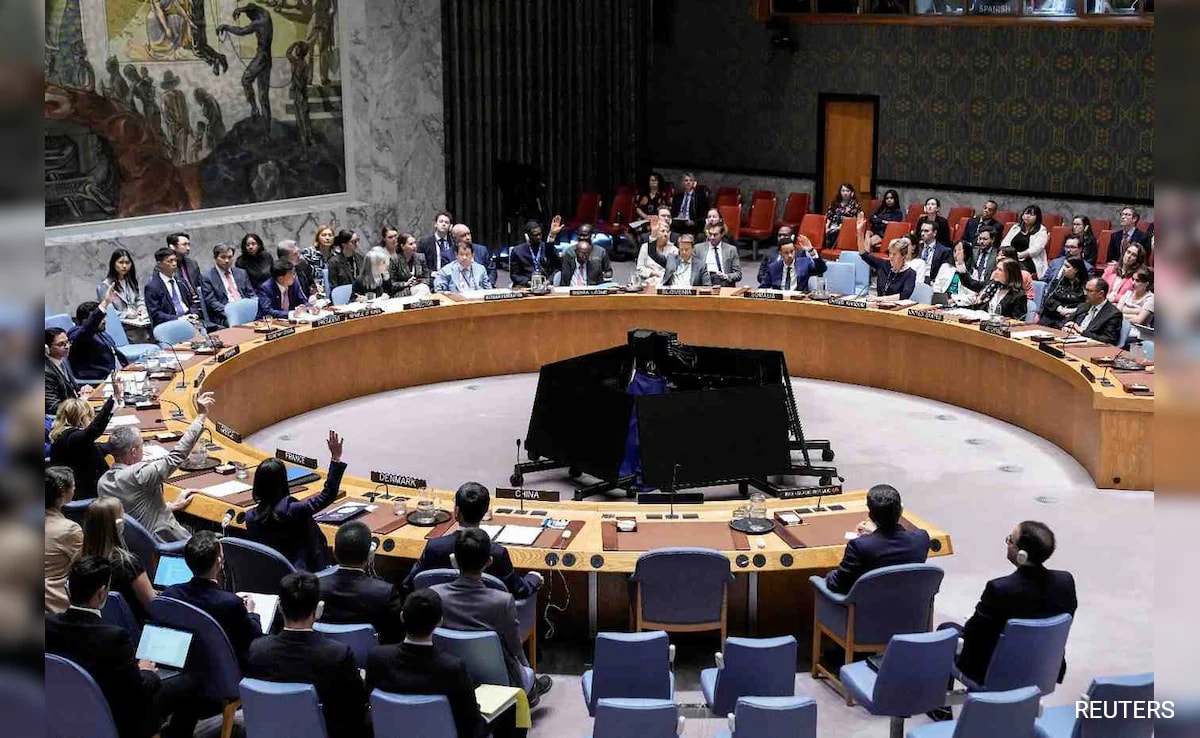
UNSC members cast votes against a resolution aiming to delay the reimposition of sanctions on Iran by six months.
Iran's theocratic government braced for potential confrontation with Western powers on Sunday following the United Nations' reimposition of sanctions targeting its nuclear program, even as voices within the country advocate for continued diplomatic engagement to alleviate the economic hardships afflicting the nation.
The sanctions, which took effect before dawn Sunday, once again freeze Iranian assets abroad, prohibit arms deals with Tehran, and penalize any advancement of Iran's ballistic missile program, among other measures. These restrictions were activated through the "snapback" mechanism incorporated within Iran's 2015 nuclear agreement with global powers.
Iran's Parliament briefly condemned the sanctions before entering a closed-door session, likely to discuss the country's response options, which could include withdrawing from the Nuclear Nonproliferation Treaty and accelerating nuclear weapons development. Citizens express concern about potential renewed hostilities between Iran and Israel, possibly involving the United States, as missile facilities damaged during the 12-day conflict in June appear to be undergoing reconstruction.
Meanwhile, Iran's currency, the rial, plummeted to an unprecedented low of 1.1 million to the dollar, further driving up food prices and complicating daily life for ordinary Iranians.
"The government must negotiate. This is a world of business," stated Mohsen Rahaei, a 49-year-old Tehran resident. "One must get along with everyone, with all countries. Until when do we want to fight? We won't gain anything."
Iran attempted a final diplomatic initiative at the UN General Assembly in New York this week, but efforts by Iranian officials, along with China and Russia, failed to prevent the sanctions from taking effect.
Speaking to the Young Journalists Club, affiliated with Iranian state television, lawmaker Ismail Kowsari revealed that Parliament would consider withdrawing from the nuclear treaty. Nonproliferation experts fear such a move could see Iran follow North Korea's precedent, which announced its withdrawal from the treaty before developing nuclear weapons.
Kowsari, however, maintained this wouldn't necessarily mean Iran would pursue nuclear weapons. Such a decision would require approval from Iran's 86-year-old Supreme Leader Ayatollah Ali Khamenei. Iranian diplomats have consistently referenced Khamenei's teachings as a binding fatwa, or religious decree, against Iran developing atomic weapons.
Parliament Speaker Mohammad Bagher Qalibaf issued a warning to those who would enforce the UN sanctions as the chamber convened Sunday.
"We announce that if any country wants to take action against Iran based on these illegal resolutions, it will face serious reciprocal action from Iran, and the three European countries that are the initiators of this illegal action will also face our reaction," Qalibaf stated without elaborating, according to the state-run IRNA news agency.
Parliament subsequently entered a closed session, with no formal announcement regarding any decisions made.
Leaders of both Iran's conventional military and its paramilitary Revolutionary Guard issued statements Sunday, asserting their forces' readiness for potential attacks. Public concern has grown that Israel might launch new strikes following the sanctions implementation.
Israel's Foreign Ministry welcomed the reimposition of sanctions.
"The goal is clear: prevent a nuclear-armed Iran," the ministry declared. "The world must use every tool to achieve this goal."
France, Germany, and the United Kingdom triggered the "snapback" mechanism 30 days ago, citing Tehran's restrictions on nuclear program monitoring and the impasse in negotiations with the United States.
Iran further reduced International Atomic Energy Agency oversight following Israel's military campaign in June, which also saw American strikes against nuclear facilities in the Islamic Republic.
Currently, Iran maintains a stockpile of uranium enriched up to 60% purity—just a technical step away from weapons-grade levels of 90%—sufficient for producing several atomic bombs should Tehran decide to pursue weaponization.
Iran has consistently maintained that its nuclear program serves peaceful purposes, though Western nations and the IAEA contend that Tehran operated an organized weapons program until 2003.
The three European nations stated Sunday they "continuously made every effort to avoid triggering snapback." However, Iran "has not authorized IAEA inspectors to regain access to Iran's nuclear sites, nor has it produced and transmitted to the IAEA a report accounting for its stockpile of high-enriched uranium."
The nations also highlighted that Iran enriches uranium to levels unprecedented in peaceful nuclear programs.
U.S. Secretary of State Marco Rubio commended the three European nations for "an act of decisive global leadership" in imposing sanctions on Iran while emphasizing that "diplomacy is still an option."
"For that to happen, Iran must accept direct talks," Rubio stated.
Tehran has argued that the three European nations lack authority to implement the snapback mechanism, citing in part America's unilateral withdrawal from the accord in 2018 during President Donald Trump's administration.
Iranian Foreign Minister Abbas Araghchi, speaking to Iranian state TV before the sanctions took effect, attempted to downplay their impact on the country.
"It will have some damages, some losses for us," Araghchi acknowledged Saturday night. "However, they have presented it in their own media as something far greater and much bigger than it actually is, and they have tried to create a monster to frighten the Iranian people and then force our government and our foreign policy to give concessions and pay tribute in this regard."
Nevertheless, Iranian citizens report feeling the economic pressure from sanctions as the rial depreciates and other financial challenges mount. One Tehran resident, who provided only his surname Najjari due to fear of reprisals, cautioned against abandoning negotiations.
"If we continue to get into a fight with the outside world and become isolated like North Korea, good things won't happen at all," he warned. "We're already seeing the impact of this, the dollar rate is going up."
Source: https://www.ndtv.com/world-news/snapback-sanctions-trigger-confrontation-between-iran-and-the-west-9360635