
UK's Largest Lake, Lough Neagh, "Dying" As Toxic Blue-Green Algae Grows
For the third year running, toxic blue-green algae blooms that look like pea soup and smell like rotten eggs have covered much of Lough Neagh, the largest lake in the UK and Ireland.
- Date & Time:
- |
- Views: 74
- |
- From: India News Bull
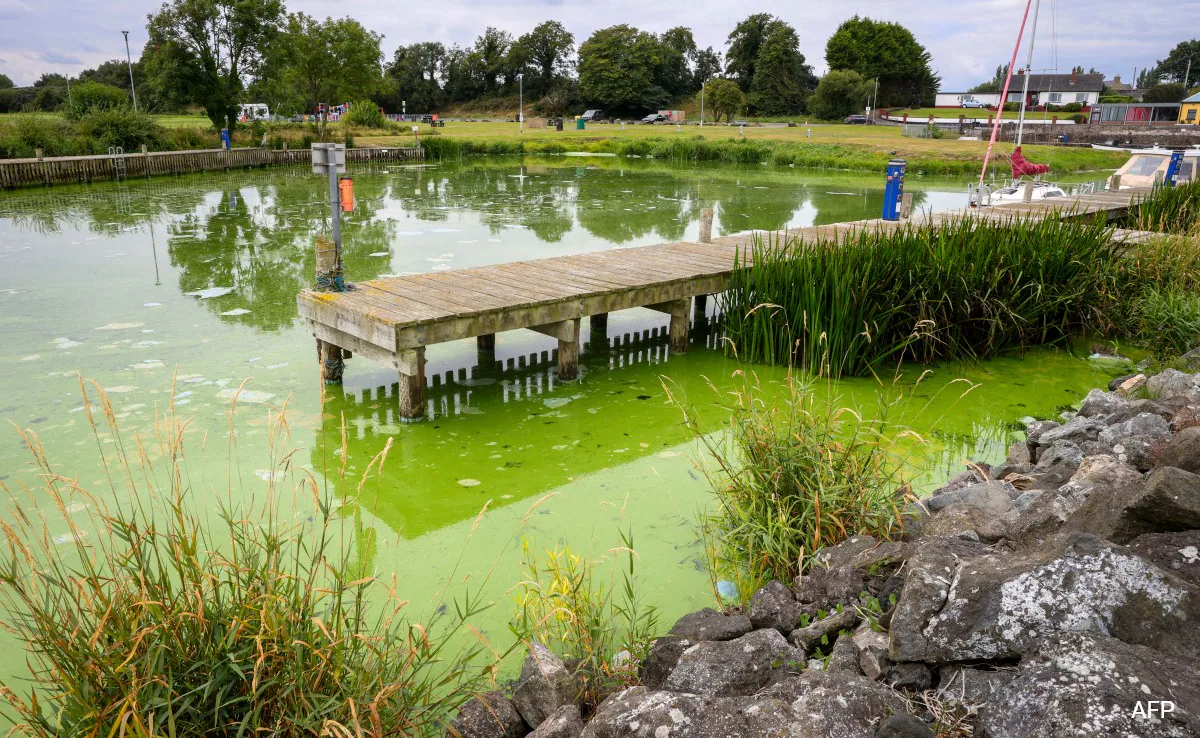
Toxic blue-green algae proliferation is driven by industrial pollution, agricultural runoff, sewage contamination, and climate change impacts.
For the third consecutive year, noxious blue-green algae blooms resembling pea soup with a rotten egg odor have engulfed significant portions of Lough Neagh, the UK and Ireland's largest freshwater body.
This summer, according to residents near this Northern Ireland landmark, the dense green covering—visible even from satellite imagery—has reached unprecedented levels.
"The lake is dying," declared Mary O'Hagan, an open water swimming enthusiast, while speaking to AFP at Ballyronan on the western shoreline, where ducks struggled to navigate over algae-coated stones.
The algal proliferation—which experts attribute to industrial discharge, agricultural pollution, sewage contamination, and climate change effects—has devastated fishing activities, water sports, and raised significant concerns regarding drinking water safety.
Warning signs prohibiting swimming appear throughout the lake's 78-mile perimeter, including at Ballyronan, located 34 miles (54 kilometres) west of Belfast, Northern Ireland's capital.
Nutrient-dense fertilizer and slurry runoff from farms supplying major corporations like chicken processor Moy Park are frequently cited as contributing factors to the contamination.
Untreated sewage discharges and septic tank leakage are also suspected culprits.
Moy Park denies responsibility for lake pollution, stating that the poultry industry is "highly regulated with strict limits set for wastewater quality" across their regional operations.
The algal growth represents a "complex issue not specifically linked to any one sector," a company spokesperson informed AFP.
'Heartbreaking'Lough Neagh served as O'Hagan's "training ground" during the Covid pandemic, but she has rarely entered the water since.
The 48-year-old explained to AFP that she manages chronic health conditions and swimming provides her only exercise option. Currently, she must rely on public swimming facilities.
"Swimming here with its spectacular sunrises helped me when I was in a bad place in my life. It's heartbreaking to see it now," she remarked as green-tinted waves washed ashore.
O'Hagan has become active with the "Save Lough Neagh" campaign group, and during a recent demonstration urged Northern Ireland's regional authorities to implement faster solutions.
"Fine the polluters!" she demanded, additionally calling for establishing an independent environmental regulatory body empowered to penalize factory farms and agri-food conglomerates responsible for pollution.
The invasive zebra mussel species, recently established in the lake ecosystem, filters water but any potential benefit is greatly outweighed by how these molluscs stimulate algal photosynthesis, intensifying the green water phenomenon.
Meanwhile, the algae has severely reduced populations of the Lough Neagh fly, a crucial food source for fish and birds, local angler Mick Hagan told AFP while fishing in a nearby tributary.
"This river used to be full of trout, but no longer," the 38-year-old remarked, returning to shore without catching anything.
Europe's largest eel fishery—also situated on the lough—suspended operations this year due to quality concerns.
Hagan represents the first generation in his family lineage not engaged in Lough Neagh's traditional eel fishing.
Currently operating a pizza truck at a campervan site near Ballyronan, Hagan noted that the overwhelming stench from the lough deterred most tourists this summer.
'Doctor Sludge'According to Gavin Knox, whose paddleboard business also succumbed to the algal contamination, the foul odor can extend miles inland.
The 48-year-old established his venture in 2022 to facilitate safe recreational water activities.
Working with individuals with learning disabilities and brain injuries as well as families, Knox reported that bookings gradually diminished after the algae appeared.
"Doing business became impossible," he told AFP. "Even if there are safe places to paddle, nobody wants to do it when the fish are dying and the birds are covered in green slime."
Forced to repay a substantial startup loan, Knox expressed frustration that governmental compensation was never offered to affected small enterprises.
"It's not fair that the people most impacted haven't been responded to in a meaningful manner," Knox stated.
Last July, the regional government introduced an action plan to initiate remediation efforts.
However, less than half the proposed measures have been implemented.
The remaining initiatives have "delivery timelines extending into 2026 and beyond," according to a government statement provided to AFP. No additional details were furnished.
With approximately 40 percent of Northern Ireland's drinking water sourced from Lough Neagh, the threat of a public health emergency might compel authorities to act more expeditiously, suggested Les Gornall, a local slurry expert nicknamed "Doctor Sludge".
"If Belfast suddenly cannot guarantee a clean water supply, then there would be a property and tourism crash," he predicted.
"Maybe that prospect will jolt them into fixing the lake."