
Understanding NASA's IMAP Mission: How the Heliosphere Protects Earth from Cosmic Radiation
- Date & Time:
- |
- Views: 63
- |
- From: India News Bull
NASA launched the Interstellar Mapping and Acceleration Probe (IMAP) spacecraft from Kennedy Space Center in Florida on Wednesday, September 24. This new mission aims to study Earth's heliosphere, the Sun's massive protective bubble that shields our solar system from harmful space radiation.
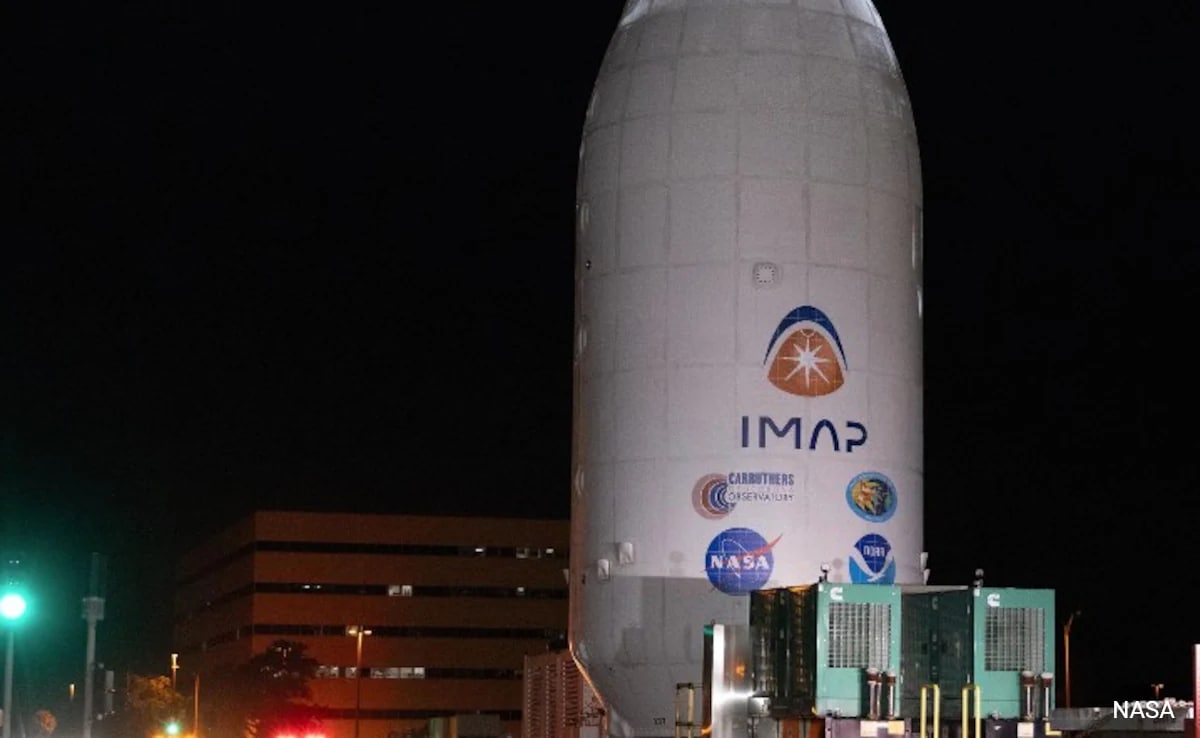
IMAP will examine the edge of this protective bubble and observe how it interacts with the space beyond our solar system. The mission will help scientists understand how the Sun protects us and how our solar system connects with the broader galaxy.
The heliosphere is an enormous, invisible protective bubble surrounding the Sun and the solar system. It functions as a cosmic shield, created by the Sun's continuous emission of solar wind, which consists of charged particles traveling in all directions.
As these particles expand outward, they create pressure against the interstellar medium—the gas, dust, and radiation existing between stars. This interaction forms the bubble-like region we call the heliosphere.
This protective shield guards Earth and other planets from cosmic radiation, which includes high-energy particles originating outside our solar system. Cosmic rays from the Milky Way can be harmful, and the heliosphere helps minimize their impact.
IMAP will investigate how the Sun's activity influences the heliosphere. It will also examine how the heliosphere interacts with interstellar space, which contains gas, dust, and cosmic radiation. The mission will provide real-time observations of solar wind and energetic particles.
These observations help scientists understand space weather phenomena, which can impact satellites, astronauts, and technology on Earth. All data collected by IMAP will be fed into the IMAP Active Link in Real-Time (I-ALiRT) system, designed to enhance space weather predictions.
I-ALiRT will provide real-time information about solar energetic particles and solar wind, which will benefit astronauts on missions to the Moon and Mars, including NASA's Artemis program.
The IMAP spacecraft carries 10 specialized instruments that measure different aspects of space. Each instrument performs a specific function, such as tracking energetic radiation, monitoring magnetic fields, or detecting particles.
IMAP will be positioned at the first Earth-Sun Lagrange point (L1), approximately one million miles from Earth in the direction of the Sun. From this strategic location, it can continuously monitor solar activity and detect solar storms or radiation bursts about 30 minutes before they reach Earth.
Source: https://www.ndtv.com/science/heliosphere-explained-nasas-new-mission-to-study-suns-protective-bubble-9340284