
Fact Check: Donald Trump's Tylenol And Autism Claims Don't Match Science
- Date & Time:
- |
- Views: 63
- |
- From: India News Bull
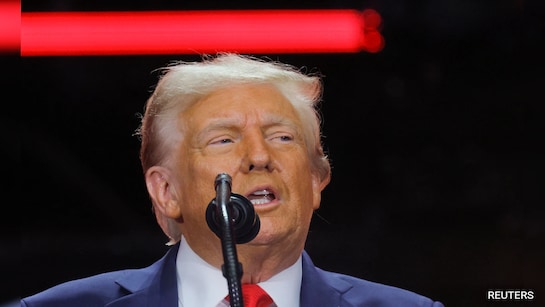
US President Donald Trump
On Monday, President Donald Trump recommended that pregnant women limit their use of Tylenol unless medically necessary, stating bluntly, "don't take Tylenol" and urging women to "just fight like hell not to take it." However, medical experts and researchers have strongly criticized these statements, as there is no conclusive evidence linking the painkiller to autism. Trump also made several questionable assertions about autism, vaccines, and treatments.
Let's examine the facts.
TRUMP: "Since 2000, autism rates have surged by much more than 400%." He claimed rates evolved from 1 in 20,000 to 1 in 10,000 and now 1 in 31, suggesting "something artificial" explains this increase.
THE FACTS: While autism rates have indeed increased significantly, Trump's figures are inaccurate. The 1 in 10,000 statistic dates to the 1990s. The Centers for Disease Control and Prevention reported rates of 1 in 150 in 2000, 1 in 44 in 2018, and most recently, 1 in 31 based on 2022 data.
Scientists attribute this rise to expanded diagnostic criteria. Decades ago, diagnoses were limited to children with severe symptoms. The understanding of "autism spectrum disorder" has evolved to include a broader range of traits and symptoms. Additionally, increased educational and support services have prompted more parents to seek diagnoses to access help for their children.
TRUMP: "Tylenol during pregnancy can be associated with a very increased risk of autism."
THE FACTS: Scientific studies do not support this claim. Even Trump's Food and Drug Administration took a much more measured approach in a recent letter to physicians, suggesting they "should consider minimizing" acetaminophen use during pregnancy.
Research clearly indicates that genetics constitute the primary risk factor for autism. Other factors include paternal age, preterm birth, and maternal health issues during pregnancy such as infections, fevers, or diabetes.
While some studies have suggested a possible connection between prenatal acetaminophen use and autism risk, more studies have found no such relationship. These observational studies compare health records of prenatal acetaminophen use with autism traits in children but cannot determine causation—they cannot distinguish whether the medication or the underlying condition necessitating the medication might be relevant.
The Coalition of Autism Scientists notes that acetaminophen use during pregnancy (known as paracetamol outside the US) has not increased proportionally with autism rates.
TRUMP: "There's no downside in not taking it," regarding pregnant women avoiding Tylenol.
THE FACTS: Leading obstetrical organizations strongly disagree. According to the Society for Maternal-Fetal Medicine, untreated fevers during pregnancy can increase risks of birth defects, premature birth, and miscarriages.
Both this society and the American College of Obstetricians and Gynecologists maintain that acetaminophen is a safe and necessary option during pregnancy. The medication's label already advises pregnant women to consult their physicians about its use.
ACOG emphasized that "the conditions people use acetaminophen to treat during pregnancy are far more dangerous than any theoretical risks."
TRUMP: "I hear Cuba doesn't have it because it's very expensive and they don't have the money to have it, or they don't want to spend the money to have it. They don't have Tylenol. And I hear they have essentially no autism."
THE FACTS: In reality, autism awareness has been growing in Cuba in recent years. The Cuban government has launched campaigns on state television promoting inclusion of people with autism. According to Ministry of Education psychologist Lisbet Rizo Suárez, Cuba maintains nine educational institutions serving children with autism.
As for paracetamol (Tylenol's name internationally), it is widely available in Cuba and prescribed without restrictions by doctors.
TRUMP: Regarding certain groups who allegedly don't take vaccines or medications, "the Amish, is an example. They have essentially no autism."
THE FACTS: This claim is false. Though research on autism in Amish communities is limited, studies have documented cases. A 2010 paper from the International Society for Autism Research found autism was less prevalent in Amish communities compared to the general US population but called for further research to determine how "cultural norms and customs" influenced these statistics.
Braxton Mitchell, an epidemiologist at the University of Maryland School of Medicine with 30 years of experience working with Amish communities, confirms autism exists within these populations. He notes that many Amish use Tylenol and some choose to vaccinate their children while others do not.
Mitchell adds that gathering reliable data is challenging because autism requires clinical assessment and expert diagnosis, which Amish families may not pursue.
TRUMP: "You have a little child, a little fragile child, and you get a vat of 80 different vaccines, I guess, 80 different blends."
THE FACTS: The current childhood vaccination schedule recommends protection against 18 diseases, administered at different ages—not all at once to "a little child."
The total number of shots from birth to age 18 is approximately three dozen, not counting annual flu shots or COVID-19 vaccinations.
Vaccines have proven effective in protecting children from once-common deadly diseases. There is no evidence suggesting the schedule is harmful.
Regarding autism, scientists and leading advocacy organizations for people with autism agree there is no link between vaccines and the disorder.
Dr. Susan Kressly of the American Academy of Pediatrics stated, "Studies have repeatedly found no credible link between life-saving childhood vaccines and autism. This research, in many countries, involving thousands of individuals, has spanned multiple decades. Any effort to misrepresent sound, strong science poses a threat to the health of children."
TRUMP: "Hepatitis B is sexually transmitted. There's no reason to give a baby that's almost just born Hepatitis B. So I would say wait till the baby is 12 years old and formed."
THE FACTS: While Hepatitis B is transmitted sexually in adults or through shared needles during drug use, infants face different risks. Pregnant women carrying the virus can transmit it to their babies during delivery. Although expectant mothers should be tested, not all are. Additionally, the virus can survive on surfaces for over seven days at room temperature, putting unvaccinated infants living with infected individuals at risk.
Since 2005, US health officials have recommended administering the first dose of the hepatitis B vaccine within 24 hours of birth for most infants. This practice has significantly reduced infant infections.
TRUMP: "The MMR, I think, should be taken separately. This is based on what I feel, the, mumps, measles and and the three should be taken separately. And it seems to be that when you mix them, there could be a problem. So there's no downside in taking them separately. In fact, they think it's better."
THE FACTS: Trump's suggestion of separating the MMR vaccine (measles, mumps, rubella) into individual shots is not feasible. According to the American Academy of Pediatrics, single-antigen versions—measles-only, mumps-only, or rubella-only vaccines—are not available.
Early concerns about a potential connection between vaccines and autism stemmed from falsified information about the MMR vaccine published in a 1998 paper that was later retracted by the medical journal.
TRUMP: On spacing out infant vaccines, "Break up your visits to the doctors. Break them up."
THE FACTS: This recommendation frustrates pediatricians. According to AAP President Kressly, "Spacing out or delaying vaccines means children will not have immunity against these diseases at times when they are most at risk."
Additionally, multiple visits specifically for