
Saudi Arabia's Grand Mufti Who Oversaw Era Of Liberal Reforms Dies At 80
- Date & Time:
- |
- Views: 68
- |
- From: India News Bull
Saudi Arabia's Grand Mufti Sheikh Abdulaziz bin Abdullah al-Sheikh, Who Led Through Era of Liberal Reforms, Dies at Age 80
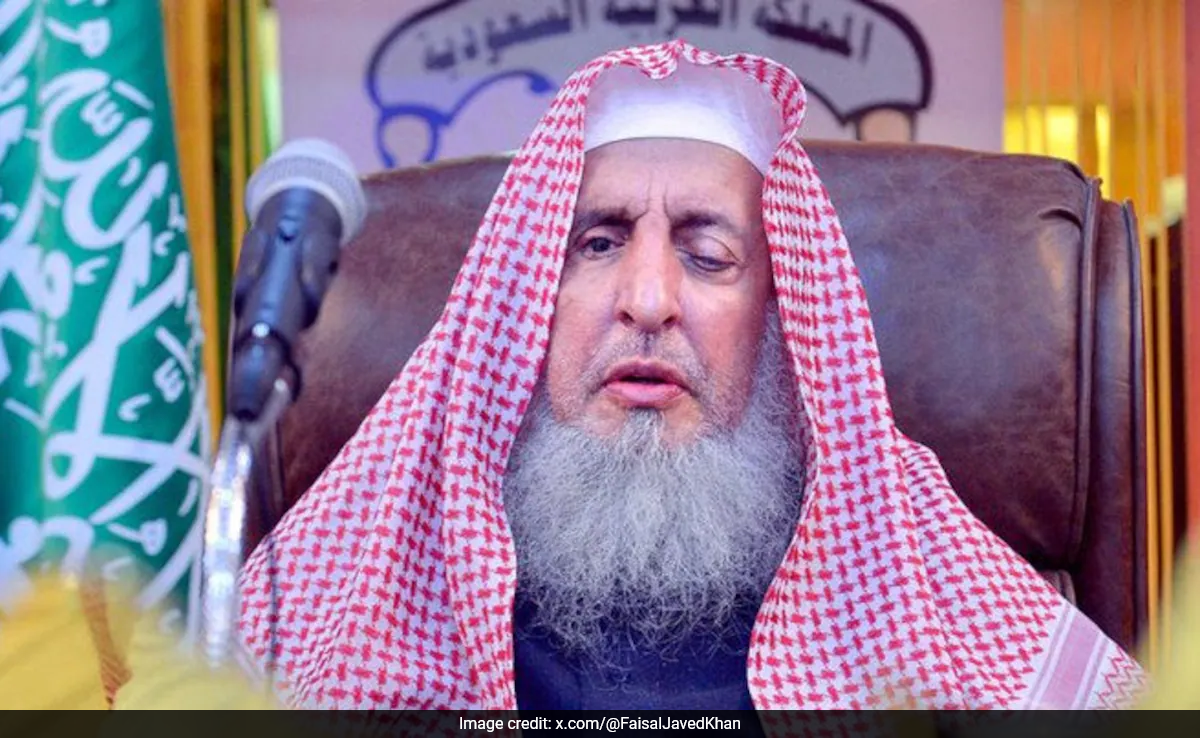
Sheikh Abdulaziz bin Abdullah al-Sheikh, Saudi Arabia's grand mufti
Sheikh Abdulaziz bin Abdullah al-Sheikh, who served as Saudi Arabia's top religious authority for over 25 years during a period of significant social liberalization in the ultraconservative Muslim nation, passed away Tuesday. He was in his 80s.
As grand mufti, Sheikh Abdulaziz held one of the most influential positions among Sunni Islamic clerics worldwide. His pronouncements carried particular weight given Saudi Arabia's status as home to Mecca and Medina, the holy cities where Muslims perform the mandatory Hajj pilgrimage.
While maintaining close ties to the Al Saud ruling family during their recent social reforms including allowing women to drive and opening movie theaters, Sheikh Abdulaziz was known for condemning extremist groups like ISIS and al-Qaida. However, his tenure was also marked by statements reflecting Saudi Arabia's Wahhabism, a strict interpretation of Islam that long enforced gender segregation and other puritanical practices.
Saudi state media announced Sheikh Abdulaziz's death without specifying a cause. Crown Prince Mohammed bin Salman, who governs the kingdom on behalf of his 89-year-old father King Salman, attended the funeral prayers in Riyadh Tuesday night.
The Saudi Royal Court stated: "With his passing, the kingdom and the Islamic world have lost a distinguished scholar who made significant contributions to the service of Islam and Muslims."
Sheikh Abdulaziz, who became blind in his youth, was appointed grand mufti in 1999 by King Fahd. At that time, Saudi society remained strictly segregated and was closely monitored by the Committee for the Promotion of Virtue and the Prevention of Vice. His earlier views reflected this conservative environment, such as his 2004 condemnation of mobile phone cameras for potentially being "exploited to photograph and spread vice in the community."
His comments sometimes sparked controversy, particularly regarding other religions. He joined Islamic leaders in criticizing Pope Benedict XVI's 2006 speech quoting a Byzantine emperor's negative remarks about Prophet Muhammad's teachings. In 2012, he reportedly stated it was "necessary to destroy all the churches of the region" when addressing a question about Christian churches in Kuwait, comments his associates later attempted to clarify after widespread Christian outrage.
Sheikh Abdulaziz also made divisive statements about Shiite Muslims following Iran's supreme leader's criticism of Saudi Arabia after the 2015 Hajj stampede that killed over 2,400 pilgrims. "We must understand they are not Muslims, for they are the descendants of Majuws, and their enmity toward Muslims, especially the Sunnis, is very old," he reportedly said, using a term referring to Zoroastrians.
Throughout his tenure, Sheikh Abdulaziz remained loyal to the Al Saud ruling family, reflecting the historical alliance between the monarchy and Wahhabism in Saudi society, particularly following Iran's 1979 Islamic Revolution.
He denounced the "fake jihad" of Islamic extremists in 2007 as Saudi Arabia battled domestic militant insurgency after the September 11, 2001 attacks. He declared the Islamic State group "enemy No. 1 of Islam" and stated that "self-proclaimed mujahedeen with their version of jihad are only distracting Muslims." After a 2014 attack within Saudi Arabia, he emphasized: "We live in one state, secure and stable under a single government that brings us together."
As King Salman and Crown Prince Mohammed rose to power, Sheikh Abdulaziz moderated many of his social positions that had previously been quite conservative. He had once called the mixing of men and women "evil and catastrophe," described women driving as "a dangerous matter that exposes women to evil," claimed girls as young as 10 could be married, and compared chess to gambling.
When Saudi Arabia lifted its ban on women driving in 2018, Sheikh Abdulaziz eventually supported the change. As the religious police lost influence, movie theaters opened, and women entered the workforce in greater numbers. During the COVID-19 pandemic, he warned that ignoring public health measures constituted "a great sin because it can... lead to the loss of innocent lives or leave people with serious complications."
Sheikh Abdulaziz's influence diminished as Crown Prince Mohammed accelerated social reforms while simultaneously conducting widespread crackdowns on perceived dissent and potential challenges to his authority.