
How Trump's $100,000 H-1B Visa Fee Could Impact US Economy More Than India
- Date & Time:
- |
- Views: 58
- |
- From: India News Bull
US President Donald Trump created widespread anxiety among thousands of American dreamers this weekend with his sudden decision to impose a $100,000 fee on H-1B visas for skilled workers. The announcement triggered panic, chaos, and eventually a quick reversal from the White House.
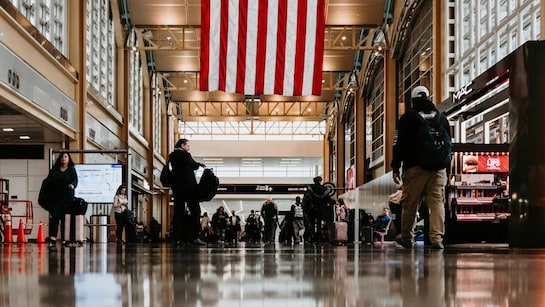
Silicon Valley companies, which employ a significant portion of immigrant workers in the US, advised their employees to avoid international travel as overseas workers rushed to book flights amid fears they wouldn't be allowed to re-enter under the new policy. To quell the turmoil, the White House clarified that the substantial fee would only apply to new applications and would be a one-time measure.
Economic Impact on the United States
Economists suggest that Trump's policy could damage US economic growth more severely than it would affect immigrants themselves.
Experts emphasized that American technology companies depend heavily on H-1B and similar visa programs to recruit engineers, scientists, and programmers from abroad, particularly from India.
According to Atakan Bakiskan, an economist at investment bank Berenberg who spoke with The Guardian, by making visas more expensive, the Trump administration is creating obstacles for companies seeking to attract foreign talent.
Bakiskan described the decision as an example of "anti-growth policymaking" by the Trump administration and warned that the resulting brain drain would significantly impact productivity.
Berenberg recently reduced its US economic growth forecast from 2 percent at the beginning of the year to 1.5 percent. Bakiskan cautioned that if Trump maintains his anti-immigration stance, even the 1.5 percent projection "may soon look optimistic."
"Investments in artificial intelligence are unlikely to compensate for the damage caused by the loss of human capital under restrictive immigration policies," he further stated.
Kathleen Brooks, research director at broker XTB, noted that Amazon, Microsoft, Meta, Apple, and Google are among the companies employing the largest numbers of H-1B visa holders.
"While these companies have the financial resources to afford the visas, other sectors that also depend on H-1B visas might face challenges with future recruitment, such as the healthcare and education sectors," she explained.
India's Prominence in the H-1B Program
Indian immigrants have been the primary recipients of H-1B visas in recent years, accounting for over 70 percent of visa holders.
Currently, executives of Indian origin lead some of America's top corporations, including Google, Microsoft, and IBM, while Indian doctors constitute nearly 6 percent of the US physician workforce.
India's Potential Response to the Shock
Experts indicated that while India might experience an initial shock, the longer-term negative effects could be more pronounced in the United States.
According to IT industry association NASSCOM, as reported by BBC, the visa fee increase could "disrupt business continuity for certain onshore projects" in the US.
The report suggests that clients might request repricing or postpone projects until legal uncertainties are resolved, while companies may reconsider their staffing strategies—moving work offshore, reducing onshore positions, and becoming much more selective in sponsorship decisions.
Indian outsourcing giants like TCS and Infosys appear to have anticipated such developments by establishing local workforces and transferring delivery operations offshore.
Aditya Narayan Mishra of CIEL HR, a prominent staffing company, notes that Indian firms are also likely to transfer the increased visa costs to their US clients.
"With employers reluctant to commit to the heavy cost of sponsorship, we could see greater reliance on remote contracting, offshore delivery and gig workers."