
Sydney Attackers' Philippines Connection: Tracing ISIS Networks and Extremism in Southeast Asia
- Date & Time:
- |
- Views: 48
- |
- From: India News Bull
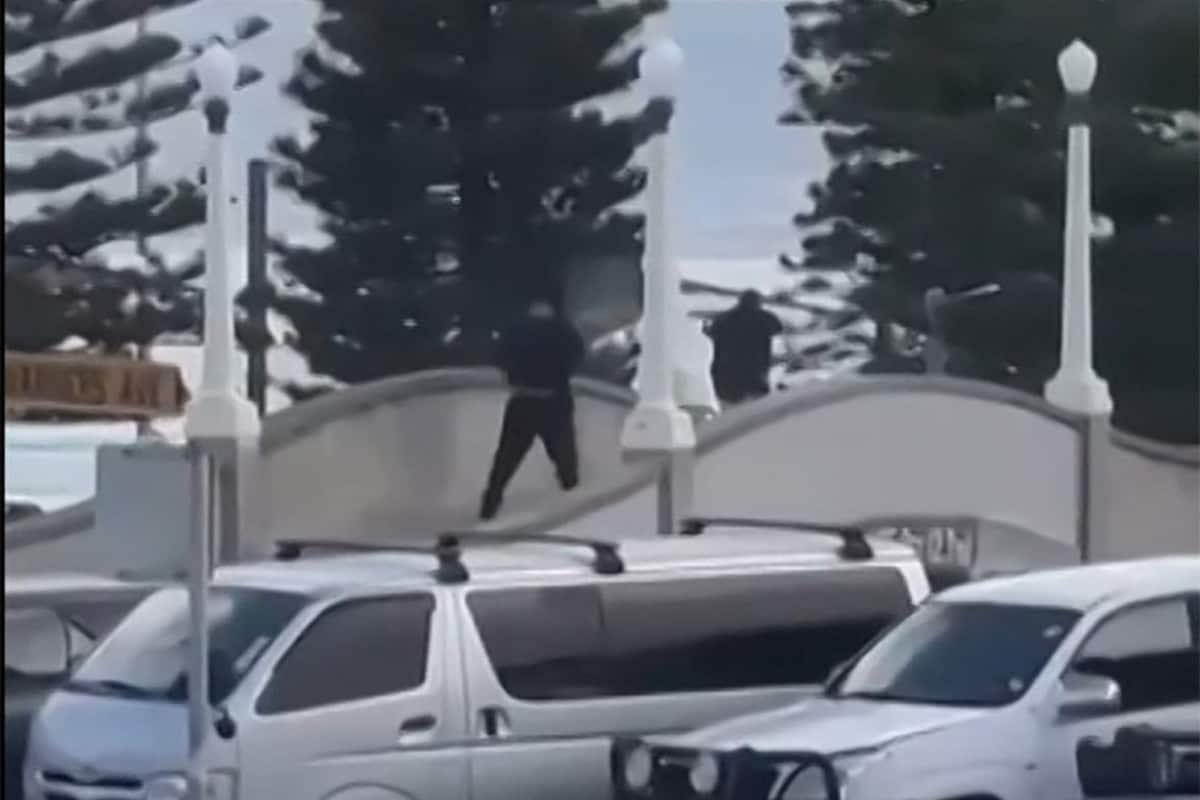
The Davao trip raises significant concerns, but questions remain about their path there.
New Delhi:
Eight years after the Philippine government declared victory over ISIS, the terrorist threat in Southeast Asia has not vanished but rather transformed. Though no longer able to control territory as it did in 2017, ISIS remains capable of inspiring violence, recruiting followers, and maintaining international connections. This persistent threat gained renewed attention when Australian authorities revealed that the suspects in Sydney's Bondi Beach massacre were motivated by ISIS ideology and had recently visited the Philippines.
Philippine authorities confirmed that Sajid Akram, an Indian national, and his son Naveed Akram, an Australian citizen, spent nearly a month in the country.
According to the Philippine Bureau of Immigration, they arrived from Sydney on November 1 and departed on November 28, returning to Australia via Manila. Bureau spokesperson Dana Sandoval told the New York Times that the pair traveled to Davao City, over 1,400 km south of Manila, during their stay. Officials have not disclosed their other destinations, contacts, or activities during this 28-day visit.
The Davao connection raises particular concerns, but how did they get there?
Davao, Mindanao's largest city, is internationally recognized as former president Rodrigo Duterte's political stronghold. However, it exists within a region shaped by decades of Muslim insurgency and separatist conflict. The city has repeatedly emerged in investigations concerning militant movements, smuggling routes, and foreign fighter transit networks.
Reuters reports that the two men arrived in the Philippines on November 1, flying with Philippine Airlines directly to Davao City. This location is approximately 225 kilometers by road from Maguindanao and about 195 kilometers from Lanao del Sur – provinces long considered strongholds for ISIS-linked factions and other armed groups, including Abu Sayyaf.
The pair traveled together on Philippine Airlines from Sydney to Manila and onward to Davao. They departed on November 28, returning to Sydney via the same route, approximately two weeks before the Bondi Beach attack.
Philippines And The Shadow Of Marawi
Mindanao, the Philippines' second-largest island, hosts a Muslim minority that has waged an armed struggle against the central government for over four decades. This conflict has claimed more than 120,000 lives and displaced millions. While Muslims constitute about 11 percent of the Philippine population nationally, they represent approximately 23 percent of Mindanao's residents.
The region's recent history was permanently altered in May 2017, when ISIS-aligned militants seized Marawi City, a lakeside commercial center in Lanao del Sur province. For five months, fighters from the Maute Group, Abu Sayyaf, and allied factions controlled large sections of the city, triggering the largest urban military operation in the Philippines since World War II.
More than 1,000 people perished, over 200,000 were displaced, and 24 districts were reduced to rubble before government forces regained control.
ISIS propagandists compared the capture of Marawi to Mosul's fall in Iraq, presenting it as evidence that the group's caliphate project could extend far beyond the Middle East. Although the Philippine military eventually eliminated key leaders – including Isnilon Hapilon and the Maute brothers, Omar and Abdullah – hundreds of fighters retreated into rural areas, forming smaller cells.
Experts indicate that despite the territorial defeat of ISIS-linked groups in Mindanao, their ideological foundation remains intact. This rhetorical adaptation has allowed extremist groups to maintain relevance despite diminished capabilities.
Active Militant Groups
Abu Sayyaf Group (ASG): Once notorious for kidnappings, bombings, and beheadings, has effectively been dismantled, with most fighters killed or surrendered, according to the Philippine Army.
Bangsamoro Islamic Freedom Fighters: A breakaway faction from the Moro Islamic Liberation Front, continues operating in parts of Maguindanao but has been weakened by military operations and defections.
The Maute Group: Also known as Daulah Islamiyah, which aligned with ISIS, has been reduced to what officials describe as a "manageable number" of fugitives.
ISIS-East Asia: A loose coalition of ISIS-pledged groups is believed to have between 300-500 fighters, mostly Filipinos with some foreign members.
Alongside these groups, the long-running communist insurgency led by the Communist Party of the Philippines and its armed wing, the New People's Army, persists in remote areas.
Online Extremism and Recruitment
While armed militancy in Mindanao predates ISIS by decades, online extremism introduced a new dimension to the conflict. After ISIS declared its caliphate in 2014, several Mindanao-based groups posted media online pledging allegiance to the group's leader.
Before the Marawi siege, extremists utilized social media platforms – particularly Facebook and encrypted messaging services – to recruit fighters, distribute propaganda, and coordinate activities. During the battle, ISIS-linked media amplified footage from Marawi, connecting local militants to global extremist networks.
Extremist messaging is often highly localized, delivered in Moro languages such as Maranao, Maguindanaoan, and Tausug, and connected to grievances at municipal or provincial levels. Following crackdowns on militancy, the once-pervasive circulation of sophisticated ISIS propaganda has declined since 2017.
The Philippines' archipelagic geography – comprising more than 7,000 islands – has historically complicated border control. Militant groups have exploited smuggling routes linking Mindanao to Malaysia and Indonesia to transport fighters, weapons, and funds.
Security assessments have identified Sabah in Malaysian Borneo and Manado in Indonesia's North Sulawesi as key transit points. From Manado, foreign fighters have traveled through the Sangihe or Talaud islands before arriving in General Santos City or Davao City, then moved overland to Marawi and other conflict zones.
Davao's appearance in the Sydney suspects' travel history has drawn particular attention from counterterrorism officials, though they caution against premature conclusions. While there is no public evidence the men met militants or received training during their visit, analysts note such travel patterns align with known extremist transit routes.
Source: https://www.ndtv.com/world-news/sydney-beach-shooting-bondi-beach-shooting-naveed-akram-sajid-akram-sydney-shooters-28-day-trip-a-look-inside-extremism-in-philippines-9828394