
The Hidden Cost of Plastic Recycling: Health and Environmental Concerns in Vietnam's Craft Villages
- Date & Time:
- |
- Views: 39
- |
- From: India News Bull
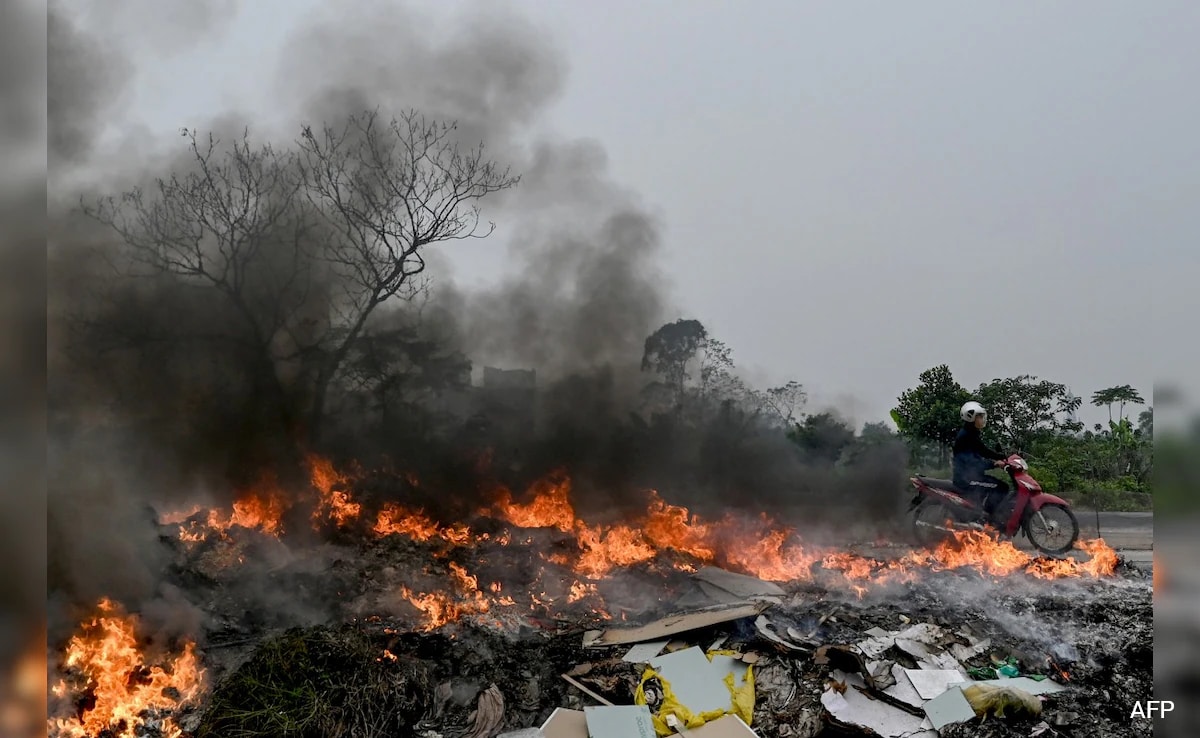
A motorcyclist passes by a smoldering heap of garbage on the roadside in Hanoi.
In Xa Cau village, Lanh hunches among mountains of discarded plastic, meticulously removing labels from bottles of Coke, Evian, and local Vietnamese beverages to prepare them for melting into reusable pellets.
Daily, more waste accumulates, forming colorful drifts along the roads and waterways of Xa Cau, one of numerous "craft" recycling villages surrounding Hanoi where waste materials undergo sorting, shredding, and melting processes.
These villages represent a contradiction: they enable the repurposing of a portion of Vietnam's annual 1.8 million tonnes of plastic waste while providing essential income to workers.
However, both workers and experts informed AFP that the recycling operations proceed with minimal regulations, causing environmental degradation and posing significant health hazards to those involved.
"This occupation is incredibly unsanitary. The environmental contamination is truly severe," remarked 64-year-old Lanh, who requested to be identified only by her first name fearing employment termination.
This dilemma confronts many rapidly developing economies where plastic consumption and disposal have outpaced governmental capacity for collection, sorting, and recycling.
Even in affluent nations, recycling rates often remain dismally low due to the high costs of repurposing plastic products and insufficient sorting practices.
Experts indicate that the primitive methods employed in Vietnam's craft villages generate hazardous emissions and expose workers to toxic substances.
"These facilities have absolutely no air pollution controls," stated Hoang Thanh Vinh, a United Nations Development Programme analyst specializing in waste recycling.
He added that untreated wastewater frequently flows directly into waterways.
Assessing the true magnitude of this issue proves challenging due to limited comprehensive research.
In Minh Khai village, Vinh reported that sediment analysis revealed "extremely high lead contamination and the presence of dioxins," as well as furan—all compounds linked to cancer development.
According to the environment ministry, a 2008 study found that village residents' life expectancy was a full decade below the national average.
AFP's requests for comment from local authorities and the environment ministry received no response.
Lanh believes toxic waste in Xa Cau caused her husband's blood cancer, yet she continues sorting garbage daily to cover his medical expenses.
"Cancer cases fill this village, with people merely awaiting death," she stated.
While no statistical data exists regarding cancer rates in these villages, AFP interviewed over six workers in Xa Cau and Minh Khai who reported colleagues or family members suffering from cancer.
Xuan Quach, Vietnam Zero Waste Alliance coordinator, explained that prolonged exposure to the "toxic environment" inevitably subjects residents to "considerably higher health risks."
Dat, 60, who has sorted plastic in Xa Cau for ten years, confirmed that the job "definitely impacts your health."
"Cancer cases are abundant in this village."
Nevertheless, workers remain plentiful, attracted by the economic opportunities recycling provides.
In Xa Cau, plastic accumulates around multi-story homes, some featuring ornate facades indicating their construction dates.
"This business has made us more prosperous," stated 58-year-old Nguyen Thi Tuyen, who resides in a two-story home.
"Now all houses are brick structures... Previously, we were merely a farming community."
Researchers and residents indicate that most waste recycled in these villages originates domestically.
However, despite recycling only about one-third of its own plastic waste, Vietnam annually imports thousands of tons from Europe, the United States, and Asia.
Imports surged after China ceased accepting plastic waste in 2018, though Vietnam has recently strengthened regulations and announced plans to gradually eliminate imports.
Currently, U.S. and EU trade statistics show shipments to Vietnam from these economies reached over 200,000 tonnes last year.
In Minh Khai, a plastic pellet production plant owner stated that domestic supply "is insufficient."
"I must import from overseas," explained 23-year-old Dinh, who provided only one name, over the noise of heavy machinery.
Most domestic waste remains unsorted, complicating reuse efforts.
Initiatives to improve the industry have included prohibiting unrecyclable waste burning and constructing modern facilities.
Yet burning persists, and unusable waste frequently ends up in vacant lots, according to Vinh.
He recommended that the government should assist recyclers in relocating to industrial parks with enhanced environmental protections, thus formalizing a sector that handles one-quarter of the country's recycling.
"The current recycling methods in these villages... are thoroughly detrimental to the environment."
Source: https://www.ndtv.com/world-news/lead-dioxins-inside-vietnams-unregulated-craft-recycling-centers-9823952