
Trump's $10 Billion Media War: Inside the Legal Battles Reshaping Press Freedom
- Date & Time:
- |
- Views: 50
- |
- From: India News Bull
Donald Trump sues BBC for $10 billion over edited Capitol speech
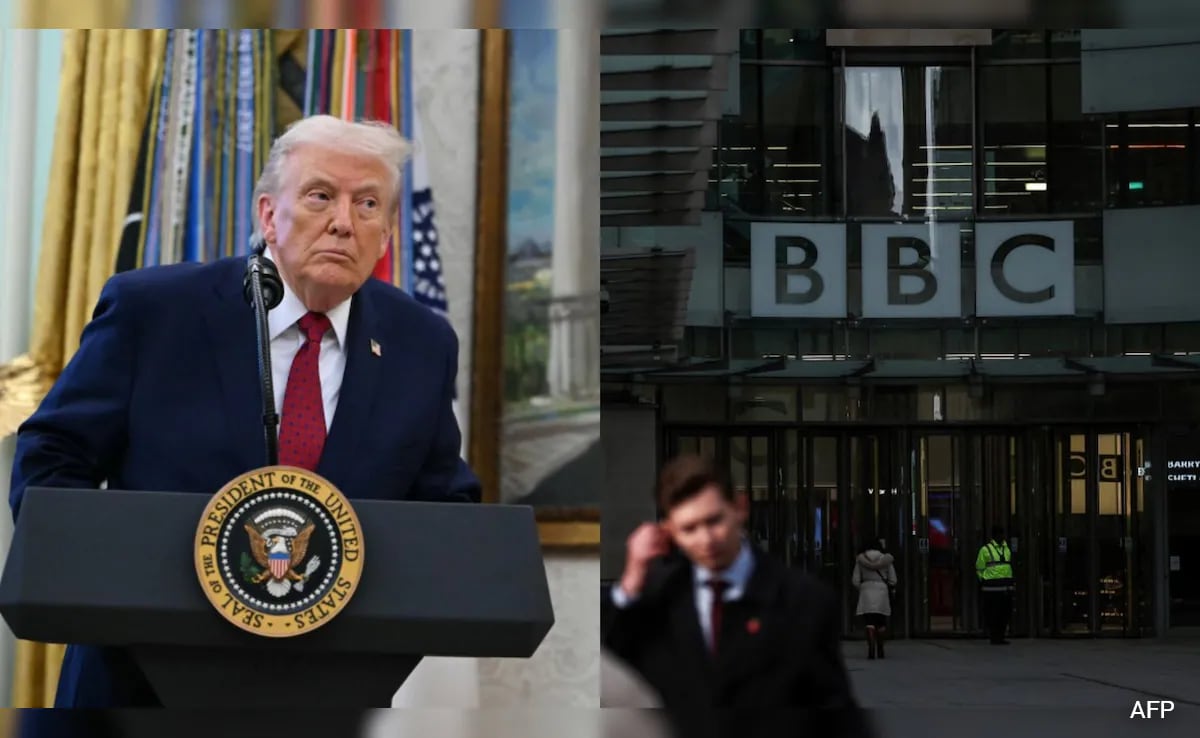
President Donald Trump's turbulent relationship with media organizations has spawned numerous legal conflicts, with the most recent being a lawsuit against the BBC alleging defamation and deceptive trade practices. The president is pursuing $10 billion in damages from the British broadcasting corporation.
The lawsuit, filed Monday, contends that the BBC "spliced together two entirely separate parts of President Trump's speech on January 6, 2021" to "intentionally misrepresent the meaning of what President Trump said." The legal action characterizes the BBC's "false" portrayal of Trump as "a brazen attempt to interfere in and influence" the 2024 US presidential election.
While the BBC issued an apology to Trump last month regarding the edited January 6 speech, the publicly funded broadcaster denied claims that it had defamed him.
Here's an examination of significant confrontations between Trump and media outlets during his second term:
ABC temporarily suspended "Jimmy Kimmel Live!" in September following backlash over remarks the host made concerning the death of conservative activist Charlie Kirk. The network reinstated the show less than a week later.
Trump celebrated the suspension of the veteran comedian and frequent critic, describing it as "great news for America."
The network removed Kimmel after his monologue included a reference to Kirk's shooting and likened Trump's grief to "how a 4-year-old mourns a goldfish."
FCC Chairman Brendan Carr, appointed by Trump, stated that the agency had strong grounds for holding Kimmel, ABC, and parent company Walt Disney Co. accountable for disseminating misinformation.
Late-night hosts Jon Stewart, Jimmy Fallon, Seth Meyers, and Stephen Colbert all expressed support for Kimmel. Hundreds of entertainment industry figures signed an American Civil Liberties Union letter describing ABC's decision as "a dark moment for freedom of speech in our nation."
Trump initiated a $15 billion defamation lawsuit against the New York Times targeting four journalists for a book and three articles published within a two-month period before the 2024 election.
A Florida federal judge dismissed the suit, stating it was excessively long and contained "tedious and burdensome" language irrelevant to the legal case, but granted Trump's legal team 28 days to submit an amended complaint. The revised lawsuit was filed in October.
The Times characterized the lawsuit as meritless and an attempt to discourage independent journalism.
Trump filed a $10 billion lawsuit against The Wall Street Journal and media mogul Rupert Murdoch, whose News Corp owns the publication. This action came just one day after the Journal published a story reporting on his connections to financier and convicted sex offender Jeffrey Epstein.
The article described a sexually suggestive letter reportedly bearing Trump's name that was included in a 2003 album compiled for Epstein's 50th birthday.
The Justice Department had previously requested a federal court to unseal grand jury transcripts in Epstein's sex trafficking case. The Trump administration had announced it would not release additional files from the case.
CBS announced the cancellation of "The Late Show With Stephen Colbert" effective next May. Colbert has been one of Trump's most vocal late-night critics. CBS attributed the cancellation to financial considerations rather than content. However, the announcement came just three days after Colbert criticized a settlement between Trump and CBS parent company Paramount Global regarding a "60 Minutes" story.
Paramount Global agreed to pay Trump $16 million to settle a lawsuit concerning the editing of a CBS "60 Minutes" interview with then-Vice President Kamala Harris in October 2024, when Harris was the Democratic presidential candidate.
Trump's attorneys claimed he experienced "mental anguish" following the interview and sued for $20 billion. The company sought to resolve the issue while seeking administration approval for a merger. Paramount, CBS's owner, indicated the funds would support Trump's future presidential library and cover his legal expenses.
Trump signed an executive order aimed at reducing public funding for PBS and NPR, citing alleged "bias" in their reporting. His directive instructed the Corporation for Public Broadcasting and other federal agencies "to cease Federal funding for NPR and PBS" and further required efforts to eliminate indirect sources of public financing for these news organizations.
Later that month, NPR and three local affiliates filed suit against Trump, arguing that the order violated their free speech rights and exceeded his authority. This summer, Congress approved eliminating $1.1 billion allocated to public broadcasting.
Trump decided to remove the Associated Press from the White House press pool, meaning AP journalists would no longer have access to the Oval Office, Air Force One, and other events not open to the full press corps. This action was in retaliation for AP's decision not to adopt his change of "Gulf of Mexico" to "Gulf of America" in all instances.
The AP Stylebook maintains the body of water's original name while acknowledging Trump's new designation, explaining that as a global news service, AP must ensure place names remain universally recognizable.
The wire service subsequently sued Trump, and a district court ruled in AP's favor in April, affirming on First Amendment grounds that the government cannot penalize the news organization for its content. A federal appeals court stayed that decision in June.
ABC News agreed to contribute $15 million toward Trump's presidential library as part of a defamation lawsuit settlement regarding anchor George Stephanopoulos's inaccurate on-air statement that the president-elect had been found civilly liable of raping writer E. Jean Carroll. The network also agreed to pay $1 million in legal fees.
The settlement agreement characterized ABC's presidential library payment as a "charitable contribution."
Trump sued ABC and Stephanopoulos in Miami federal court in March 2024 following the network's broadcast of a segment in which Stephanopoulos repeatedly misstated the verdicts in Carroll's two lawsuits against Trump. Neither verdict included a finding of rape as defined under New York law.
Source: https://www.ndtv.com/world-news/lawsuits-and-settlements-a-look-at-trumps-fight-with-news-organisations-9823304