
Pakistan's Attempt to Create a South Asian Alliance Without India: Why Experts Say It's Destined to Fail
- Date & Time:
- |
- Views: 64
- |
- From: India News Bull
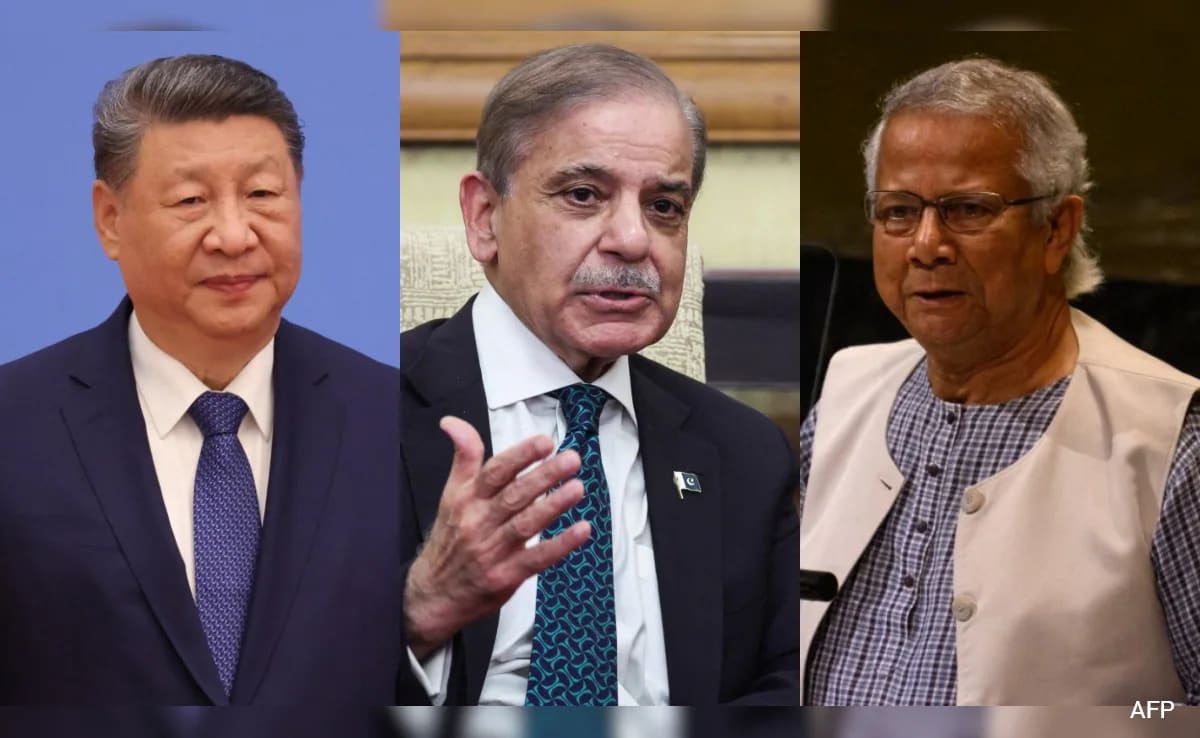
Pakistan, Bangladesh and China established a trilateral mechanism earlier this year to enhance regional cooperation.
Pakistan is attempting to challenge India's established dominance in South Asian geopolitics through a new regional alliance proposal. Deputy Prime Minister Ishaq Dar recently announced that Islamabad is working to expand its trilateral initiative with Bangladesh and China by including other nations from the region and beyond.
However, analysts suggest that considering India's economic strength and proven crisis management capabilities, few nations would be willing to join a regional grouping that excludes New Delhi.
Pakistan's Deputy Prime Minister Dar recently advocated for a new regional organization to replace the inactive South Asian Association for Regional Cooperation (SAARC). His statements come amid increasing tensions between India and Pakistan, particularly following a four-day military confrontation between the nuclear powers in May.
Dar argued that South Asia can no longer remain constrained by "zero-sum mindsets, political fragmentation and dysfunctional regional architecture," as he promoted Islamabad's vision for "open and inclusive regionalism."
He indicated that Pakistan has garnered support for new multilateral platforms outside SAARC and expressed Islamabad's vision for a South Asia where cooperation supersedes "divisions, economies grow in synergy, disputes are resolved peacefully in accordance with international legitimacy, and where peace is maintained with dignity and honour."
Earlier this year, Pakistan, Bangladesh, and China established a trilateral mechanism to foster collaboration in areas of mutual interest. The three nations conducted their inaugural meeting in Kunming in June.
"This concept can be expanded and replicated. As I have said before, groups with variable geometry – on issues from the economy to regional priorities – cannot and should not be held hostage to anyone's rigidity," stated Dar, who also serves as Pakistan's Foreign Minister, in an indirect reference to India.
SAARC has become virtually non-functional amid heightened tensions between India and Pakistan in recent years.
SAARC, the primary regional organization in South Asia, was founded in 1985 during a summit in Dhaka. The seven founding members included India, Pakistan, Bangladesh, Bhutan, the Maldives, Nepal, and Sri Lanka, with Afghanistan joining later in 2007.
According to its official website, the organization's primary objective is to promote economic growth, social progress, and cultural development within the South Asian region.
Despite its ambitious goals, SAARC's last summit occurred in 2014. The subsequent meeting, scheduled for 2016 in Islamabad, was canceled following the terrorist attack in Uri, which India attributed to Pakistan. Since then, New Delhi has maintained that Islamabad's support for cross-border terrorism makes SAARC meetings unfeasible.
While still maintaining SAARC membership, India has redirected its focus toward BIMSTEC (Bay of Bengal Initiative for Multi-Sectoral Technical and Economic Cooperation), a regional grouping that excludes Pakistan.
According to recent statistics, SAARC countries comprise over two billion people, making South Asia the world's most densely populated region. However, intra-regional trade remains at just $23 billion, representing only about 5 percent of the region's total commerce, according to World Bank data.
Limited regional connectivity is identified as a major factor contributing to the region's weak trade relationships.
The World Bank has estimated that South Asian nations could potentially exchange goods worth $67 billion - triple their current trade volume - if they reduced existing barriers.
Lahore-based academic Rabia Akhtar suggests that Pakistan's proposal is currently "more aspirational than operational."
"But it signals Pakistan's intent to diversify and reimagine regional cooperation mechanisms at a time when SAARC remains paralysed," explained Akhtar, director at the Centre for Security, Strategy and Policy Research (CSSPR) at the University of Lahore, in comments to Al Jazeera.
The viability of the proposal hinges on two key factors, according to Akhtar: "First, whether prospective states see functional value in smaller, issue-focused groupings at a moment when traditional architectures are stalled; and second, whether participation does not trigger political costs vis-a-vis India."
This isn't Pakistan's first attempt to reconfigure regional cooperation frameworks. Islamabad, together with Beijing, made a similar proposal in June.
Swaran Singh, a professor of international relations at New Delhi's Jawaharlal Nehru University, observed that India's position in South Asia is unassailable.
Speaking to the South China Global Post, he highlighted that India's population exceeds Pakistan's by sevenfold, its defense budget is five times larger than Islamabad's, and its economy is 12 times bigger. Additionally, India's foreign exchange reserves surpass Pakistan's by a factor of 45.
"This should give us enough idea of the future of any South Asian regional cooperation initiatives that seek to keep India out of its formulation," he remarked.
JNU associate professor Shantesh Kumar Singh noted that smaller regional nations like Nepal and Bhutan depend on access to India for many of their export needs. During crises, such as disaster response and vaccine distribution during the COVID-19 pandemic, New Delhi has demonstrated its role as an indispensable regional leader.
"India must continue to be a responsible and collaborative leader, fostering trust and inclusive collaboration to avoid external forces from dictating South Asia's regional architecture and goals," he stated, adding that Delhi's active participation was essential for a "balanced regional order" given China's expanding strategic influence in the region.
He further noted that India's absence could leave SAARC "fragmented and underfunded."
Source: https://www.ndtv.com/world-news/pakistan-pushes-for-a-south-asian-bloc-without-india-why-it-may-never-work-9784869