
Ray-Ban Meta Glasses Lead AI Eyewear Market While Navigating Privacy Concerns and Rising Competition
- Date & Time:
- |
- Views: 54
- |
- From: India News Bull
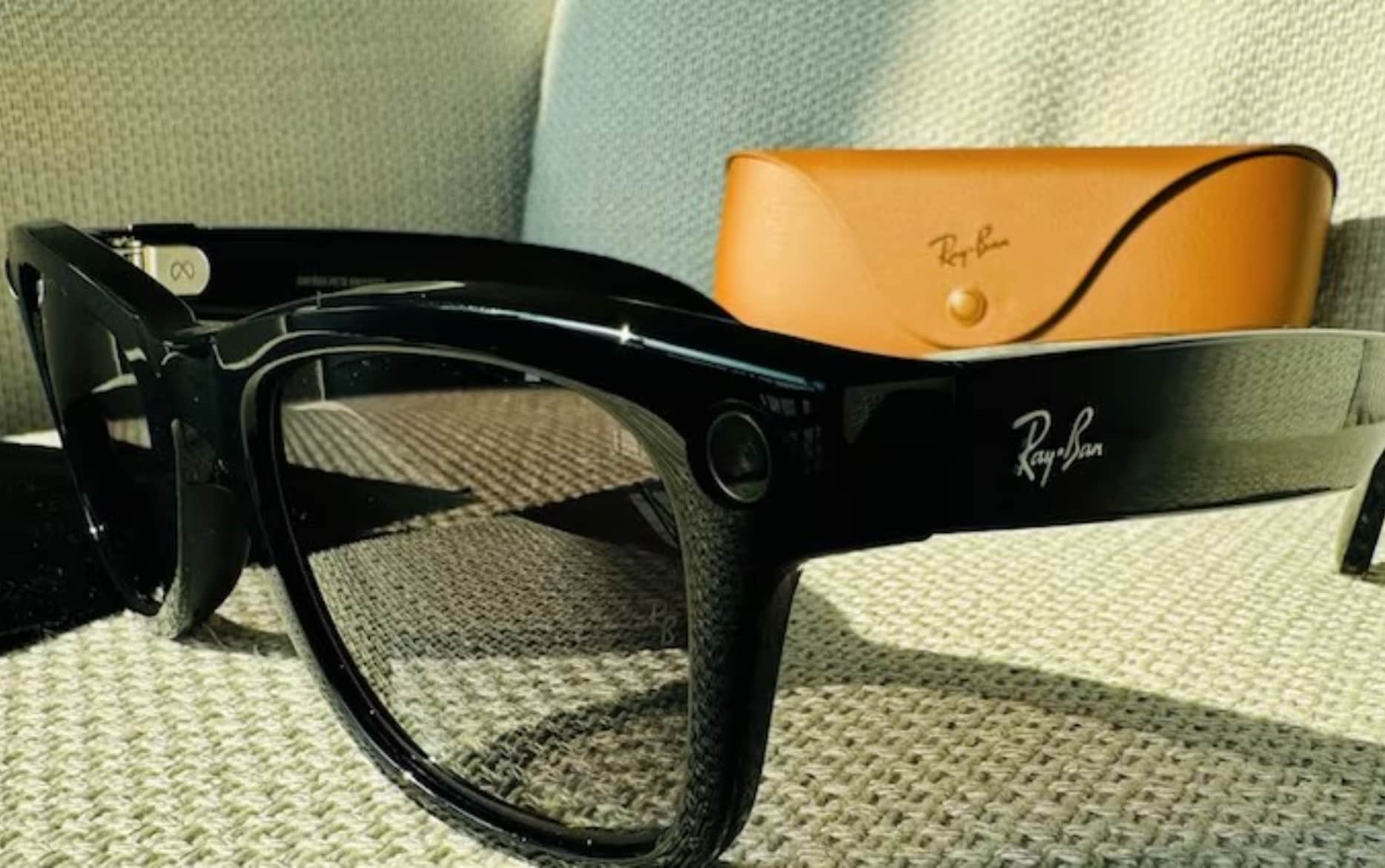
AI-enabled wearables now fall under the European Union's AI Act regulation framework.
EssilorLuxottica has made a significant investment in smart eyewear technology, and that strategic decision is now facing its critical market test. The Ray-Ban Meta glasses, enhanced with artificial intelligence capabilities, have recently delivered their first substantial revenue increase this year. However, industry analysts caution that privacy issues and emerging competitors may restrict their growth potential.
Introduced in 2021, these innovative frames aim to revolutionize how we interact with technology by allowing wearers to capture photos and videos through miniature cameras embedded in the lenses, stream content directly to Meta applications, and interact with an AI assistant.
Nevertheless, the very features designed to make these AI-powered glasses—developed through collaboration between Mark Zuckerberg's Meta and the French-Italian eyewear leader EssilorLuxottica—into essential devices are raising significant concerns. Bystanders have limited control over being recorded or how their personal data might be processed.
"AI smart glasses raise significant privacy concerns," explained Kleanthi Sardeli, an attorney at European digital rights advocacy organization NOYB. "The main issues are linked to the use of people's personal data to train AI models and transparency for bystanders."
Meta Platforms, the parent company of Facebook, Instagram, and WhatsApp that generates most of its revenue through advertising, leverages user data to power its artificial intelligence tools—a strategy that has brought the company under intensified scrutiny regarding its data practices.
European regulators have identified potential risks since 2021, when authorities in Italy and Ireland requested Meta to clarify how its products comply with local privacy regulations.
Ireland's Data Protection Commission questioned whether a small LED indicator provided sufficient warning to people that they were being recorded, which prompted Meta and EssilorLuxottica to enhance the light and implement a blinking pattern.
Privacy concerns are especially pronounced in the European Union, where more stringent regulations have delayed the implementation of certain AI features.
AI-enabled wearable devices must comply with both the EU's AI Act and the General Data Protection Regulation (GDPR).
"Any recording of individuals must be clearly communicated and must have a legal basis to record individuals," a European Commission spokesperson stated, unless the data processing occurs solely for personal or household purposes.
However, NOYB points out that enforcing these rights becomes challenging when the device owner remains unidentified.
A 2024 survey conducted by Monash University involving over 1,000 Australian participants found that smart glasses owners perceive benefits to their self-image and social connections, while non-users express concerns about privacy violations and social disruption.
EssilorLuxottica affirmed its commitment to partnering "with competent authorities to drive innovation, safeguard privacy and set new industry standards."
A Meta spokesperson declined additional comment beyond referring to EssilorLuxottica's statement.
Ray-Ban Meta glasses currently lead the AI eyewear market thanks to a partnership that successfully bridges technology and fashion—a gap that caused Google Glass to fail approximately a decade ago, according to analysts and experts.
Barclays reports that EssilorLuxottica currently controls approximately 60% of the smart glasses market share.
"Instead of trying to make something cool, Meta partnered with people who know what's cool," observed Ross Gerber, CEO of California-based wealth management firm Gerber Kawasaki, which holds Meta shares in its portfolio.
However, Bernstein analyst Luca Solca suggests this first-mover advantage may diminish as competitors introduce superior products. Smart glasses could also potentially cannibalize traditional eyewear sales, which represent about a quarter of EssilorLuxottica's revenue.
Several technology giants are working to catch up in this market segment.
In November, Alibaba released its new Quark AI-powered glasses in China, a market where Ray-Ban Meta products are not currently available.
Apple is anticipated to unveil its own model next year with a projected release in 2027, according to Bloomberg News reports.
Google has partnered with Warby Parker and luxury fashion conglomerate Kering to develop its competing product, announcing on Monday its plans to launch an initial product in 2026—news that negatively impacted EssilorLuxottica's share price. Amazon is reportedly exploring this market as well, while Xiaomi introduced a similar product in June.
As the world's largest eyewear manufacturer, EssilorLuxottica can leverage its extensive network of 18,000 stores and prestigious brands including Prada, Armani, and Chanel.
"One of the key differentiating elements for them is not just their ability to produce, but also their ability to distribute, and their ability to leverage a portfolio of brands," explained Bassel Choughari, a Paris-based portfolio manager at Comgest, which holds EssilorLuxottica shares. "That is an element that shouldn't be underestimated."
EssilorLuxottica CEO Francesco Milleri, who assumed leadership of the company in 2020, is directing the group toward medical technology advancements.
Smart glasses, central to this strategic vision, contributed more than four percentage points to EssilorLuxottica's nine-month sales growth, triggering a 14% market rally for the €140 billion company, despite accounting for just 2% of global sales according to investor CCLA estimates.
EssilorLuxottica continues building on this momentum by expanding its portfolio to include sports brand Oakley and engaging in exploratory discussions with Prada, as confirmed by Lorenzo Bertelli, heir to the luxury brand, in comments to Reuters. In September, the company introduced a model featuring an in-lens display operated through a bracelet that converts hand gestures into commands.
The company welcomes competition, stating: "A vibrant ecosystem will help us drive market growth, fuel innovation and expand consumer choice."
Source: https://www.ndtv.com/world-news/ray-ban-meta-glasses-leads-ai-eyewear-market-but-face-competition-test-9784215