
Sindh Nationalist Leader Warns of Nuclear Risks Under Pakistan's Military Leadership in Appeal to India
- Date & Time:
- |
- Views: 68
- |
- From: India News Bull
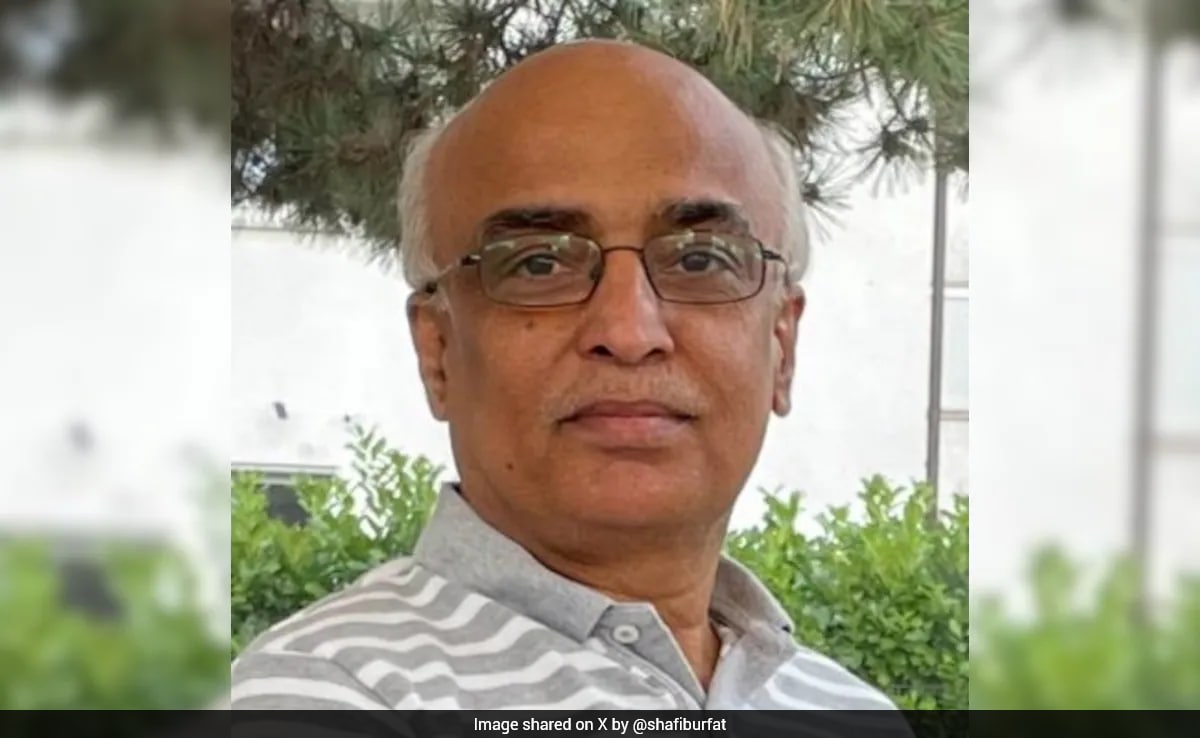
Burfat, who chairs the Sindhi nationalist organization Jeay Sindh Muttahida Mahaz, has issued a significant appeal amidst growing concerns.
As Pakistan's Army Chief General Asim Munir faces mounting criticism for what many perceive as an unconstitutional consolidation of power, Sindhi leader Shafi Burfat has made a remarkable appeal to Indian Prime Minister Narendra Modi. In his comprehensive letter sent from Frankfurt on the eve of World Human Rights Day, Burfat cautioned that Pakistan is entering a precarious phase under what he describes as a "radicalised, militarised command structure" that threatens not only Sindh but regional stability.
Burfat, who leads the Sindhi nationalist group Jeay Sindh Muttahida Mahaz (JSMM), delivered this message as Pakistan's democratic institutions face increasing marginalization. Field Marshal Munir is widely perceived as accumulating extraordinary influence over national policies, security matters, and political processes.
Critics contend that this unprecedented empowerment of military leadership further undermines democratic safeguards in a nuclear-armed nation already struggling with extremism and internal divisions.
In his detailed appeal, Burfat characterized Pakistan as an "artificial, extremism-driven state" founded on the suppression of historic nations, including Sindhis, Baloch, and Pashtuns.
He argued that the country has evolved into a "Punjabi-controlled military colony" where institutions prioritize army interests over those of its diverse citizenry. The JSMM chairman alleged systematic political repression in Sindh, including enforced disappearances, censorship, and exploitation of the province's natural resources.
A central element of Burfat's warning concerns the alleged ideological radicalization within Pakistan's military leadership. Without explicitly naming Munir, he suggested the current command structure is influenced by "jihadist worldviews," creating circumstances where nuclear weapons could be misused. "The danger is no longer terrorists capturing Pakistan's nuclear arsenal," he stated, "but the extremists already positioned at the highest levels of control."
He further claimed that Pakistani military authorities use Sindh and Balochistan as storage locations for nuclear assets, endangering millions. Connecting Pakistan's internal instability to regional geopolitics, Burfat portrayed Islamabad as a destabilizing force across the Indo-Pacific – from supporting extremist groups to undermining maritime security from the Arabian Sea to East Africa.
Presenting Sindh as India's "civilisational partner" and "natural ally," Burfat encouraged New Delhi to raise concerns about Pakistan's nuclear command, state-sponsored extremism, and alleged human rights violations in international forums including the United Nations, BRICS, G20, QUAD, and the UN Security Council. He urged India to support Sindh's right to self-determination and advocate for global oversight of Pakistan's nuclear facilities.
Asserting that the Indus Valley represents the historical foundation of Indian civilization, Burfat framed Sindh's liberation not merely as a political objective but as a matter of "international security" and a step toward reducing extremist influence throughout South Asia.
The letter concluded with a direct appeal to Modi's leadership: "A stable future for the region is impossible as long as Pakistan's extremist state structure endures. India must stand with oppressed nations seeking freedom from tyranny."
Though New Delhi has not officially responded, this letter adds a new dimension to regional discourse at a time when Pakistan's shifting internal power dynamics, particularly Army Chief Asim Munir's expanding authority, are generating increased international concern.
India's Position On The Sindh Issue
India's Defence Minister Rajnath Singh recently remarked that while the Sindh region may not currently be part of India, borders can change, and it may eventually return to India.
"Today, the land of Sindh may not be a part of India, but civilisationally, Sindh will always be a part of India. And as far as land is concerned, borders can change. Who knows, tomorrow Sindh may return to India again. Our people of Sindh, who hold the Indus River sacred, will always be our own. No matter where they are, they will always be ours," the Defence Minister stated.
"Not just in Sindh, but throughout India, Hindus consider the Indus River sacred. Many Muslims in Sindh also believed that the water of the Indus was no less sacred than the Aab-e-Zamzam of Mecca. This is Advani ji's quote," he added in his statement.
Source: https://www.ndtv.com/world-news/pakistani-leaders-extremist-controlled-nukes-warning-amid-asim-munirs-rise-9782897