
Trump's Rice Tariff Threat: Impact on Indian Basmati Exports and US Consumers
- Date & Time:
- |
- Views: 41
- |
- From: India News Bull
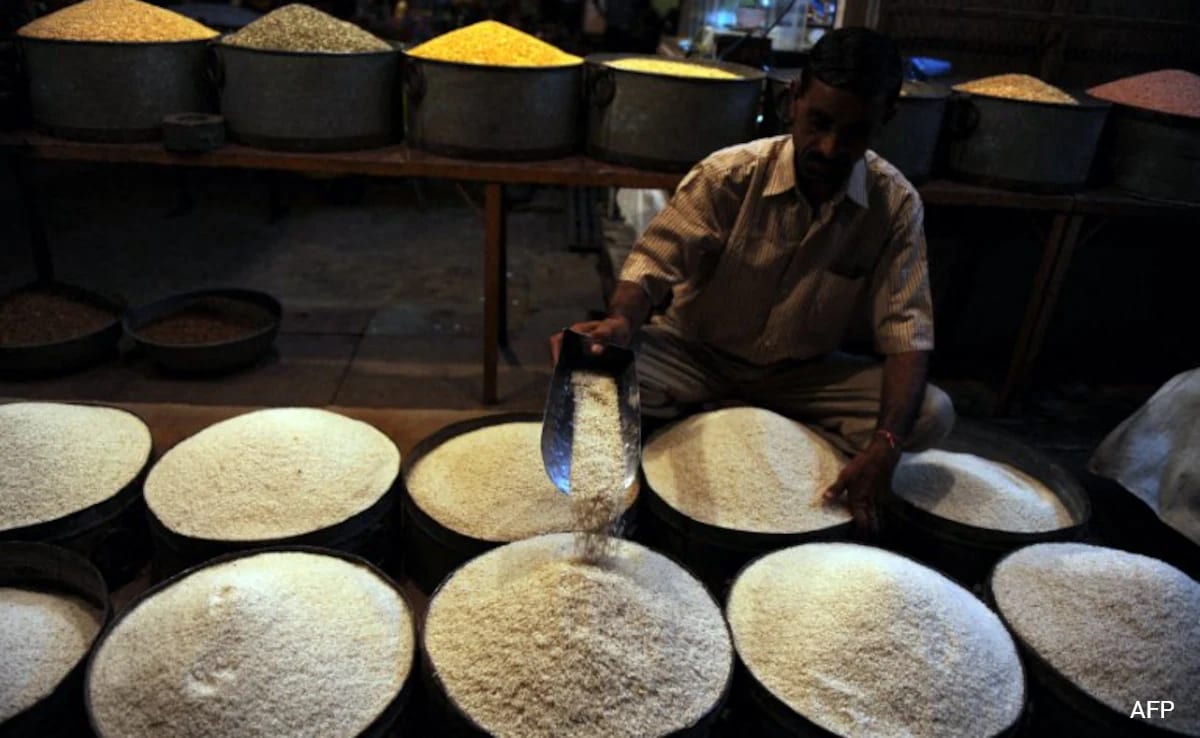
US President Trump has indicated potential new tariffs on Indian rice imports
US President Donald Trump's recent threat to impose additional tariffs on rice imports from countries including India is expected to have minimal impact on Indian rice exports, particularly basmati rice, according to industry experts. Rice exporters suggest that American consumers, rather than Indian producers, would likely bear the cost burden if these new tariffs are implemented.
Ajay Bhallotia, General Secretary of the All India Rice Exporters Association, emphasized that President Trump specifically mentioned India alongside Vietnam and Thailand, suggesting his focus is primarily on non-basmati rice since Vietnam and Thailand exclusively export non-basmati varieties to the US market.
"It remains unclear whether the proposed additional tariff would apply only to non-basmati rice or include basmati varieties as well. Currently, basmati rice exports to the US are approximately five times greater than non-basmati exports. We must await President Trump's final decision," Bhallotia told NDTV.
India's rice export data to the US reveals significant trade volume. During the 2024-2025 financial year, India exported 274,213.14 metric tonnes of basmati rice valued at $337.10 million to the US, making it the 4th largest market for Indian basmati rice according to Indian Rice Exporters Federation (IREF) statistics.
In the same period, non-basmati rice exports to the US totaled 61,341.54 metric tonnes worth $54.64 million, positioning the US as the 24th largest market for this category. Combined, Indian rice exports to the US are valued at approximately $390 million (roughly Rs 3,510 crore).
Before President Trump's earlier tariff increases, Indian rice faced a 10 percent tariff in US markets. Following the imposition of a 50 percent duty, the tariff increased to 40 percent. Despite this significant increase, exports haven't experienced major disruption as most additional costs were passed on to consumers through higher retail prices, while Indian farmers and exporters continued to receive stable returns.
The IREF projects that any new US tariffs on rice imports from India would likely be absorbed by American consumers due to the product's essential nature in certain consumer segments. The federation stated, "While the US is an important destination, India's rice exports are well-diversified across global markets... Evidence from retail markets indicates that most of the tariff burden has been passed on to US consumers."
The federation highlighted that domestically grown US rice is not a suitable substitute for Indian basmati due to its distinctive aroma, flavor, texture, and elongation properties that make it a culinary specialty.
"Indian basmati has distinctive aromatic qualities, elongation characteristics, texture, and flavor profiles that US-grown varieties generally cannot replicate for traditional Gulf and South Asian dishes. Indian rice in the US market is predominantly consumed by Gulf and South Asian ethnic communities, with steadily growing demand linked to the increasing popularity of Indian cuisine, particularly dishes like biryani where basmati rice is an essential, irreplaceable ingredient," the federation explained.
Industry experts also noted the resilience and global competitiveness of the Indian rice export industry. India continues to strengthen trade partnerships and expand into new markets worldwide.
Dev Garg, Vice President of Indian Rice Exporters, commented, "Although the US represents an important market, India's rice exports are well-diversified across global markets. The Federation, working closely with the Government of India, continues to deepen existing trade relationships while opening new markets for Indian rice."
During a White House event announcing new aid packages for US farmers, President Trump signaled his intention to potentially impose fresh tariffs on agricultural products, including Indian rice, suggesting ongoing trade negotiations with US partners could continue.
Addressing concerns raised by some American farmers who blame rice imports for declining domestic prices, Trump stated, "They shouldn't be dumping. I mean, I heard that, I heard that from others. You can't do that." These farmers specifically accused countries like India, Vietnam, and Thailand of undercutting their crops with lower-priced imports.
Source: https://www.ndtv.com/world-news/will-trumps-new-tariff-threat-impact-indian-rice-exports-what-experts-said-9777433