
The Escalating Border Conflict Between Thailand and Cambodia: Historical Disputes and Failed Peace Efforts
- Date & Time:
- |
- Views: 54
- |
- From: India News Bull
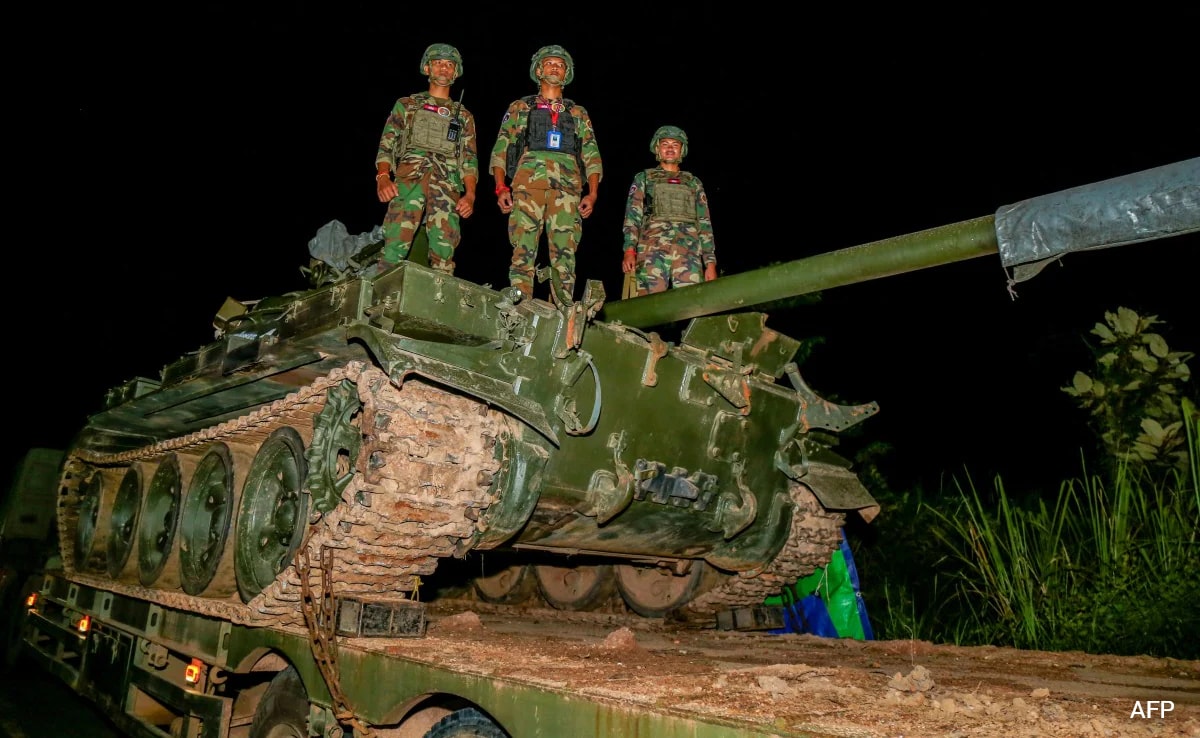
Potential economic consequences go beyond trade.
The long-standing territorial dispute between Thailand and Cambodia has erupted into open conflict again, merely months after a ceasefire agreement mediated by US President Donald Trump.
Both Southeast Asian nations engaged in five days of border fighting in July, resulting in numerous military and civilian casualties, and forcing tens of thousands of villagers to evacuate from both sides.
The most intense fighting since the ceasefire broke out on Monday. While the initiator remains uncertain, Thailand launched airstrikes along the border alongside ground combat operations.
Thailand and Cambodia share centuries of historical animosity and experience periodic tensions across their land border spanning over 800 kilometers (500 miles).
The territorial disputes largely originate from a 1907 map created during Cambodia's French colonial period, which Thailand claims is inaccurate. Many Thais remain resentful of a 1962 International Court of Justice ruling that granted sovereignty of disputed territory to Cambodia—a decision reconfirmed in 2013. This disagreement triggered several armed conflicts between 2008 and 2011.
A tenuous peace was established in late July when Malaysia facilitated peace negotiations and President Trump brought the opposing parties to negotiations by leveraging US market access for both countries' exports, threatening to withhold important trade privileges.
Trump subsequently cited this intervention as one of several examples worldwide where his actions brought peace between conflicting nations.
The preliminary agreement was followed by a more comprehensive October accord. Its provisions included coordinating de-mining operations, removing heavy weaponry from the border, implementing trust-building measures, and ceasing harmful rhetoric and misinformation. However, these terms were not fully implemented, if at all.
Both countries continued waging an intense propaganda campaign, with occasional minor incidents of cross-border violence.
Cambodia's major grievance involves Thailand's continued detention of 18 captured troops. Thailand accuses Cambodia of placing new landmines in disputed areas that injured Thai soldiers. Cambodia maintains these mines are remnants from decades of civil war that ended in 1999.
The failure to implement ceasefire terms was used by Thailand as justification for not promptly releasing the Cambodian prisoners, despite the October agreement urging such release "as a demonstration of Thailand's desire to promote mutual confidence and trust."
Thailand remains one of Washington's oldest and closest allies, possessing significant military advantage, particularly evident in its largely unchallenged air power capabilities.
Cambodia has sought to strengthen its diplomatic position. It was among the first countries to endorse a Nobel Peace Prize nomination for Trump, even organizing public demonstrations supporting this cause.
Cambodia has also conducted an extensive social media propaganda campaign portraying itself as the underdog while making frequent unverifiable accusations about Thai actions. Nationalistic rhetoric has been prevalent on both sides.
Washington appears to be actively cultivating better relations with Cambodia to distance it from its close ties with China, which has created resentment in Thailand.
Cambodia has made greater progress toward finalizing a trade agreement with Washington compared to Thailand, despite Thailand's significantly larger and more complex economy.
The economic implications extend beyond trade relations.
The renewed conflict coincides with peak winter tourism season, potentially deterring visitors. Tourism represents a major revenue source for both nations, which are still recovering from the pandemic's severe impact on the industry.
The hostility between these neighbors transcends border disputes, stemming from deep-rooted cultural animosity dating back centuries when they were competing empires.
In contemporary times, tensions have persisted as Cambodia's development—hindered by French colonialism and the Khmer Rouge's brutal communist regime in the 1970s—has lagged significantly behind Thailand.
Both countries have contested claims over cultural elements ranging from boxing and mask dancing to traditional clothing and cuisine.
Source: https://www.ndtv.com/world-news/explained-the-root-of-fighting-between-thailand-and-cambodia-9776870