
Syria One Year After Assad: A Nation's Struggle for Healing and Reconstruction
- Date & Time:
- |
- Views: 57
- |
- From: India News Bull
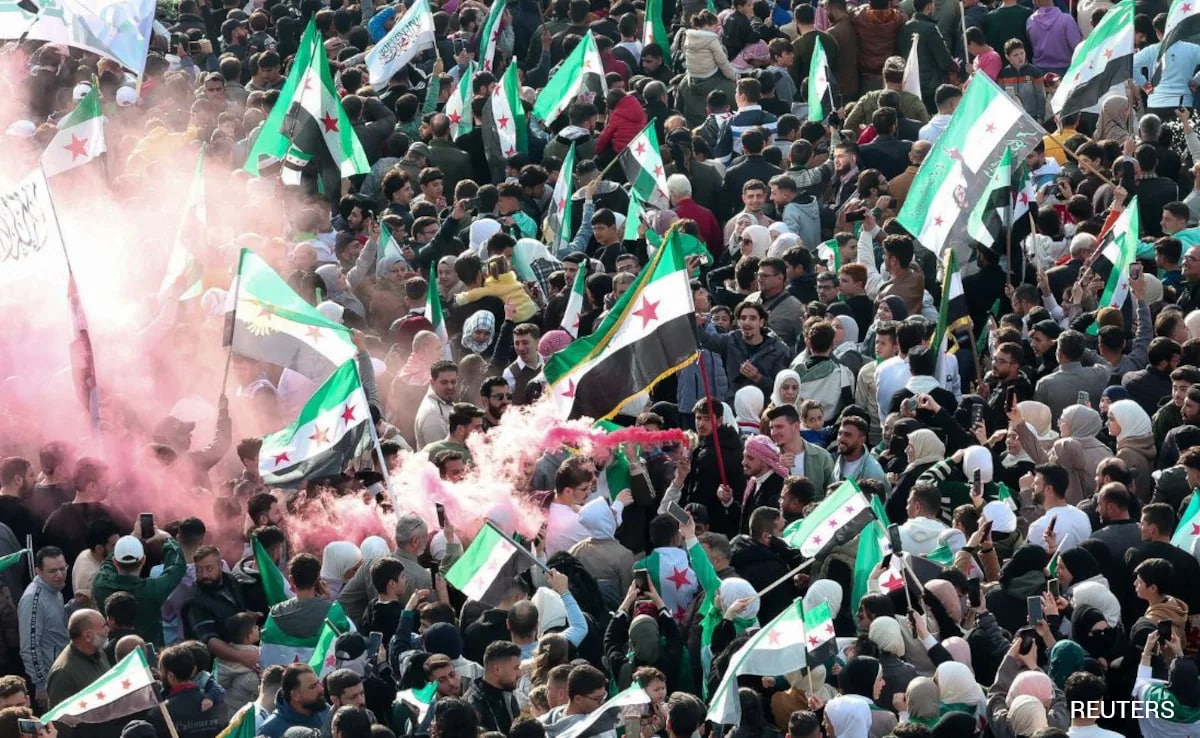
Syrians commemorated the first anniversary of Bashar al-Assad's overthrow after his decades-long authoritarian rule.
In Homs, Mohammad Marwan found himself released from Syria's infamous Saydnaya prison a year ago when advancing rebel forces liberated the facility. Walking barefoot and disoriented, this marked the end of his nightmare that began in 2018 after being arrested for evading mandatory military service.
Before arriving at Saydnaya—a complex notorious for human rights abuses under Assad's regime—Marwan had been transferred through four other detention centers. He vividly remembers the brutal welcome new prisoners received: beatings and electric shocks accompanied by guards declaring, "You have no rights here, and we're not calling an ambulance unless we have a dead body."
His December 8, 2024 return to his village in Homs province was a moment of celebration with family and friends. However, the six years of imprisonment left lasting physical and psychological damage. He developed tuberculosis causing chest pain and breathing difficulties, while also suffering from severe anxiety and insomnia.
Currently receiving tuberculosis treatment and attending therapy at a rehabilitation center for former prisoners in Homs, Marwan reports gradual improvement in both his physical and mental health. "We were in something like a state of death in Saydnaya," he reflected. "Now we've come back to life."
On Monday, thousands of Syrians celebrated the anniversary of Assad's downfall in street demonstrations across the country.
Like Marwan's personal recovery, Syria is struggling to heal following the collapse of the Assad dynasty's oppressive 50-year reign. The country endured 14 years of devastating civil war that claimed approximately half a million lives, displaced millions more, and left the nation fractured and severely damaged.
The unexpected collapse of Assad's government stunned even those who fought against it. In late November 2024, insurgent groups from northwestern Syria—led by Hayat Tahrir al-Sham under Ahmad al-Sharaa, now Syria's interim president—launched an offensive targeting Aleppo. They were surprised when Syrian army defenses rapidly disintegrated, first in Aleppo, then in the strategic cities of Hama and Homs, opening a clear path to Damascus.
While rebel forces from the south mobilized toward the capital, insurgents captured Damascus on December 8. Assad was evacuated by Russian forces and remains in exile in Moscow. Russia, Assad's longtime ally, chose not to intervene militarily and has instead established relations with Syria's new leadership while maintaining its coastal military bases.
Hassan Abdul Ghani, spokesperson for the Syrian Ministry of Defense, explained that HTS and allied groups had implemented major organizational reforms after losing territory to Assad's forces in 2019 and 2020. The November 2024 offensive wasn't initially aimed at capturing Damascus but was designed to prevent an anticipated government offensive against opposition-held Idlib.
Attacking Aleppo "was a military solution to expand the radius of the battle and thus safeguard the liberated interior areas," Abdul Ghani stated. The rebels strategically timed their assault to exploit Russia's preoccupation with the Ukraine conflict and Hezbollah's weakened position following its war with Israel.
When the Syrian army collapsed, the insurgents seized the opportunity, "taking advantage of every golden opportunity," according to Abdul Ghani.
Since his sudden rise to power, al-Sharaa has engaged in diplomatic outreach, developing relationships with Western and Arab nations that had previously shunned Assad and once considered al-Sharaa himself a terrorist. In November, he made history as the first Syrian president to visit Washington since Syria gained independence in 1946.
In his Damascus speech on Monday, al-Sharaa outlined his vision of Syria as "a strong country that belongs to its ancient past, looks forward to a promising future and is restoring its natural position in its Arab, regional and international environment" that will join "the ranks of the most advanced nations."
However, diplomatic progress has been overshadowed by outbreaks of sectarian violence, with hundreds of Alawite and Druze civilians killed by pro-government Sunni fighters. The Druze community has established its own de facto government and military forces in southern Sweida province.
Tensions persist between Damascus and Kurdish-led forces controlling northeastern Syria, despite a March agreement intended to merge their military forces. Israel remains cautious about Syria's new Islamist government, even though al-Sharaa has expressed desire to avoid conflict. Israel has occupied a former UN buffer zone in southern Syria and continues regular airstrikes and incursions. Security agreement negotiations have reached an impasse.
Civil war remnants remain prevalent throughout Syria. The Mines Advisory Group reported Monday that landmines have killed at least 590 people since Assad's fall, including 167 children, potentially making Syria the country with the world's highest landmine casualty rate in 2025.
The economy continues to struggle despite the lifting of most Western sanctions. While Gulf nations have promised reconstruction investments, little tangible progress has materialized. The World Bank estimates rebuilding war-damaged areas will cost $216 billion.
Most reconstruction has been limited to individual owners repairing their damaged homes and businesses.
On Damascus's outskirts, the formerly vibrant Yarmouk Palestinian camp resembles a lunar landscape. Controlled by various militant groups and later bombarded by government forces, the camp was largely abandoned after 2018.
Since Assad's overthrow, former residents have gradually returned. While the most damaged areas remain largely uninhabited, the main street entering the camp shows signs of recovery—damaged walls repaired in structurally sound buildings, shops reopening, and families returning to apartments. However, comprehensive reconstruction appears distant.
"It's been a year since the regime fell. I would hope they could remove the old destroyed houses and build towers," said Maher al-Homsi, who is repairing his damaged home despite the area lacking water connections.
His neighbor, Etab al-Hawari, showed understanding toward the new government: "They inherited an empty country—the banks are empty, the infrastructure was robbed, the homes were robbed."
Bassam Dimashqi, a Damascus dentist, acknowledged improvements: "Of course it's better, there's freedom of some sort." Yet he remains concerned about security challenges and economic implications. "The job of the state is to impose security, and once you impose security, everything else will come," he observed. "The security situation is what encourages investors to come and do projects."
The UN refugee agency reports over 1 million refugees and nearly 2 million internally displaced Syrians have returned home since Assad's fall. However, without employment opportunities and reconstruction, some will leave again.
Among them is Marwan, who considers post-Assad Syria "far better" than before, but struggles financially. Sometimes earning only 50,000 or 60,000 Syrian pounds (approximately $5) from daily labor, he plans to seek better-paying work in Lebanon once his tuberculosis treatment concludes.
Source: https://www.ndtv.com/world-news/syrians-struggle-to-heal-as-country-marks-one-year-of-assads-ouster-9773993