
US Concerns Intensify Over India-Russia Relations Following Putin's High-Profile Visit to New Delhi
- Date & Time:
- |
- Views: 49
- |
- From: India News Bull
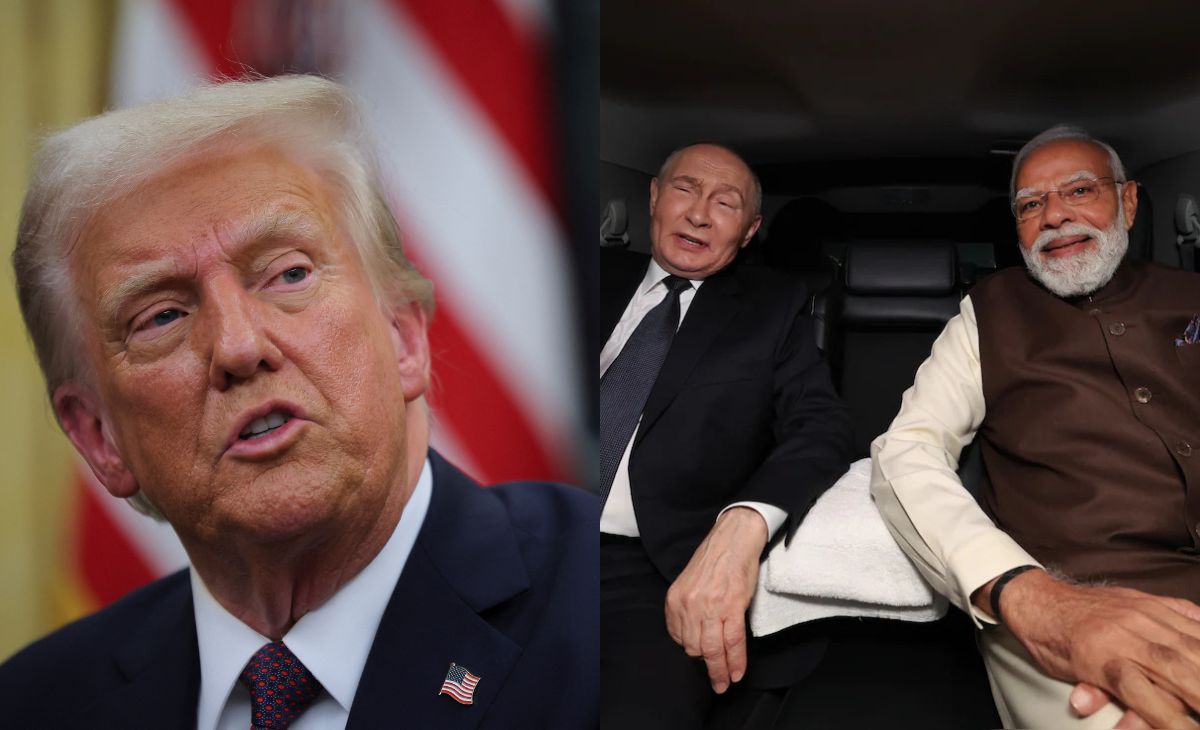
The recent high-profile visit of Russian President Vladimir Putin to New Delhi has sparked renewed discussions in Washington regarding India's strengthening relationship with Moscow during a period of rapid global geopolitical realignment.
In an exclusive interview with NDTV, Michael Kugelman, Senior Fellow for South Asia at the Atlantic Council, indicated that this visit, which was celebrated in India for its strong diplomatic imagery and comprehensive outcomes, has intensified concerns within the US administration about the direction of India-Russia relations.
According to Kugelman, Washington is likely to interpret the successful summit, complete with a detailed joint statement and renewed commercial and military cooperation agreements, as India "bolstering Putin" at a time when the United States is attempting to reinvigorate peace negotiations in Ukraine.
While Prime Minister Narendra Modi has simultaneously reached out to Kyiv and maintained that "this is not an era of war," the meeting with Putin has highlighted the constraints on New Delhi's strategic autonomy in an increasingly divided global landscape.
The timing of these developments has added to the diplomatic tension. The postponement of the Quad summit, the delay of Donald Trump's visit to India, and US sanctions against Moscow have created new complications. "These sanctions have changed the calculus," Kugelman observed, noting that India's decision to reduce Russian oil imports shortly before Putin's arrival demonstrates the complex balancing act New Delhi must perform between Russian and Western interests.
While India's new gas agreement with the United States may help alleviate some American concerns, Kugelman suggested that "more concessions will likely be expected."
Trade issues remain at the forefront of bilateral tensions. As Washington imposes tariffs on various partners from China to Canada, India is preparing for potential economic repercussions. President Trump's public criticism of India's economy and inconsistent messaging regarding his personal relationship with PM Modi have further complicated diplomatic relations.
Kugelman cautioned that countries seeking tariff relief from Trump have historically been required to make significant concessions. "India faces a difficult moment," he stated, though he noted that recent signals suggesting both nations are "close to a deal" provide some reason for cautious optimism.
A potential stabilizing factor is the appointment of Sergio Gor as the new US ambassador to India. As a close Trump ally and vocal advocate for strong India-US relations, Gor is expected to significantly influence the tone of bilateral engagement moving forward.
Kugelman emphasized the distinction between the hardline rhetoric from the White House and the more collaborative approach championed by the State Department, Defense Department, and Congress. "There is strong bipartisan support for India," he remarked, suggesting that institutional goodwill persists despite recent tensions.
Regarding South Asia's volatile security situation, Kugelman offered a measured assessment of the recent India-Pakistan conflict and the tenuous ceasefire that followed. He warned that India's established red lines—particularly treating any Pakistan-backed terror attack as an act of war—indicate that hostilities could resume under the right circumstances.
Pakistan's military and civilian leadership gained substantial public support during the conflict, according to Kugelman. However, the introduction of controversial constitutional amendments and Army Chief Asim Munir's promotion to field marshal risk undermining this goodwill, potentially destabilizing the country's internal and external position.
Kugelman also addressed China's growing regional influence and its implications for India and the US. He argued that the Trump administration's China policy remains undefined, with the president alternating between confrontational rhetoric and pragmatic restraint. Trump will likely maintain economic competition with Beijing, Kugelman suggested, while avoiding actions that could trigger damaging retaliation from a nation with substantial leverage in global markets.
This dynamic raises the possibility of a new US-China "understanding" that could reshape Indo-Pacific dynamics and complicate India's strategic calculations.
Despite these challenges, Kugelman expressed cautious optimism regarding India-US relations. He indicated that both governments remain committed to preventing a rupture and are continuing high-level negotiations. "It's a difficult moment, but not a breaking point," he stated, adding, "There is a genuine desire in Washington to get this relationship back on track. It's just a matter of time."
Source: https://www.ndtv.com/world-news/putin-visit-raised-us-concern-on-india-russia-ties-expert-to-ndtv-9771524