
Kremlin Welcomes Trump's New Strategy: Russia No Longer Labeled a 'Direct Threat' in US Security Policy
- Date & Time:
- |
- Views: 44
- |
- From: India News Bull
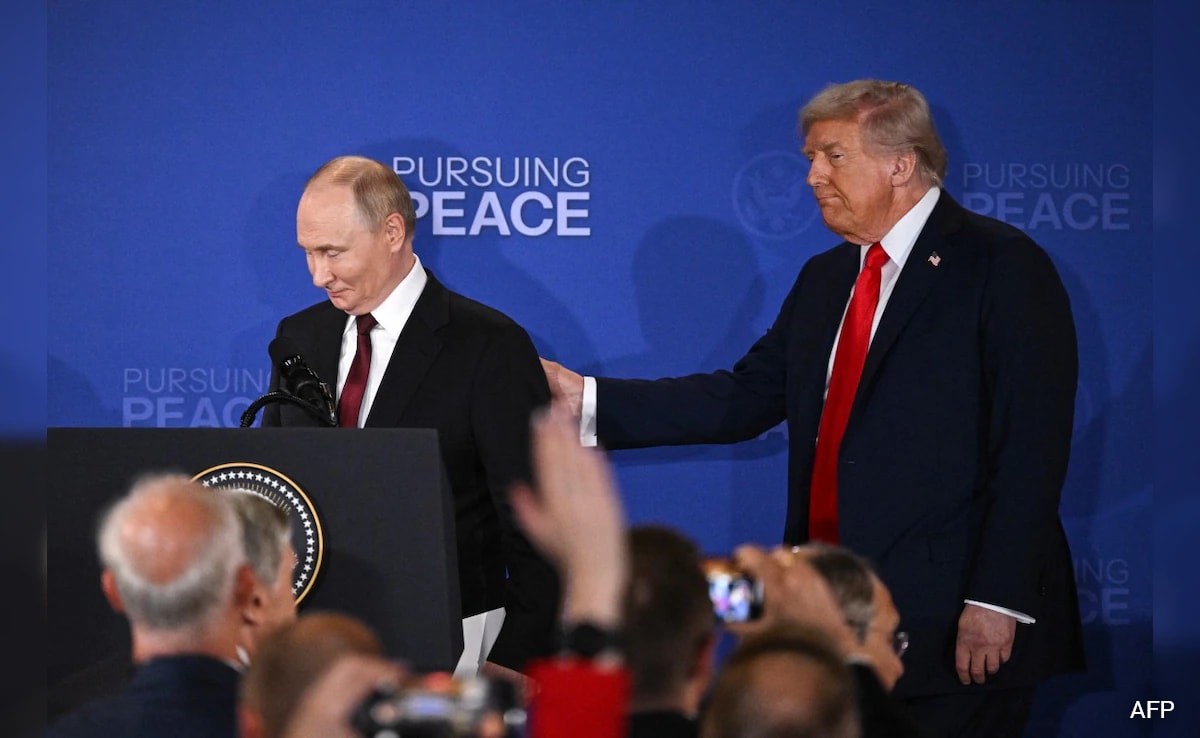
Donald Trump has frequently expressed positive and admiring sentiments about Vladimir Putin.
The Kremlin expressed approval on Sunday regarding US President Donald Trump's decision to no longer classify Russia as a direct threat. They also noted that his new national security strategy, which portrays European powers as declining, largely aligns with Russia's own perspective.
The US National Security Strategy outlined Trump's "flexible realism" vision and advocated for reviving the 19th century Monroe Doctrine, which established the Western Hemisphere as Washington's sphere of influence.
The Trump-signed strategy also warned about Europe facing "civilizational erasure," identified negotiating an end to the Ukraine conflict as a "core" US interest, and expressed Washington's desire to reestablish strategic stability with Russia.
"The adjustments we're observing align considerably with our viewpoint," Kremlin spokesman Dmitry Peskov told state television reporter Pavel Zarubin when questioned about the new US strategy.
When asked about the US document's commitment to end "the perception, and preventing the reality, of NATO as a perpetually expanding alliance," Peskov described it as encouraging.
However, Peskov also cautioned that what he referred to as the US "deep state" viewed the world differently from Trump. The president has used this term to describe an allegedly entrenched network of US officials seeking to undermine those who challenge the status quo, including Trump himself.
Trump's critics contend that no "deep state" exists and that Trump and his allies are promoting a conspiracy theory to justify an executive-branch power grab.
Since Russia's annexation of Crimea in 2014 and its invasion of Ukraine in 2022, US strategies have designated Moscow as an aggressor or a threat attempting to destabilize the post-Cold War order through force.
In statements to the state-run TASS news agency, Peskov indicated that calling for cooperation with Moscow on strategic stability issues rather than describing Russia as a direct threat represented a positive development.
Trump has often made favorable and admiring remarks about Russian President Vladimir Putin, leading critics to accuse him of being lenient toward Moscow, despite both his administrations imposing sanctions on Russia.
Senior officials from major European powers have repeatedly expressed concern that under Trump, the US might be turning away from Europe, which relies on Washington for military support.
Source: https://www.ndtv.com/world-news/kremlin-spokesman-dmitry-peskov-welcomes-us-president-donald-trumps-move-to-stop-calling-russia-direct-threat-9769012