
The Rising Tide of Military Coups in Africa: From Mali to Benin's Recent Attempt
- Date & Time:
- |
- Views: 46
- |
- From: India News Bull
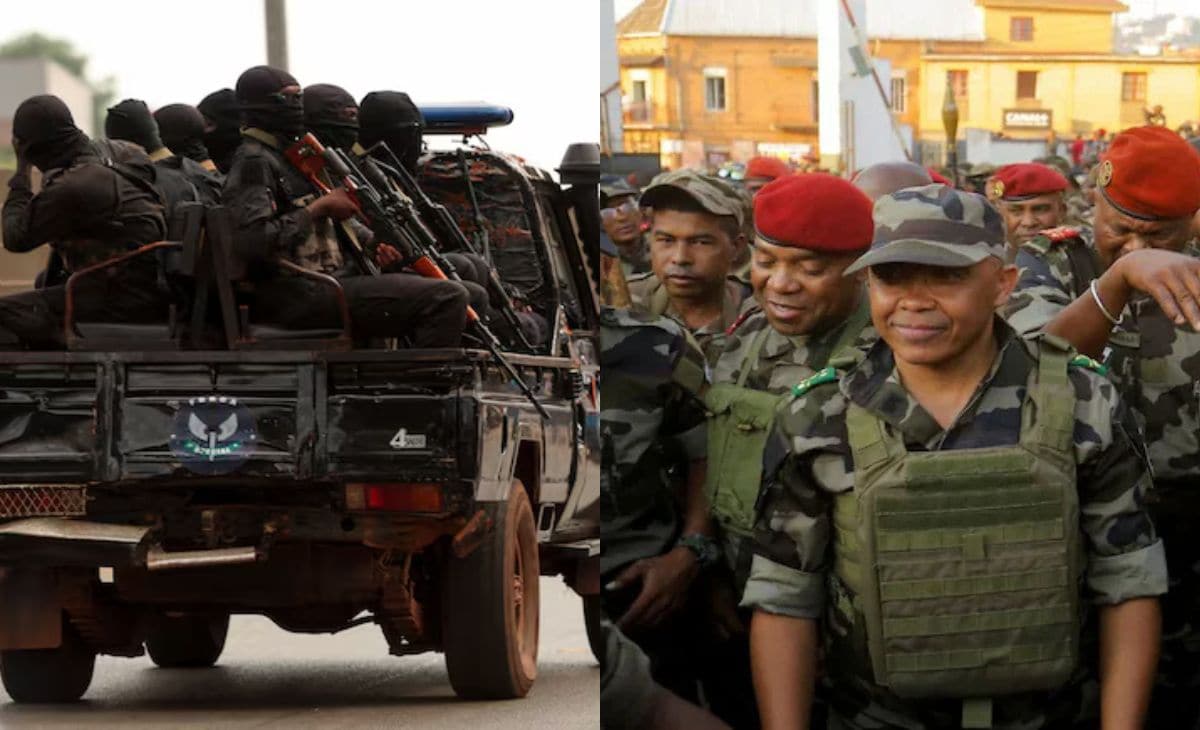
Soldiers in Guinea-Bissau seized power following a contested presidential election, adding to the growing pattern of military interventions across Africa.
Benin has recently joined the expanding list of African nations experiencing military takeovers since 2020. On Sunday, the country briefly faced a coup attempt that was ultimately thwarted within hours.
Following a familiar script witnessed throughout West Africa, military personnel appeared on Benin's state television declaring President Patrice Talon's removal and announcing the dissolution of the government after a swift power grab.
Interior Minister Alassane Seidou later confirmed in a video statement that the coup attempt had been defeated. He stated that the involved soldiers had "launched a mutiny with the aim of destabilizing the state and its institutions," while emphasizing that the military remained "committed to the republic."
Below is a chronological overview of recent coups across Africa, which follow patterns of disputed elections, constitutional crises, security challenges, and youth dissatisfaction:
Mali has experienced two consecutive coups since August 2020. Soldiers mutinied and detained senior military officials near Bamako following weeks of civilian protests demanding President Ibrahim Keita's resignation over corruption allegations and failure to address armed group activities.
Col. Assimi Goita, the military leader, initially formed a power-sharing arrangement with civilian president Bah Ndaw, serving as vice president in a transitional government. In 2021, Goita overthrew Ndaw after several disagreements and installed himself as president, postponing scheduled 2022 elections until 2077.
Mali now forms part of a triumvirate of landlocked West African nations, alongside Burkina Faso and Niger, governed by military juntas that have established their own bloc after breaking away from ECOWAS, firmly rejecting calls for democratic restoration.
Following his father's death in 2021, army general Mahamat Idris Deby rapidly seized power, extending his family's three-decade rule over this central African country.
Three years later, he delivered the election he had promised upon taking power. Deby was declared victor in an election the opposition claimed was manipulated. He has subsequently suppressed critics, with former Prime Minister Succes Masra, an opposition figure, receiving a 20-year prison sentence earlier this year.
After 11 years in office, Alpha Conde was ousted by soldiers led by Mamady Doumbouya. In 2020, Conde had amended the constitution to enable himself to seek a third term.
Doumbouya is participating in the December elections, seeking to transition from military leadership to civilian rule, following a referendum this year that permitted junta members to run in elections and extended presidential term limits from five to seven years.
The Sudanese military, under Gen. Abdel-Fattah Burhan, executed a coup in October 2021, deposing Omar al-Bashir after his 26-year rule.
Burhan subsequently shared power with Muhammad Dangalo, known as Hedmeti, commander of the paramilitary Rapid Support Forces.
In April 2023, escalating tensions between them erupted into what the United Nations describes as one of the world's most devastating conflicts, which continues to this day.
Similar to neighboring Mali, Burkina Faso has undergone two successive coups. In January 2022, Roch Kaboré was overthrown by Lt. Col. Paul-Henri Damiba. By September, Capt. Ibrahim Traoré, heading an artillery unit of Burkina Faso's army, ousted Damiba citing the same justification as the previous coup—deteriorating security conditions.
Traoré has continued to govern the country and dissolved the independent electoral commission in July.
Gen. Abdourahamane Tchiani deposed Mohamed Bazoum, terminating a rare democratic transition in Niger. This dramatic coup triggered a crisis within the regional ECOWAS bloc, which threatened military intervention if Bazoum was not reinstated and democracy restored.
The crisis divided the region, with Niger forming the breakaway Alliance of Sahel States alongside Burkina Faso and Mali.
Shortly after President Ali Bongo, who had ruled for 14 years and sought a third term, was declared winner of a 2023 election, military officers announced on television they were assuming power. They nullified the election results and dissolved all state institutions.
Brice Oligui Nguema, Bongo's cousin, seized control and has since governed Gabon. He was declared winner of a presidential election held in April.
Expressing frustration over persistent water shortages and power outages, Madagascar's youth took to the streets demanding former President Andry Rajoelina's resignation.
Rajoelina instead dissolved his government while refusing to step down, ultimately leading to military intervention in this southern African nation.
On November 26, soldiers in Guinea-Bissau seized power following a disputed presidential election held three days earlier. Critics including opposition figures described the coup as a staged takeover designed to prevent the incumbent's electoral defeat.
Both incumbent President Umaro Sissoco Embalo and main opposition candidate Fernando Dias claimed victory in the November 23 presidential election.
Embalo was released and permitted to flee to neighboring Senegal, from where he has since departed. The new military junta has made appointments, many being allies of the deposed president.
Less than two weeks after the Guinea-Bissau coup, soldiers attempted a similar takeover in Benin following gunshots near the presidential palace.
A group of soldiers, identifying themselves as the Military Committee for Refoundation, appeared on state television announcing President Talon's removal and the dissolution of state institutions.
The soldiers appointed Lt. Col. Pascal Tigri as president of their military committee.
Hours later, officials announced that the coup attempt had been foiled by the armed forces, which remained "committed to the republic."
Source: https://www.ndtv.com/world-news/amid-benins-coup-a-look-at-other-military-takeovers-in-africa-9768422