
India Emerges as Critical Partner in Trump's New National Security Strategy: Deepening Economic and Defense Ties
- Date & Time:
- |
- Views: 53
- |
- From: India News Bull
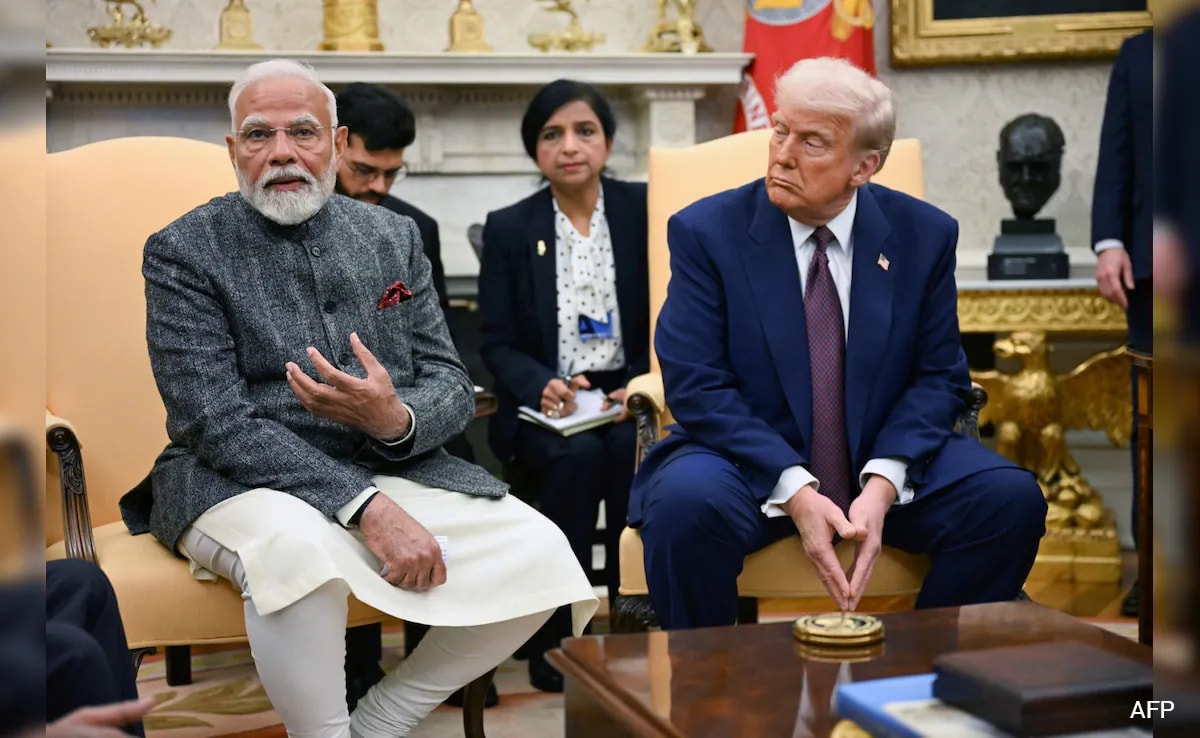
The Trump Administration has elevated India to the status of a critical partner within its newly released National Security Strategy, demonstrating Washington's commitment to strengthening ties with New Delhi across economic, technological, and defense domains.
The White House strategy document explicitly advocates for enhanced commercial relations with India and encourages New Delhi's active participation in Indo-Pacific security through continued engagement in the Quadrilateral Security Dialogue alongside Australia, Japan, and the United States.
"We must continue to improve commercial (and other) relations with India," states the document, highlighting a significant diplomatic emphasis on the bilateral relationship.
The strategy identifies the Indo-Pacific region as "already the source of almost half the world's GDP" and positions it among "the next century's key economic and geopolitical battlegrounds."
US officials have expressed their intention to collaborate with treaty allies and partners—representing a combined economic force of $65 trillion—to counter what the document characterizes as "predatory economic practices" in the region.
India, with its expanding economy and strategic position, features prominently in this strategic framework. The administration has highlighted technology cooperation, specifically in artificial intelligence, quantum computing, and defense technologies, as areas for strengthened partnership.
The document reaffirms America's commitment to quadrilateral cooperation through the Quad, which has emerged as a crucial diplomatic and security framework in the Indo-Pacific.
Washington views this grouping as essential for maintaining what it describes as a "free and open Indo-Pacific" and ensuring freedom of navigation in vital maritime corridors.
On security matters, the strategy outlines plans to build military capabilities "capable of denying aggression anywhere in the First Island Chain" while urging allies to "step up and spend—and more importantly do—much more for collective defence."
The document also addresses Taiwan and the South China Sea, through which one-third of global shipping passes annually, as critical concerns for regional stability and the US economy.
Titled "America First," the National Security Strategy represents a departure from previous administrations' approaches, emphasizing what officials describe as "pragmatic" engagement focused on core US interests.
India is well-positioned within this framework, with the strategy explicitly rejecting demands for democratic or social change in partner nations, instead favoring relationships based on shared interests and mutual benefit.
The document portrays President Trump's second term as an era of "unconventional diplomacy," claiming peace deals or ceasefires in several protracted conflicts, including between India and Pakistan. It frames these initiatives as part of a broader effort to "surgically extinguish embers of division between nuclear-capable nations" before they escalate into wider conflict.
Regarding economics, the document characterizes US-China competition as a contest over supply chains, critical minerals, and advanced technologies including AI, biotech, and quantum computing, while encouraging allies and partners—including India—to align with US standards and controls. It advocates for "balanced trade" and "reindustrialization" domestically, a position that contrasts with Washington's recent significant tariffs and trade pressures directed at Indian exports and energy relationships with Russia.
Source: https://www.ndtv.com/world-news/us-positions-india-as-important-partner-in-new-national-security-strategy-9759621