
Israel Resumes Airstrikes on Lebanon Following Historic First Direct Talks in Decades
- Date & Time:
- |
- Views: 41
- |
- From: India News Bull
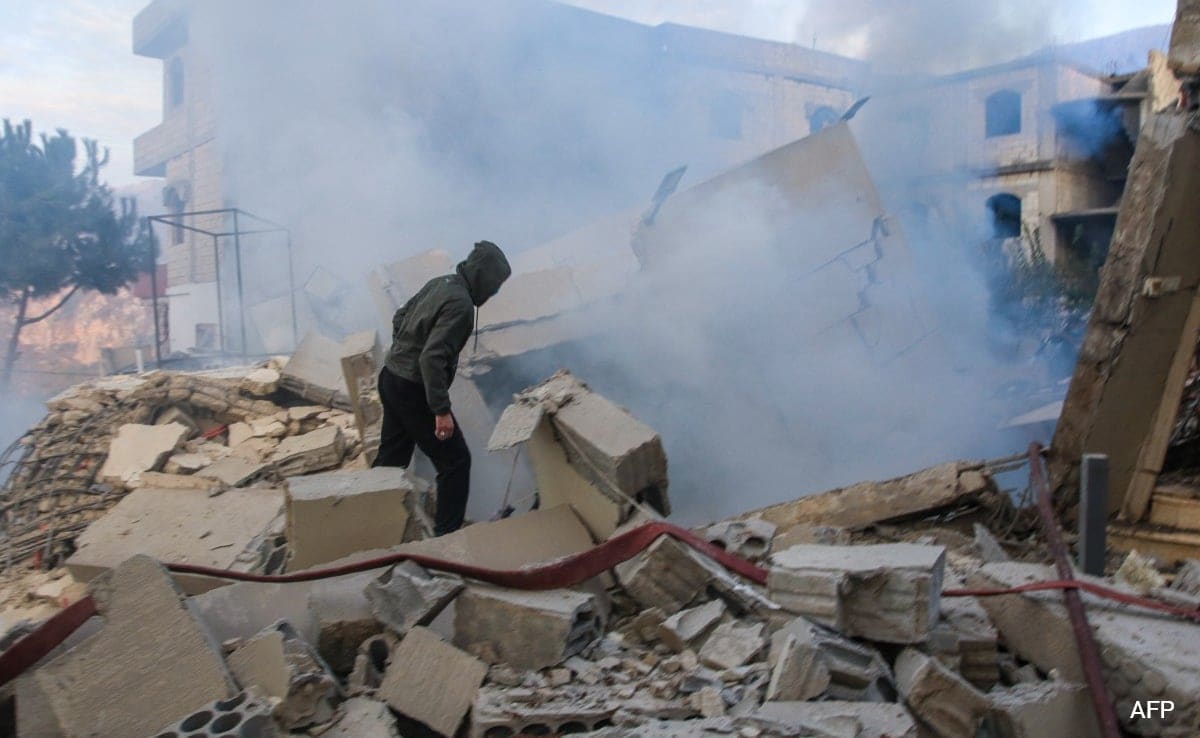
Israel conducted an airstrike targeting the southern Lebanese village of Jbaa on December 4, 2025.
Israeli forces launched raids in southern Lebanon on Thursday, with the military stating they were targeting Hezbollah weapons storage facilities. This action came just one day after Lebanese and Israeli civilian representatives engaged in their first direct talks in decades.
Despite a November 2024 ceasefire intended to end over a year of conflict between Israel and the Iran-supported militant group, Israel has continued its strikes on Lebanon and maintained troops in five strategic areas in southern Lebanon.
Pope Leo XIV's visit from Sunday to Tuesday had provided Lebanon with a brief respite from Israeli airstrikes, which had escalated in recent weeks. During his visit, the pontiff called for an end to hostilities.
On Thursday, the Israeli military announced it "began conducting strikes on Hezbollah terror targets in southern Lebanon," following warnings of impending strikes on buildings in south Lebanon's Mahrouna and Jbaa.
The military subsequently issued additional warnings about strikes on Hezbollah "military infrastructure" in Majadal and Baraasheet, also in southern Lebanon.
Lebanon's official National News Agency reported that "Israeli warplanes launched a strike on the town of Mahrouna," while additional raids targeted structures in Jbaa, Majadal, and Baraasheet.
An AFP photographer observed smoke rising from the strike location in Jbaa.
Local official Yassir Madi told journalists, including AFP, "It's a completely civilian area. We're used to Israeli threats from time to time. As for the damage, there's not a window within 300 metres that didn't break. Everyone is living in shock."
The Israeli military claimed it struck "weapons storage facilities belonging to Hezbollah" located in the "heart of the civilian population," adding, "This is yet another example of Hezbollah's cynical use of Lebanese civilians as human shields, and continued operations from within civilian areas."
Lebanon's government has pledged to disarm Hezbollah, but the group has rejected this proposal, and many Lebanese citizens fear a return to expanded Israeli military operations.
Lebanese and Israeli civilian representatives held unexpected talks on Wednesday under the auspices of the ceasefire monitoring mechanism at the UN peacekeeping force's headquarters in Lebanon's Naqura near the Israeli border.
Representatives of the ceasefire monitoring committee—including the United States, France, Lebanon, Israel, and UN forces—regularly meet in Naqura.
On Thursday, Lebanese President Joseph Aoun announced that another round of talks with Israel will commence on December 19.
Information Minister Paul Morcos quoted Aoun as describing the initial negotiations as "positive" and emphasizing "the need for the language of negotiation—not the language of war—to prevail."
Lebanon and Israel have technically been at war since 1948, and Lebanese Prime Minister Nawaf Salam cautioned that this new diplomatic contact did not constitute broader peace discussions.
The United States has been pressuring Lebanon to rapidly disarm Hezbollah and has advocated for direct talks between the neighboring countries.
Israeli Prime Minister Benjamin Netanyahu's office stated that the atmosphere at the talks was "positive," and that there was agreement "to develop ideas to promote potential economic cooperation between Israel and Lebanon."
Israel also emphasized that it was "essential" for Hezbollah to disarm regardless of any progress in economic cooperation, according to the premier's office.
Salam clarified that the new discussions were strictly limited to fully implementing last year's truce, stating, "We are not yet at peace talks." He explained that the talks only sought "the cessation of hostilities," the "release of Lebanese hostages," and "the complete Israeli withdrawal" from Lebanon.
A spokesperson for the French foreign ministry said France "welcomes the holding of these discussions" that allow "all parties to come to the table," adding, "We are fully committed to ensuring that this mechanism remains the framework to promote de-escalation and enable a lasting return to stability in the region."
Until now, Israel and Lebanon, which lack formal diplomatic relations, have insisted on limiting participation in the ceasefire mechanism to military officers.
The US embassy in Beirut reported that US envoy Morgan Ortagus also attended the talks. Ortagus had been in Jerusalem a day earlier and met with Netanyahu and Israeli Foreign Minister Gideon Saar.
Source: https://www.ndtv.com/world-news/israel-launches-fresh-strikes-on-lebanon-after-warnings-9753660