
Trump's Declining Political Influence: November Reveals Significant Challenges for the Presidency
- Date & Time:
- |
- Views: 46
- |
- From: India News Bull
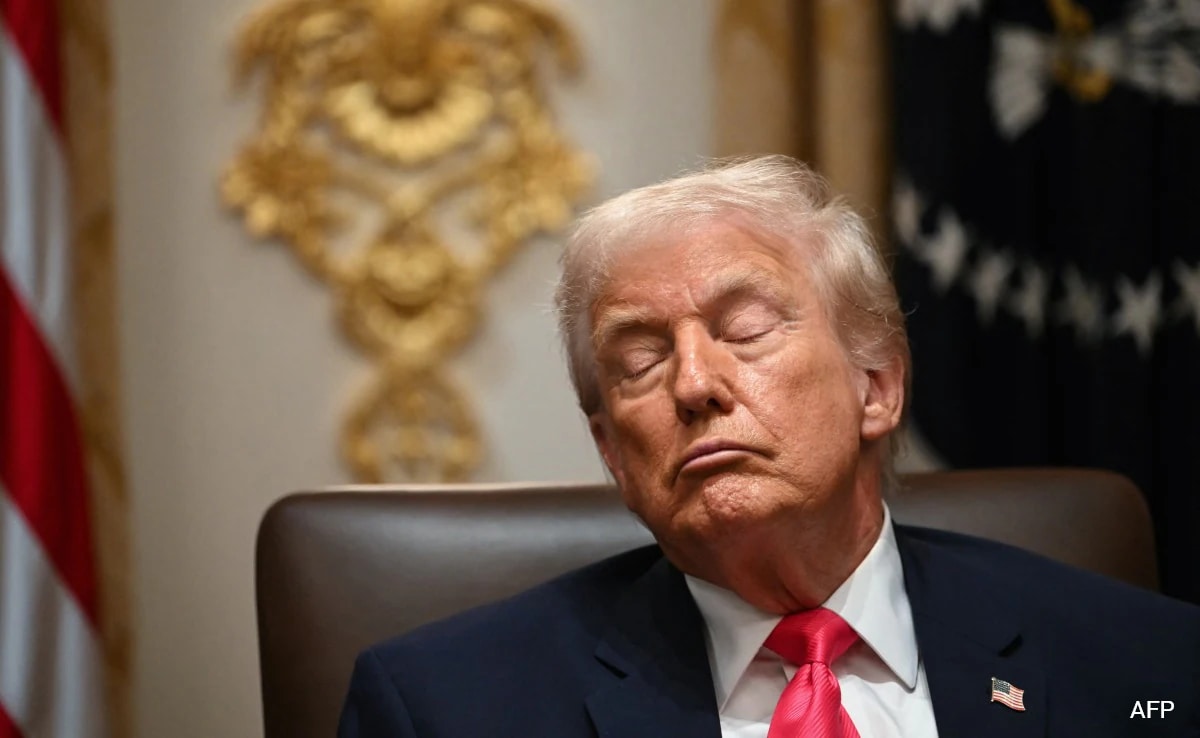
November has emerged as a particularly challenging month for US President Donald Trump, with a series of significant political, legal, and diplomatic challenges suggesting his grip on power may be weakening. The month began with Democrats achieving substantial victories across state and local elections on November 4, effectively transforming local races into a national assessment of Trump's leadership capabilities.
Democrats secured governorships in both New Jersey and Virginia with female candidates, winning by unexpectedly large margins. These decisive outcomes indicate more than just partisan preferences—they suggest a considerable erosion of Republican influence under Trump's leadership. Democrats also claimed key mayoral positions in major cities, including Zohran Mamdani's surprising victory in New York City, which essentially became a contest between the progressive young candidate and Trump himself, as the President had actively opposed Mamdani while endorsing his opponent. Additionally, California passed a redistricting referendum that could reshape House representation to favor Democrats through 2026.
These Democratic successes, primarily in urban and suburban regions, potentially indicate growing dissatisfaction with Republican leadership under Trump, especially among younger voters and minority communities. The election results suggest voters are increasingly evaluating candidates based on competence, vision, and performance rather than mere party allegiance.
November also witnessed historic victories for minority and immigrant communities. Virginia elected Ghazala Hashmi, born in Hyderabad, India, as its first Muslim Lieutenant-Governor, while Mamdani's mayoral win in New York highlighted the increasing influence of young, immigrant, and Muslim voters in urban politics. These outcomes carry particular significance against the backdrop of prevalent anti-immigrant and Islamophobic rhetoric in national discourse.
These victories demonstrate voters' willingness to prioritize vision, leadership, and character over identity or religious affiliation, countering divisive rhetoric. For Democrats, these aren't merely symbolic wins—they represent a new generation of engaged voters potentially shaping political outcomes for years ahead, energizing younger constituents and inspiring future political participation.
Trump's domestic policy decisions continue generating discontent. Inflation remains high, unemployment exceeds pre-pandemic levels, and wage growth struggles to match rising costs. Many Americans fear that the government shutdown and Republican refusal to extend Obamacare subsidies will worsen economic hardship, particularly for middle and lower-income households.
Trump's tariff-driven industrial strategy has generated federal revenue but at significant cost to consumers and American businesses. Major allies in Europe, Japan, South Korea, and India have expressed frustration, complicating diplomatic and economic relationships. Simultaneously, his stringent immigration enforcement, including family separations and mass deportations, has attracted widespread criticism. The backlash from Hispanic and immigrant communities contributed to Democratic gains in areas with substantial minority populations.
Additionally, Trump's persistent focus on foreign policy—particularly Middle East diplomacy and engagement with Israel—has diverted resources and attention from pressing domestic issues. While supporters argue these actions strengthen America's global influence, voters appear increasingly concerned about neglected domestic priorities.
Trump faced another setback when federal courts struck down his attempts to redraw electoral maps in Texas to favor Republican candidates. Judges ruled these maps constituted unconstitutional racial gerrymanders, undermining his effort to secure five additional GOP-friendly Congressional seats. This legal defeat not only frustrates the administration's strategic ambitions but could significantly backfire if California succeeds in its gerrymandering efforts.
Meanwhile, Trump's initial resistance to releasing the Epstein files followed by an abrupt reversal has invited renewed scrutiny of Jeffrey Epstein—whose criminal activities, sexual misconduct, and alleged political connections, including ties to Israel, have long concerned the public, particularly conservative commentators within the MAGA movement.
Trump's foreign policy decisions have generated international concern. His decision to boycott the G20 summit in South Africa diminished American influence at a crucial international forum. The summit passed a resolution completely without US input, highlighting issues contrary to Trump's agenda, especially emphasizing the climate crisis. Moreover, US allies rejected key elements of Trump's Ukraine peace plan, which restricts Ukraine militarily and requires territorial concessions to Russia.
This retreat underscores the broader perception of unpredictability in Trump's foreign policy. Scholars and diplomats worry that the United States is becoming unreliable as a stabilizing force, creating opportunities for rising powers—particularly China and the so-called CRINK alliance (China, Russia, Iran, North Korea)—to expand their influence.
Internally, November's outcomes may provoke friction within the Republican Party. Trump's unilateral approach and aggressive media presence are making party leaders nervous and may generate resistance. As the 2026 midterms approach, he may face pressure to adjust policies on domestic economics, immigration, and foreign relations to prevent further erosion of support for Republicans in competitive races.
Meanwhile, Democrats are leveraging this momentum. Candidates like Mamdani and Hashmi are inspiring new voter engagement, particularly among younger, immigrant, and minority populations. The unexpected Mamdani-Trump alliance at the White House has shocked both MAGA Republicans and establishment Democrats. Trump's open admiration and support for Mamdani and his agenda has surprised both parties, preventing Republicans from labeling Democrats as communists while forcing Democrats to shift from billionaire and Israel-focused politics toward addressing working Americans' concerns.
The fundamental challenge for Trump is whether he will respond to these setbacks reflectively. Will he modify domestic policies on tariffs, healthcare, and immigration to better align with voter priorities? Will he re-engage with international institutions or continue withdrawing from diplomatic forums like the G20?
With voter frustration, legal challenges, Epstein controversies, and electoral defeats, November's results suggest Americans are expressing dissatisfaction with both the Republican Party and Trump personally. His response will determine the trajectory of his political career and the broader party's future.
(Dr. Muqtedar Khan is Professor of International Relations at the University of Delaware and host of Khanversations a YouTube show on global affairs. His most recent e-Book is titled, 'The Rise of India as a World Power'. He is a Senior fellow at the Newlines Institute.)
Disclaimer: These are the personal opinions of the author
Source: https://www.ndtv.com/opinion/are-americans-losing-faith-in-trump-9749485