
Vladimir Putin's KGB Years in Germany: How His Spy Agency Experience Shaped Russia's Future Leader
- Date & Time:
- |
- Views: 59
- |
- From: India News Bull
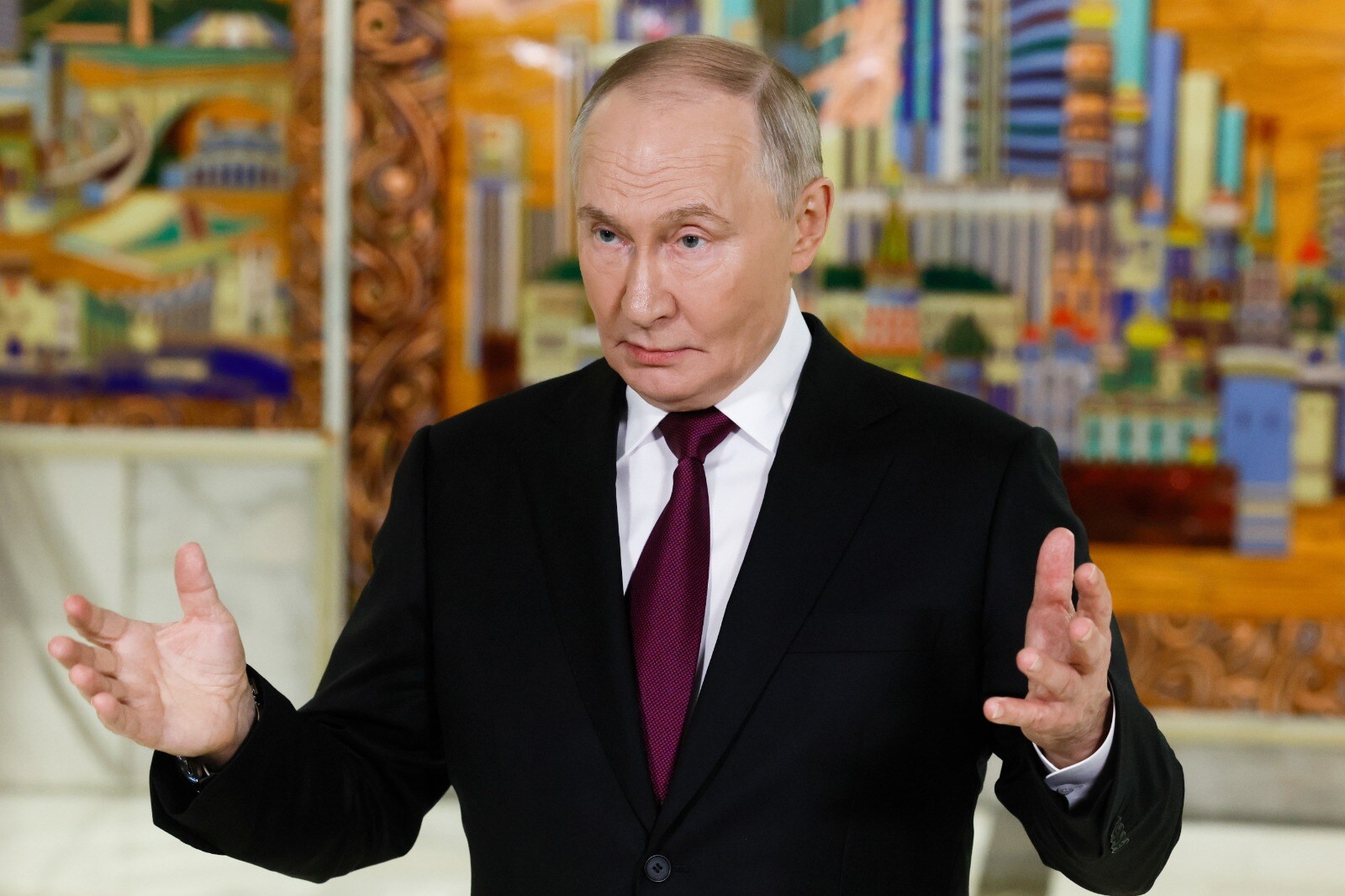
Vladimir Putin resigned from the KGB in 1991 following the dissolution of the Soviet Union.
Before ascending to the Russian presidency and becoming one of the world's most influential leaders, Vladimir Putin served as a mid-level officer in the KGB, the Soviet Union's formidable intelligence and security organization.
His KGB career commenced in the late 1970s, where he acquired essential espionage capabilities including source recruitment, counterintelligence operations, and surveillance methodologies. However, his experience extended considerably beyond his official duties.
Putin's assignment to Dresden, East Germany in 1985 represented his first international posting, where he operated under the guise of a translator. He also functioned as a liaison with the Stasi, East Germany's secret police. Putin resided there for approximately five years, a period he subsequently characterized as developmentally significant.
Putin's early KGB service coincided with the Cold War era when the Berlin Wall separated East and West Germany. The Berlin Wall's dismantling in 1989 marked a pivotal historical moment.
When protesters surrounded Dresden's Stasi headquarters and KGB intelligence office, Putin requested Red Army intervention but received what he described as "devastating silence" from Moscow, with officials stating, "We cannot do anything without orders."
Concerned about potential repercussions, Putin and his KGB colleagues incinerated substantial quantities of classified intelligence documents to conceal their activities. Putin later recalled, "I personally burned a huge amount of material. We burned so much stuff that the furnace burst."
Jack Barsky, a SPYEX consultant and former KGB sleeper agent, observed, "Putin transitioned from membership in an extraordinarily powerful organization and enjoying a comfortable lifestyle in East Germany to a position of complete vulnerability."
"This experience motivated him to reconstruct—not necessarily the Soviet Union, but a greater Russia. This remains his objective," Barsky added.
During his Dresden assignment, Putin was isolated from familiar Soviet environments. Despite being stationed in East Germany, he had proximate exposure to Western prosperity. Furthermore, his involvement in surveillance and covert operations enhanced his professional capabilities. Years of espionage work developed his skills in assessing individuals, anticipating actions, and discreetly managing threats.
Former KGB colleague Vladimir Usoltsev revealed that Putin dedicated significant time examining Western mail-order catalogs to remain informed about fashion trends.
His East German experience, particularly during the communist regime's collapse, provided Putin with valuable insights regarding governmental and societal functions. This informed his conception of establishing a robust and regulated society.
When Moscow withdrew support, Putin recognized that maintaining security and influence necessitated a powerful network of allies, while simultaneously instilling awareness that even formidable leaders could be readily overthrown.
Unlike the Soviet Union, East Germany maintained multiple political parties, though the Communist Party retained control.
Journalist Boris Reitschuster noted that Putin appreciated life in East Germany, viewing it as an "orderly paradise" characterized by organization and control.
Putin's observations in East Germany influenced his attempts to establish comparable control mechanisms in Russia.
However, when public demonstrations demanding freedom emerged, Putin—accustomed to authoritative control and secret police dominance—was profoundly affected. His perceived "paradise" transformed into a "KGB nightmare" as it demonstrated how rapidly a controlled system could disintegrate.
"When confronted with crowds in Kiev in 2004, Moscow in 2011, or Kiev during 2013-2014, I believe these Dresden memories resurface," explains Reitschuster. "His former apprehensions reemerge."
In 2020, Putin authorized a directive enabling him to remain in office until 2036. He secured a decisive victory in Russia's 2024 presidential elections, obtaining another six-year term. The 72-year-old received an unprecedented 87.8 percent of votes—the highest result in Russia's post-Soviet history.
Should he complete this term, Putin will become Russia's longest-serving leader in two centuries. His tenure would rank second only to Joseph Stalin, the former Communist Party general secretary, who governed for 29 years from 1923 to 1954.
Source: https://www.ndtv.com/world-news/inside-vladimir-putins-germany-years-how-a-spy-agency-posting-influenced-him-9748802