
Saving the Cheetah: How a Genetic Sperm Bank Could Prevent Extinction of Earth's Fastest Land Animal
- Date & Time:
- |
- Views: 52
- |
- From: India News Bull
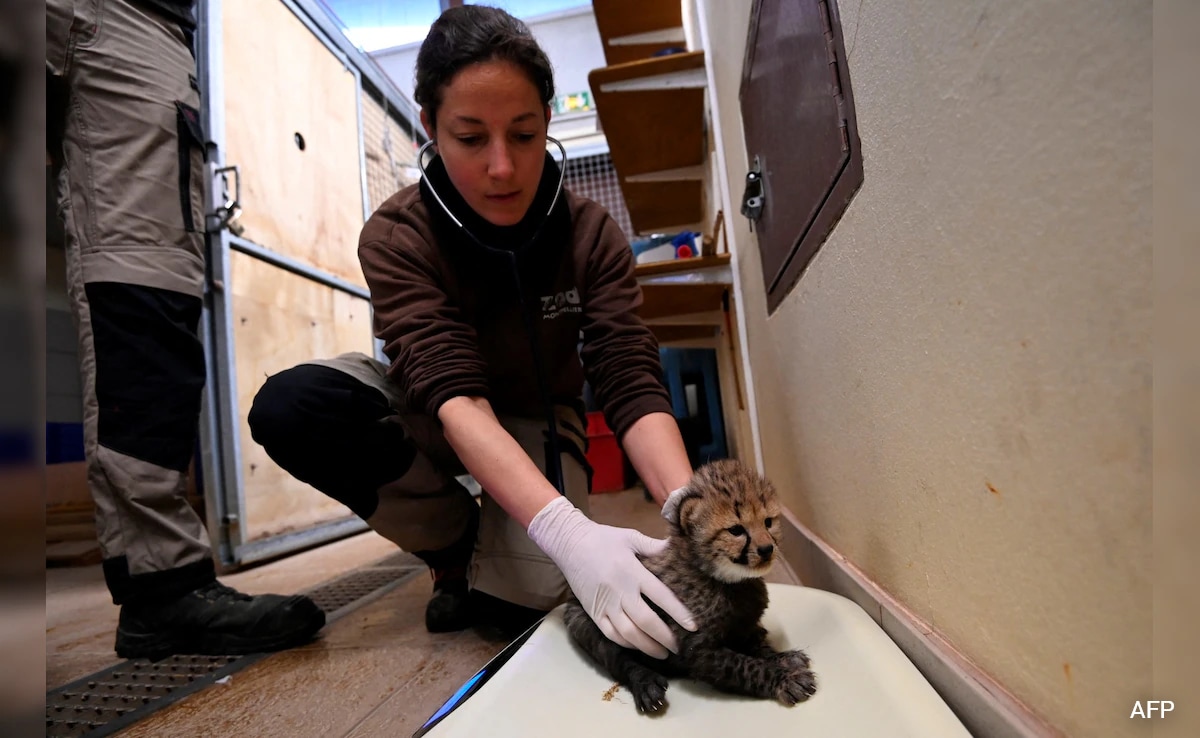
Globally, cheetah populations in the wild have plummeted by 80 percent over the past five decades.
For 35 years, American zoologist Laurie Marker has been diligently collecting and preserving specimens in a cheetah sperm bank in Namibia, hoping these genetic resources will never need to be utilized.
However, she fears that the world's fastest land mammal might face extinction someday, potentially requiring artificial reproduction techniques for survival.
Marker describes the sperm repository at her Cheetah Conservation Fund in the southern African nation as a "frozen zoo" of cheetahs she has been developing since 1990. This genetic bank represents a last-resort safeguard for these magnificent cats, whose numbers have declined dramatically in wild habitats during the last half-century.
"You don't utilize it unless it becomes necessary," Marker, one of the world's leading cheetah experts, explained to The Associated Press from her research facility near Otjiwarongo, Namibia. "And we sincerely hope never to reach that point."
As conservationists observe World Cheetah Day, fewer than 7,000 cheetahs remain in the wild, comparable to the critically endangered black rhino population. Only about 33 cheetah populations exist across isolated regions primarily in Africa, with most groups containing fewer than 100 animals, according to Marker.
Like many endangered species, these elegant felines that can achieve speeds of 70 miles per hour (112 kilometers per hour) face threats from habitat destruction, human-wildlife conflict, and illegal wildlife trafficking. Their diminishing, isolated populations result in a shrinking gene pool as small groups continuously breed among themselves, adversely affecting reproduction rates.
Worldwide, wild cheetah numbers have decreased by 80 percent in the past half-century, and they've been driven from 90 percent of their historical range.
Scientists believe cheetahs previously narrowly escaped extinction at the conclusion of the last ice age approximately 10,000-12,000 years ago, which initially reduced their genetic diversity.
Marker noted that limited genetic variation, combined with the fact that cheetahs have 70-80 percent abnormal sperm, suggests they might require reproductive assistance in the future.
"Consequently, maintaining a sperm bank makes perfect sense," Marker stated.
Preserving sperm isn't unique to cheetah conservation efforts. This approach has been developed for various species, including elephants, rhinoceroses, antelopes, other big cats, birds, and additional wildlife.
The importance of reproductive research, Marker explained, is evidenced in the desperate struggle to save the northern white rhinoceros from extinction.
Only two northern white rhinos remain, both females, rendering the species functionally extinct with no possibility of natural reproduction. Their sole hope lies in artificial reproduction using northern white rhino sperm collected and cryopreserved years ago.
Since neither remaining northern white rhino—a mother and daughter—can sustain pregnancies, scientists have attempted implanting northern white rhino embryos in southern white rhino surrogates. Though the surrogates haven't successfully carried any pregnancies to term, the conservation team remains committed to saving northern white rhinos despite overwhelming challenges.
Other artificial reproduction initiatives have succeeded, including a project that bred black-footed ferrets through assisted reproduction after they had been reduced to a single wild population in Wyoming, United States.
Marker doesn't actively pursue cheetahs to collect sperm but obtains samples opportunistically. In Namibia, cheetahs primarily face threats from farmers who view them as livestock predators. Marker's team responds when cats are injured or captured, collecting samples while treating and releasing them.
Sperm samples can also be collected from deceased cheetahs. "Every cheetah represents a unique combination of a very limited number of genes. We attempt to preserve genetic material from every animal possible," Marker explained.
Samples from approximately 400 cheetahs and counting are now preserved at ultralow temperatures in liquid nitrogen at the Cheetah Conservation Fund laboratory. Marker's research doesn't involve artificial insemination since breeding wild animals in captivity is prohibited in Namibia.
Should cheetahs face extinction again, the first backup would be roughly 1,800 cats living in zoos and other captive environments. However, Marker noted that cheetahs don't breed effectively in captivity, and the sperm bank might become, like for northern white rhinos, the final option.
Without this genetic repository, "we wouldn't have much chance for their survival," Marker concluded.
Source: https://www.ndtv.com/world-news/how-a-cheetah-sperm-bank-aims-to-save-the-fastest-land-animal-9748721