
Bangladesh's Gen-Z Revolution: Student-Led NCP Fights for Political Relevance After Ousting Sheikh Hasina
- Date & Time:
- |
- Views: 73
- |
- From: India News Bull
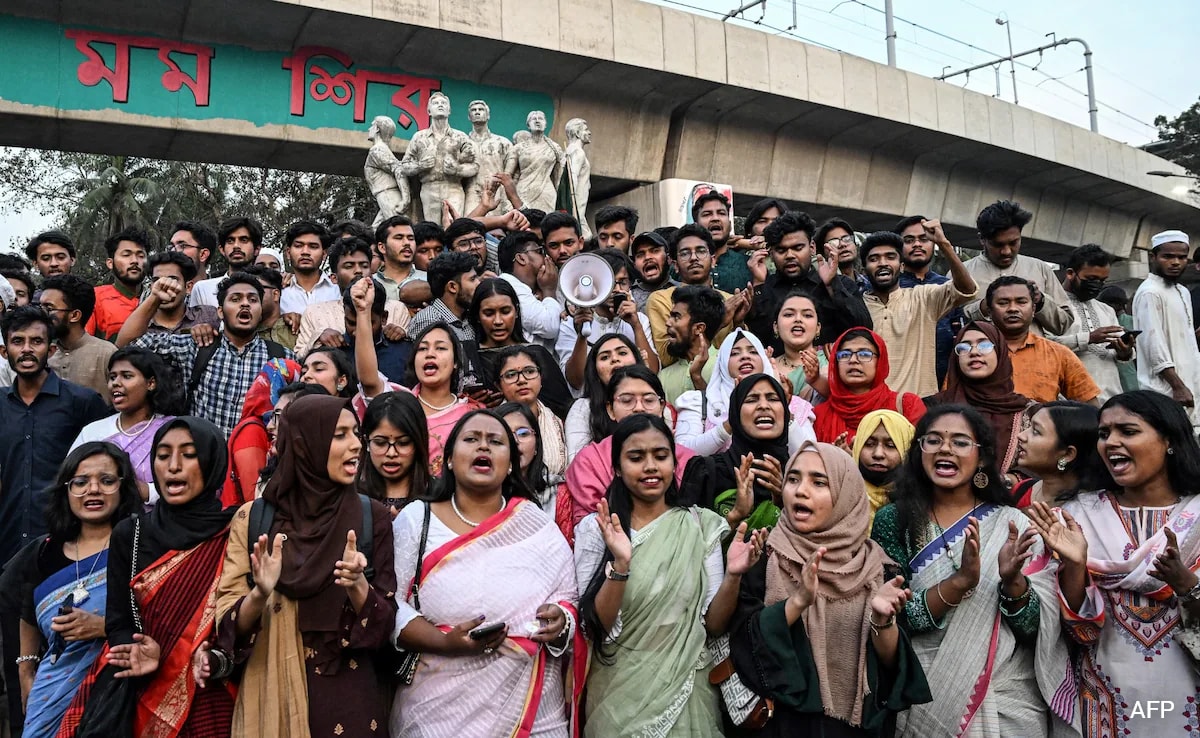
NCP leaders express their vision beyond the upcoming election, focusing on long-term structural reforms for Bangladesh.
Thousands of Bangladeshis gathered to hear the vision of student activists who successfully toppled long-time leader Sheikh Hasina when they formed the National Citizen Party (NCP), but the group now struggles to convert their street influence into electoral success.
Striving to fulfill their promise of liberating Bangladesh from decades of nepotism and two-party dominance, the student-led NCP faces formidable opponents with established networks and substantial resources as February elections approach.
"Our organisation remains underdeveloped due to limited time for building infrastructure," explained NCP leader Nahid Islam, who gained prominence during last year's deadly anti-government demonstrations and briefly served in Nobel laureate Muhammad Yunus's caretaker administration.
"We recognize this weakness, yet we're still embracing the challenge," added the 27-year-old, speaking from their headquarters in a Dhaka high-rise where one wall featured graffiti depicting revolutionary crowds.
Recent polling data reveals the NCP, which plans to compete in all 300 constituencies, ranking third with only 6 percent support, significantly trailing the Bangladesh Nationalist Party (BNP) of former Prime Minister Khaleda Zia, which leads with 30 percent.
Even the hardline Jamaat-e-Islami outperforms the NCP, securing second position with 26 percent support according to a December poll by the U.S.-based International Republican Institute.
"I initially saw potential in them, like many others," said Prapti Taposhi, 25, who helped lead the uprising and hoped the newcomers would break the cycle of traditional two-party governance, only to eventually feel disillusioned.
"They claim to be centrist, but their actions don't reflect this position," added Taposhi, a feminist activist.
"They avoid taking definitive stances on crucial issues such as minority and women's rights, and when they finally do, their responses come too late."
Another indication of growing disenchantment appeared when the party failed to secure any seats in September's student body election at Dhaka University, the epicenter of the uprising that forced Hasina to flee to New Delhi.
Hasina's Awami League, currently prohibited from participating in the election, has cautioned about potential unrest if the ban continues, a threat that could jeopardize Bangladesh's textile industry, the world's second-largest garment exporter.
Constrained by minimal organizational structure, limited funding, and perceived ambiguity on key issues including women's and minority rights, the NCP is negotiating with other parties, including the BNP and Jamaat-e-Islami, according to party leaders.
"Running independently creates a significant risk of not winning even a single seat," a senior NCP leader told Reuters anonymously, acknowledging their vulnerability.
However, analysts suggest that forming alliances risks compromising the party's revolutionary image.
"If they form coalitions, the public will no longer view them as distinct from the Awami League, BNP and Jamaat," explained Dhaka-based writer and political analyst Altaf Parvez.
While the uprising temporarily united students across political divisions to oust Hasina, most subsequently returned to their original affiliations, leaving only a fraction to establish the NCP, according to political analysts and an NCP leader.
Now the party confronts opponents with deeply entrenched networks and well-established mechanisms extending into rural communities.
Financial constraints present another obstacle, Islam noted, as members depend on their full-time employment income, small donations, and crowdfunding to sustain campaign activities.
Some members, like 28-year-old Hasnat Abdullah, have attempted to build support through grassroots door-to-door outreach in villages.
"In my constituency, I openly tell people I have no financial resources," he said, referring to the eastern region where he intends to run. "I explain that a leader's primary responsibility isn't distributing money to voters, but ensuring proper allocation and utilization of government funds."
Corruption allegations against certain NCP leaders, which the party denies while asserting a zero-tolerance policy toward corruption, have further damaged its reputation.
Nevertheless, some young citizens remain supportive of the party, viewing it as working toward a more equitable political culture in a landscape dominated by financial influence, force, and dynastic power.
"They represent youth, led the revolution, and I believe they can deliver meaningful change—provided they don't become authoritarian themselves," said university student Manzila Rahman, expressing continued support.
The NCP initiated an unconventional candidate selection process in November, interviewing over 1,000 ordinary citizens from across the country during a two-day event.
Young party leaders moved between interview stations, meeting with diverse applicants including a rickshaw puller who took time off work for the opportunity and a 23-year-old student partially blinded by police pellets during the protests.
"Some might question what a rickshaw puller could contribute in parliament," said Mohammad Sujan Khan, 32. "Give me an opportunity to demonstrate how I would transform the country."
This vision of transformation attracted Tasnim Jara, a physician who abandoned a successful career in Cambridge to join the NCP, hoping to help build the organization from its foundation.
"We aim to democratize politics, removing it from the exclusive domain of powerful families, and restore power to ordinary citizens," she explained.
BNP and Jamaat leaders also recognize the value of engaging with student activists.
"Young people will dominate future politics, so including them in parliament would be beneficial," stated BNP leader Mirza Fakhrul Islam Alamgir.
NCP leaders emphasize their focus extends beyond the upcoming election, targeting institutional and structural reforms for the long term.
"Regardless of electoral outcomes, our participation itself offers something new to the political landscape," said NCP's Abdullah.
Source: https://www.ndtv.com/world-news/bangladeshs-gen-z-battles-to-gain-political-ground-after-ousting-sheikh-hasina-9748528