
Catastrophic Asian Floods Kill 1,200 Across Four Countries as Relief Efforts Face Critical Supply Challenges
- Date & Time:
- |
- Views: 60
- |
- From: India News Bull
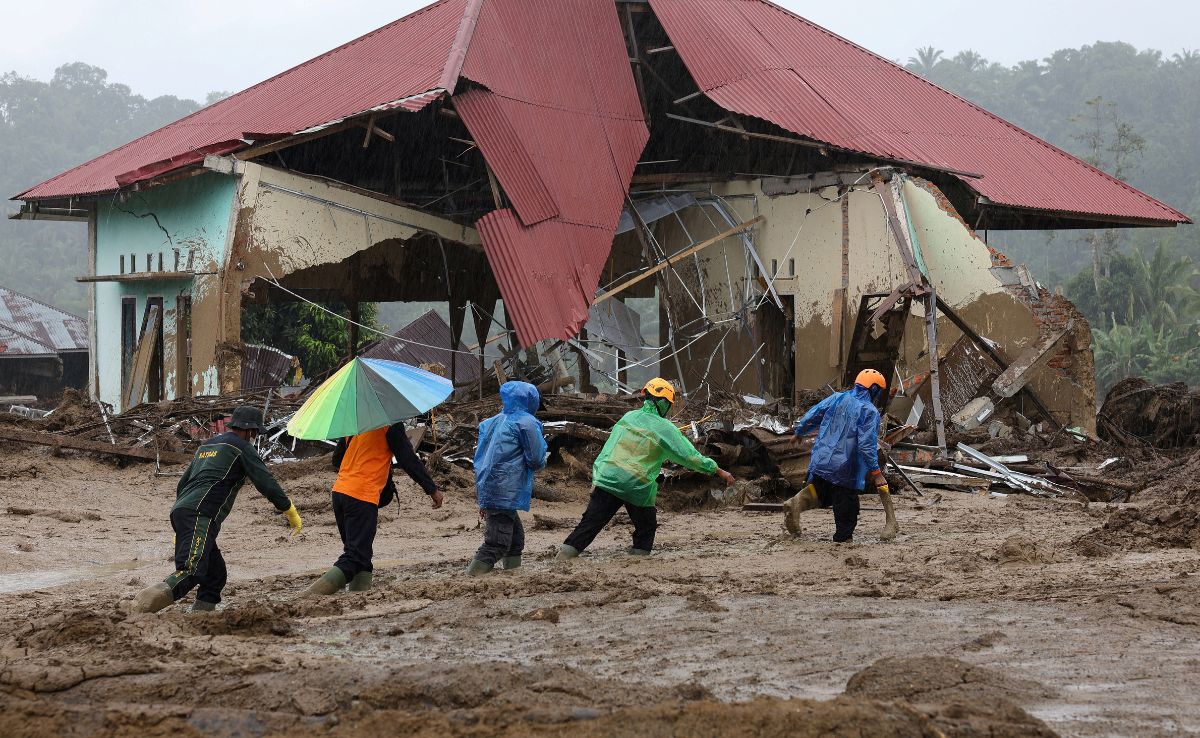
At least 631 people were killed in the floods across Sumatra, and 472 remain missing as rescue efforts continue.
In Indonesia, governments and aid organizations are working urgently to deliver assistance to hundreds of thousands of people affected by catastrophic flooding that has claimed approximately 1,200 lives across four Asian countries.
Heavy monsoon rainfall combined with two separate tropical cyclones last week unleashed devastating floods throughout Sri Lanka and across regions of Indonesia's Sumatra, southern Thailand, and northern Malaysia.
Scientists attribute the increased intensity of rainfall events to climate change, as warmer atmospheric conditions retain more moisture and heated ocean temperatures intensify storm systems.
Although floodwaters have largely receded, the destruction has forced hundreds of thousands into temporary shelters where they face critical shortages of clean water and food supplies.
In Indonesia's heavily impacted Aceh province, residents report that those with financial means are stockpiling essential goods.
"Road access is mostly cut off in flood-affected areas," explained 29-year-old Erna Mardhiah while waiting in a lengthy queue at a Banda Aceh petrol station.
"People are worried about running out of fuel," she added, noting she had been waiting for two hours.
The supply constraints have triggered dramatic price inflation.
"Most things are already sky-high... chillies alone are up to 300,000 rupiah per kilo ($18), so that's probably why people are panic-buying," Mardhiah observed.
Indonesia's government announced Monday it was dispatching 34,000 tons of rice and 6.8 million litres of cooking oil to the three worst-affected provinces: Aceh, North Sumatra and West Sumatra.
"There can be no delays," emphasized Agriculture Minister Andi Amran Sulaiman.
Humanitarian organizations warn that local markets are depleting essential supplies while prices have already tripled in many areas.
"Communities across Aceh are at severe risk of food shortages and hunger if supply lines are not reestablished in the next seven days," warned Islamic Relief.
The charity is transporting 12 tonnes of food aboard an Indonesian navy vessel scheduled to arrive in Aceh on Tuesday.
Official figures confirm 631 deaths from flooding across Sumatra, with 472 individuals still unaccounted for. Indonesia's disaster agency reports one million people have evacuated their homes.
Survivors describe terrifying sudden surges of water that arrived without warning.
In East Aceh, a resident named Zamzami recounted floodwaters that were "unstoppable, like a tsunami wave."
"We can't explain how big the water seemed, it was truly extraordinary," said the 33-year-old.
Villagers in his area sought refuge atop a local two-storey fish market and are now clearing mud and debris while coping with power and telecommunications disruptions.
"It's difficult for us (to get) clean water," he told AFP on Monday.
"There are children who are starting to get fevers, and there's no medicine."
The same weather system affecting Indonesia also brought severe rainfall to southern Thailand, causing at least 176 fatalities.
Across the border in Malaysia, two additional deaths have been reported.
A separate storm system inundated Sri Lanka entirely, triggering flash floods and devastating landslides that killed at least 390 people.
Another 352 individuals remain missing, with some of the most severely affected areas in central Sri Lanka still difficult to access.
President Anura Kumara Dissanayake has declared a national emergency in response to what he described as the "most challenging natural disaster in our history".
Unlike Indonesia's response, Sri Lanka has formally requested international assistance.
The Sri Lankan air force, supported by Indian and Pakistani military aircraft, continues evacuating stranded residents and delivering essential supplies.
In the mountainous Welimada region, security personnel recovered the bodies of 11 residents buried by mudslides on Monday, according to local officials.
In Colombo, the capital, floodwaters were gradually subsiding Tuesday.
The rapid rise of water levels around the city caught many residents by surprise, despite their familiarity with seasonal flooding.
"Every year we experience minor floods, but this is something else," delivery driver Dinusha Sanjaya told AFP.
"It is not just the amount of water, but how quickly everything went under."
While rainfall has diminished across Sri Lanka, landslide warnings remain active throughout most of the heavily impacted central region, officials confirmed.
Source: https://www.ndtv.com/world-news/flood-hit-sri-lanka-indonesia-thailand-malaysia-struggle-for-water-food-9734550