
Princess Aiko's Rising Popularity Challenges Japan's Male-Only Imperial Succession Law
- Date & Time:
- |
- Views: 50
- |
- From: India News Bull
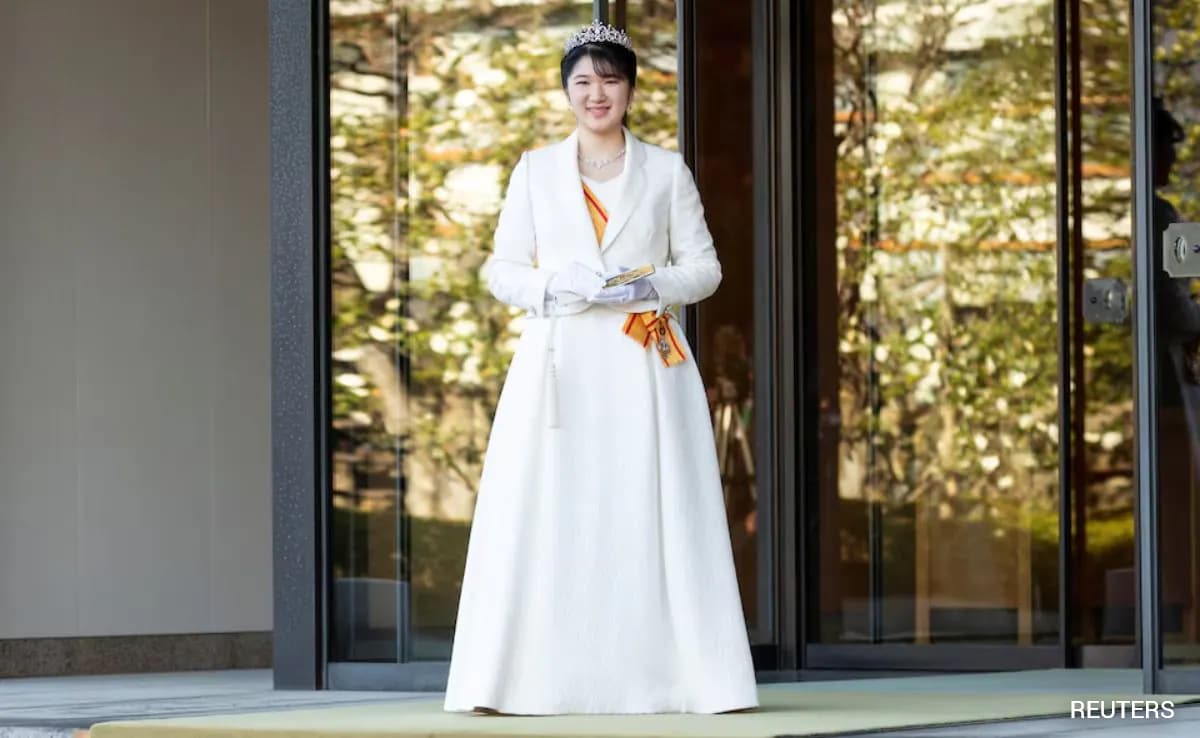
Support for Princess Aiko as a potential future monarch has grown following her successful solo official trip to Laos.
Tokyo:
During a recent visit to Nagasaki accompanying Emperor Naruhito and Empress Masako, Princess Aiko experienced extraordinary public reception, with crowds calling her name so enthusiastically that it surpassed cheers for her parents.
As the princess celebrates her 24th birthday on Monday, supporters are increasingly vocal about changing Japan's male-only succession law that prevents Aiko, the emperor's only child, from ascending to the throne.
The debate over succession rules has stalled despite growing urgency. Japan's imperial family faces a demographic crisis, with Naruhito's teenage nephew being the only eligible heir from the younger generation.
Experts argue the female succession ban should be lifted before the royal family faces extinction, but conservative lawmakers, including Prime Minister Sanae Takaichi, remain firmly opposed to such changes.
Since her formal debut as an adult royal in 2021, Aiko has captivated the public with her intelligence, friendliness, compassion, and good humor.
Public support for Aiko as a potential monarch intensified following her November solo diplomatic mission to Laos, where she represented the emperor. During the six-day visit, she engaged with high-ranking Laotian officials, toured cultural and historical sites, and connected with local citizens.
Earlier this year, Aiko joined her parents on visits to Nagasaki and Okinawa. She has followed her father's example in emphasizing the importance of teaching younger generations about World War II tragedies.
"I have always been rooting for Princess Aiko to be crowned," shared Setsuko Matsuo, an 82-year-old atomic bombing survivor who arrived at Nagasaki's peace park hours ahead of the royal family's visit. "I like everything about her, especially her smile... so comforting," she told The Associated Press.
Mari Maehira, a 58-year-old office worker who waited to greet Aiko in Nagasaki, remarked that she has watched Aiko grow up and "now we want to see her become a future monarch."
The princess's popularity has inspired grassroots pressure on legislators to reform the succession law.
Cartoonist Yoshinori Kobayashi has created comic books advocating for legal changes that would allow Aiko to become monarch, with supporters sending these materials to parliamentarians to raise awareness and gather political support.
Others have launched YouTube channels and distributed informational leaflets to increase public engagement on the issue.
Ikuko Yamazaki, 62, uses social media platforms to advocate for succession by the emperor's first child regardless of gender. She warns that excluding Aiko as a successor and insisting on male-only monarchs threatens the very survival of the imperial institution.
"The succession system conveys the Japanese mindset regarding gender issues," Yamazaki explained. "I expect having a female monarch would dramatically improve women's status in Japan."
Princess Aiko was born on December 1, 2001.
Shortly after giving birth, her mother Masako, a Harvard-educated former diplomat, developed a stress-induced mental condition, apparently triggered by criticism for not producing a male heir—a condition from which she continues to recover.
As a child, Aiko showed remarkable intelligence, memorizing sumo wrestlers' full names as a young fan.
However, her life has not been without challenges: she experienced bullying in elementary school that briefly kept her from classes, and as a teenager, she appeared extremely thin and missed a month of schooling.
In 2024, Aiko graduated from Gakushuin University, the traditional educational institution for Japanese royalty. She now balances official duties and palace rituals while working at the Red Cross Society. During weekends, she enjoys walking with her parents and playing volleyball, tennis, and badminton with palace officials.
The 1947 Imperial House Law restricts succession to males in the paternal line and requires female royals who marry commoners to forfeit their royal status.
The Imperial Family now consists of just 16 members, down from 30 three decades ago, all of whom are adults.
Emperor Naruhito has only two younger male heirs: his 60-year-old brother, Crown Prince Akishino, and Akishino's 19-year-old son, Prince Hisahito. Prince Hitachi, the former Emperor Akihito's younger brother and third in line, is 90 years old.
Crown Prince Akishino has acknowledged the aging and shrinking royal population, noting that "nothing can be done under the current system."
"I think all we can do right now is to scale back our official duties," he told reporters before his 60th birthday on Sunday.
Last year, the crown prince made a rare, nuanced comment that royal members are "human beings" whose lives are affected by these discussions. However, he noted on Sunday that despite palace officials taking his remarks seriously, no changes have occurred.
Princess Aiko has previously stated her awareness of the declining royal population but declined to comment directly on the system. "Under the circumstances, I hope to sincerely serve every official duty and help the emperor and the empress, as well as other members of the Imperial Family."
The shortage of male successors poses a serious threat to the monarchy, which some historians trace back 1,500 years. This crisis mirrors Japan's broader demographic challenges of rapid aging and population decline.
"I think the situation is already critical," stated Hideya Kawanishi, a Nagoya University professor specializing in monarchy studies. The institution's future depends entirely on Prince Hisahito and his future wife's ability to produce male offspring. "Who wants to marry him? If anyone does, she would endure enormous pressure to produce a male heir while performing official duties at a superhuman capacity."
Prince Hisahito must bear this burden and the Imperial Family's fate alone, former Imperial Household Agency chief Shingo Haketa observed in a Yomiuri newspaper article this year. "The fundamental question is not whether to allow a male or female succession line but how to save the monarchy."
While Japan has traditionally favored male emperors, historical records document eight female monarchs. The last was Empress Gosakuramachi, who ruled from 1762 to 1770.
The male-only succession rule was codified in 1889 and maintained in the postwar 1947 Imperial House Law.
Experts note that this system historically functioned with the support of concubines who, until approximately a century ago, gave birth to half of Japan's emperors.
In 2005, the government considered allowing female monarchs, but Prince Hisahito's birth provided conservatives with grounds to abandon the proposal.
A predominantly conservative expert panel in 2022 recommended maintaining male-line succession while allowing female royals to retain their status after marriage and continue official duties. These conservatives also suggested adopting male descendants from defunct distant branches of the royal family to preserve male lineage—an idea widely considered impractical.
The United Nations women's rights committee in Geneva urged Japan last year to permit female monarchs, arguing that the current restriction impedes gender equality in Japanese society.
Japan dismissed the report as "regrettable" and "inappropriate," insisting that imperial succession represents a fundamental aspect of national identity.
"Though it's not spelled out, what they're saying is clearly in favor of male superiority. That's their ideal society," Professor Kawanishi concluded.
Source: https://www.ndtv.com/world-news/japan-princess-admiration-sparks-call-to-change-male-only-succession-law-9729907