
Can Israel-Palestine Conflict Be Resolved Through Two-State Solution Now?
- Date & Time:
- |
- Views: 53
- |
- From: India News Bull
Can Israel-Palestine Conflict Be Resolved Through Two-State Solution Now?
Benjamin Netanyahu has expressed firm opposition to Palestinian statehood and warned of potential retaliatory measures
This year's United Nations General Assembly gathering has become a platform for France and Saudi Arabia to reinvigorate discussions on a two-state solution to the Israeli-Palestinian conflict, especially amid the devastating war in Gaza Strip.
Their initiatives include developing a new framework for eventual Palestinian statehood in territories Israel captured during the 1967 Mideast war, alongside several Western nations joining the global majority in recognizing a Palestinian state prior to its formal establishment.
On Sunday, Britain, Canada and Australia officially recognized a Palestinian state, joining approximately 150 countries that have already done so, with France expected to announce similar recognition during this week's General Assembly.
However, these efforts face substantial challenges, beginning with strong opposition from the United States and Israel. The US has prevented Palestinian officials from attending the General Assembly, while Prime Minister Benjamin Netanyahu, who opposes Palestinian statehood, has threatened unilateral action in response—potentially including annexation of West Bank territories.
Such actions would further distance Palestinians from their aspiration for independence.
The establishment of a Palestinian state encompassing east Jerusalem, the West Bank and Gaza has long been considered internationally as the only viable solution to the conflict, which predates Hamas' October 7, 2023 attack that triggered the current Gaza war.
Advocates argue this would enable Israel to maintain its democratic character with a Jewish majority. They suggest the alternative—maintaining the status quo where Jewish Israelis enjoy full rights while Palestinians live under varying degrees of Israeli control—constitutes apartheid according to major rights organizations.
"Israel must understand that the one state solution, with the subjugation of the Palestinian people without rights—that is absolutely intolerable," UN Secretary-General António Guterres stated last week. "Without a two-state solution, there will be no peace in the Middle East."
Peace negotiations initiated in the early 1990s repeatedly stalled amid violence and Israeli settlement expansion aimed at preventing Palestinian statehood. No meaningful negotiations have occurred since Netanyahu returned to power in 2009.
Israel has annexed east Jerusalem, considers it part of its capital, and has actively encouraged Jewish settlement growth in and around Palestinian neighborhoods.
The occupied West Bank houses over 500,000 Israeli citizens in settlements alongside approximately 3 million Palestinians living under Israeli military administration, with the Palestinian Authority exercising limited autonomy in disconnected enclaves.
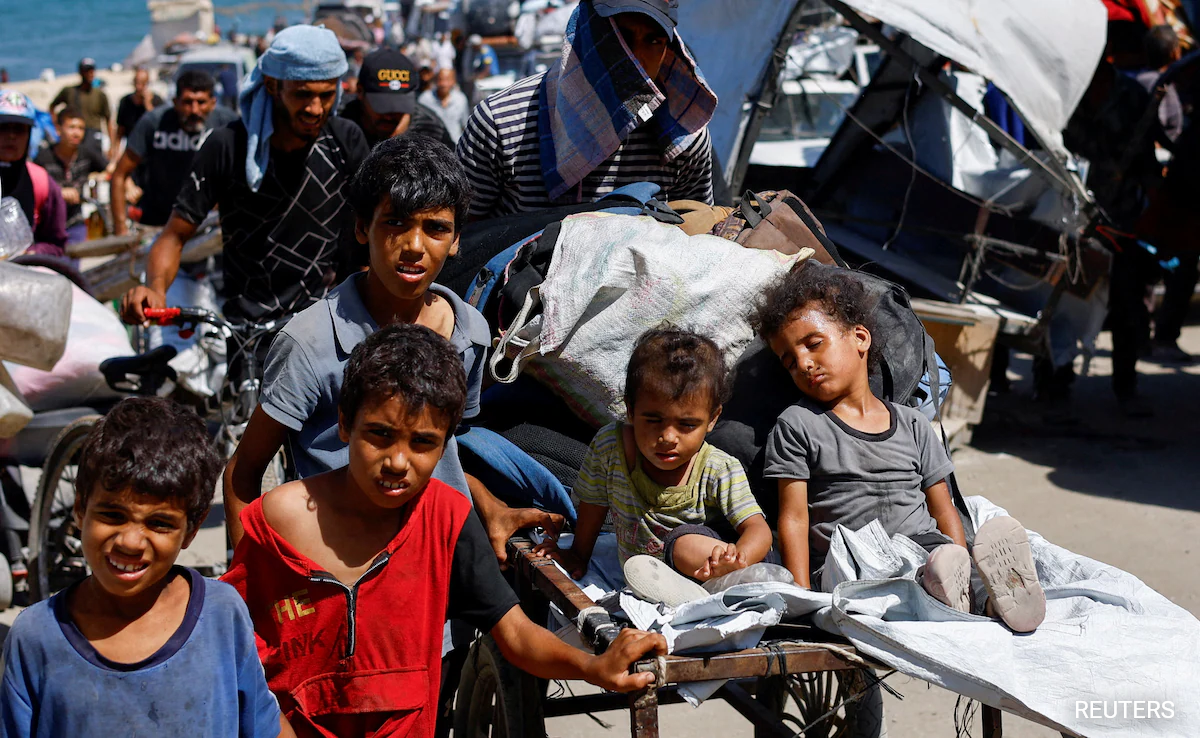
In Gaza, Israel's military response has resulted in tens of thousands of Palestinian casualties, displaced about 90% of the 2 million residents, rendered much of the territory uninhabitable, and pushed certain areas into famine. A new offensive threatens to empty and devastate the largest Palestinian city.
Netanyahu's government and most of Israel's political establishment opposed Palestinian statehood even before the current conflict. The Trump administration has shown no interest in reviving peace talks, instead advocating for relocating much of Gaza's population to other countries—a proposal Israel has embraced despite critics condemning it as ethnic cleansing.
In this seemingly darkest hour, France and Saudi Arabia have proposed a phased plan to resolve the conflict through establishing a demilitarized state governed by the Palestinian Authority with international support.
Their plan calls for an immediate cessation of hostilities in Gaza, the return of all hostages, and complete Israeli withdrawal. Hamas would transfer power to an independent committee under Palestinian Authority oversight—something it has already agreed to—and disarm, which it has not.
The international community would assist the Palestinian Authority in rebuilding Gaza and governing the territories, potentially with foreign peacekeepers. Regional peace and integration, likely including Saudi normalization of relations with Israel, would follow.
The 193-member UN body approved a non-binding resolution endorsing this "New York Declaration" earlier this month.
The United States and Israel contend that international pressure for Palestinian statehood rewards Hamas and complicates efforts to end the war and secure the remaining hostages' release.
Gaza ceasefire negotiations collapsed again following Israel's September 9 strike targeting Hamas negotiators in Qatar, one of the principal mediators. The US withdrew from talks in July, blaming Hamas, while Israel unilaterally terminated an earlier ceasefire in March.
Israel maintains that creating a Palestinian state would enable Hamas to execute another October 7-style attack on a larger scale. While Hamas leaders have occasionally indicated acceptance of a state based on 1967 borders, the organization remains officially committed to Israel's elimination.
Netanyahu characterizes international recognition of Palestinian statehood as an assault on Israel. During discussions with Secretary of State Marco Rubio last week, Netanyahu stated, "it is clear that if unilateral actions are taken against us, it simply invites unilateral actions on our part."
Netanyahu and his far-right coalition partners have long sought to annex substantial portions of the West Bank, which would effectively prevent establishing a viable Palestinian state.
The US has not publicly stated its position on this matter, but in a Fox News interview, Rubio connected "this conversation about annexation" to statehood recognition.
The United Arab Emirates has described annexation as a "red line," without specifying potential consequences for the 2020 Abraham Accords, through which it normalized relations with Israel.
The French-Saudi proposal avoids the most contentious issues: final borders, settlement status, Palestinian refugee return rights, security arrangements, Jerusalem's status, and recognition of Israel as a Jewish state.
It also heavily depends on the Palestinian Authority, whose current leadership many Palestinians view as corrupt and autocratic. Israel claims they lack genuine commitment to peace and accuses them of incitement despite recent reforms.
The plan proposes Palestinian elections within a year, but President Mahmoud Abbas has postponed previous votes when his party appeared likely to lose, citing Israeli restrictions. Hamas, which won the last national elections in 2006, would be excluded unless it disarms and recognizes Israel.
Consequently, this initiative will likely join numerous previous Middle East peace proposals, leaving Israel in control of all territory from the Jordan River to the Mediterranean Sea, governing millions of Palestinians denied fundamental rights.